Table of Contents

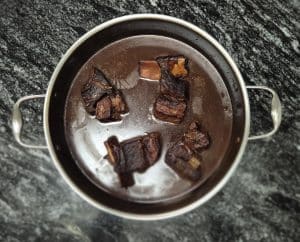
This beef short ribs in red wine recipe serves 4 and takes 3 hours 30 minutes to 4 hours in the oven at 140°C (fan 120°C / 275°F / Gas Mark 1). Beef short ribs are a bone-in cut taken from the lower rib cage — typically the chuck or plate section — and are one of the best cuts for slow braising, thanks to their high collagen content, which breaks down into gelatin during cooking to produce a rich, glossy sauce. The recipe calls for a full bottle of full-bodied red wine — Merlot, Côtes du Rhône, or a Bordeaux blend all work well — which is reduced by half before braising to concentrate flavour and mellow the alcohol. A classic mirepoix of shallots, carrots, celery, and leek forms the base, alongside garlic, bay leaves, thyme, and good-quality beef stock. The ribs are dredged in seasoned flour, seared until deeply browned, then braised in a covered casserole with a greaseproof paper cartouche for 3½ to 4 hours until the meat is completely tender and falling off the bone. The finished sauce is strained, reduced, and finished with wholegrain mustard and a splash of vinegar. This dish improves significantly if made the day before — the flavours deepen overnight and any excess fat can be lifted cleanly from the surface. Leftovers keep for up to 3 days in the fridge or up to 3 months in the freezer. The recipe was inspired by Michelin-starred chef Daniel Boulud.
1 Dreamy, slow-cooked Beef short ribs are well worth the wait
The beef short ribs in red wine were inspired by Michelin-starred chef Daniel Boulud. After seeing the recipe, I had to cook it and share it. Short ribs need a long, slow braise, but when ready, you are rewarded with meat that just falls apart and is so succulent. The magic of this recipe is that the ribs are coated with a truly wonderful red wine and beef gravy. Whilst it is a long process, the cooking side and prep are not difficult, and most of the hard work is done by the oven.
To buy short ribs, you probably need to go to a butcher; mine came from Wylde Market, the UK’s online farmers’ market. I ordered pasture-fed short ribs, and honestly, they were excellent — good size, beautifully marbled, and exactly the kind of quality that makes a long braise really worth it. Pasture-fed beef has a depth of flavour that intensively reared meat just doesn’t match, and when you’re investing three-plus hours in a dish, starting with the best you can find makes a real difference.
The cooking time will vary depending on the size of the short ribs. As you can see from the pictures, the ribs we cooked were on the large side, and they took 3 hours and 30 minutes.
They say good things happen if you are prepared to wait, and this recipe confirms that — whilst three hours plus in the oven might seem like a lifetime, your kitchen is filled with the aromas of beef and rich red wine gravy.
I recommend serving with seasonal vegetables — I went with a celeriac purée, some mini roasted potatoes, and my no-fail honey roasted carrots and parsnips. I urge you to take a look at my tried and tested recipe for the carrots and parsnips; they turn out perfectly every time and are a great accompaniment to this dish, but also to a Sunday roast.
2 What Are Beef Short Ribs?
Beef short ribs are cut from the lower portion of the rib cage, typically from the chuck or plate section of the animal. They’re a heavily worked muscle, which means they carry a lot of connective tissue and fat — exactly what you want in a long, slow braise. That connective tissue breaks down over time in the oven, turning into gelatine and giving the finished dish that rich, glossy body that you just can’t fake.
In the UK, short ribs aren’t always on display in supermarkets, which is why a good butcher or an online farmers’ market like Wylde Market is your best route. Ask for bone-in, English-cut short ribs if you can — they’re meatier and look spectacular on the plate.
3 Why Slow Braising Is the Only Way to Cook Short Ribs
Short ribs are one of those cuts that simply don’t respond well to high, fast heat. Try to rush them and you’ll end up with tough, chewy meat that hasn’t had the chance to relax. The magic of low-and-slow braising is time — three and a half to four hours at 140°C gives the collagen in the meat the opportunity to fully convert to gelatine, which is what makes the meat so unctuous and the sauce so silky.
There’s also something rather satisfying about putting a pot in the oven and largely forgetting about it. Your kitchen fills with the most incredible smell, your guests are thoroughly impressed before you’ve even plated up, and you’ve barely had to do anything. It’s the ultimate dinner party recipe for exactly that reason.
4 Choosing the Right Red Wine for Braising
The rule I always follow: if you wouldn’t drink it, don’t cook with it. That doesn’t mean you need to open something expensive — a decent, full-bodied red around the £6–£12 mark is absolutely fine. You’re reducing the whole bottle, so you want something with enough structure and fruit to stand up to the beef without any harsh, sharp notes. A Merlot, Côtes du Rhône, or a robust Bordeaux all work beautifully. Save the cooking wine for something else entirely.
Reducing the wine before braising is a step some recipes skip, but I’d really encourage you not to. It concentrates the flavour and mellows out the alcohol, so you end up with a deeper, sweeter base rather than a sharp, boozy bitter one. It only takes about 20 minutes and makes a real difference.
5 Building the Vegetable Base — Why It Matters
The vegetables in this recipe aren’t just padding — they’re doing serious flavour work. Shallots, carrots, celery, and leek form a classic mirepoix-style base, and the time you spend caramelising them properly is time very well spent. Don’t rush this stage. You want everything to take on a good golden colour, as that browning is where a lot of the depth in the finished sauce comes from.
All of these vegetables are well and truly in season during the colder months, which makes this dish a natural fit for autumn and winter cooking.
What Is a Cartouche and Why Use One?
A cartouche is simply a circle of greaseproof paper pressed directly onto the surface of the braising liquid. It might sound fussy, but it takes about 30 seconds to make and does a genuinely useful job — it slows evaporation just enough to stop the liquid reducing too quickly, while still allowing a little steam to escape. A lid alone traps too much moisture; a cartouche keeps things just right.
To make one, tear off a sheet of greaseproof paper roughly the size of your pot, fold it in half, then in quarters, then a few more times until it forms a rough triangle. Hold the point over the centre of the pot, mark where the edge falls, and cut. Unfold, and you’ve got a near-perfect circle. Press it gently onto the liquid before the lid goes on.
6 Why I Use Wylde Market for Beef Short Ribs
Short ribs aren’t always the easiest cut to track down — plenty of supermarkets don’t stock them at all, and even some butchers need advance notice. That’s where Wylde Market has been a genuine find for me. As the UK’s online farmers’ market, they work directly with British farms to bring seasonal, sustainably raised meat straight to your door — and the pasture-fed short ribs I ordered for this recipe were, honestly, exceptional. Good size, excellent marbling, and the kind of quality that makes a slow braise really sing.
7 What to Serve with Beef Short Ribs in Red Wine

The ribs and their gravy are rich, so you want sides that either complement that richness or cut through it slightly. Here’s what works well:
Celeriac purée is my personal favourite pairing — its earthy, slightly nutty flavour is a natural match for the beef, and the smooth texture feels luxurious alongside the falling meat. Mashed potato or a buttery potato gratin works equally well if celeriac isn’t your thing.
Roasted root vegetables are a great autumnal option. Carrots and parsnips, honey-roasted until caramelised, are a classic pairing — see my dedicated recipe for those — and roasted swede or beetroot would work just as well.
For something green, tenderstem broccoli, cavolo nero, or buttered kale all hold their own against the richness of the sauce without getting lost.
Finally, good bread on the table is never a bad idea. You’ll want something to mop up the gravy.
8 Make-Ahead Tips — This Dish Gets Better Overnight
Honestly, this is one of those recipes that actively improves if you make it the day before. The ribs sit in the finished sauce overnight in the fridge, the flavours deepen, any remaining fat solidifies on the surface and can be lifted off cleanly, and reheating is simple. For a dinner party, this is ideal — all the work is done in advance, and all you need to do on the night is reheat gently and get your sides ready.
To reheat, place the ribs and sauce in a covered pot over a low heat, turning the ribs occasionally, for about 20–25 minutes. Alternatively, cover tightly with foil and warm in the oven at 150°C for around 30 minutes. Either way, low and slow is the approach — you don’t want to push the meat hard at this stage or it’ll start to dry out.
9 Storing and Freezing Beef Short Ribs
Leftovers keep well in the fridge for up to three days, stored in an airtight container with the sauce. The fat will solidify on top when cold — you can either remove it before reheating or stir it back in for extra richness.
Short ribs also freeze very well. Store the ribs and sauce together in a freezer-safe container for up to three months. Defrost overnight in the fridge before reheating as above. I’d say the quality holds up remarkably well from frozen — the braised meat doesn’t suffer the way some cuts do.
10 Variations and Substitutions
Bone-in vs boneless: Bone-in short ribs are my preference — the bone adds flavour to the braising liquid as it cooks. Boneless short ribs are easier to find in some areas and work fine in this recipe; just check for tenderness from around the 2-hour 30-minute mark as they may cook a little faster.
The wine: If you’d rather not use red wine, a good dark ale or stout makes an excellent substitute and gives the sauce a slightly more robust, British character. You can also use additional beef stock in place of the wine, though the sauce will be less complex.
Vegetables: The classic mirepoix base — carrots, celery, shallots — is very much interchangeable with what’s in season. In summer, a punnet of cherry tomatoes added to the braise adds a lovely sweetness and freshness. For me, cooking and writing this in early March, I went with a classic root veg base — it’s exactly right for the time of year.
Herbs: Thyme and bay are the workhorses here. A sprig of rosemary would also be at home, particularly if you’re using ale rather than wine.
11 Frequently Asked Questions
Can I make beef short ribs in a slow cooker?
Yes, absolutely. Brown the ribs and cook the vegetables as per the recipe, then transfer everything to your slow cooker. Cook on low for 7–8 hours or high for 4–5 hours. You’ll need to reduce the braising liquid in a saucepan afterwards to get the sauce to the right consistency, as slow cookers don’t allow for much evaporation.
What cut of beef short ribs should I buy?
Bone-in short ribs are ideal — the bone adds flavour to the braise. Ask your butcher for ‘English-cut’ short ribs, which are cut across the bones and tend to be meatier. If you can only find boneless, they’ll work fine — just reduce the cooking time slightly and check for tenderness from around 2 hours 30 minutes.
Can I use a cheaper cut of beef instead?
Beef cheeks or ox cheeks (see our recipe here)are a great alternative if short ribs aren’t available — they’re similarly rich in connective tissue and respond beautifully to long braising. Brisket also works well. Avoid anything lean like sirloin or rump, which will simply dry out over that length of cooking time.
What red wine is best for braising beef?
A full-bodied, fruit-forward red works best — Merlot, Côtes du Rhône, or a Bordeaux blend are all excellent choices. The key rule is: if you wouldn’t drink it, don’t cook with it. You don’t need to spend a lot, but avoid anything labelled ‘cooking wine’ — it typically contains added salt and won’t give you a good result.
Why do I need to reduce the wine before braising?
Reducing the wine first mellows the alcohol and concentrates the fruit and flavour, giving you a richer, sweeter base rather than a sharp, boozy one. It only takes about 20 minutes and makes a noticeable difference to the finished sauce.
My sauce is too thin — how do I thicken it?
Make a cornflour slurry: mix a tablespoon of cornflour with a tablespoon of cold water until smooth, then whisk it into your simmering sauce. It thickens quickly, so add it gradually until you reach the consistency you want. Alternatively, simply reduce the sauce for longer over a medium heat.
Can I prepare this dish in advance?
Yes — and I’d actually encourage it. This is one of those dishes that improves overnight. Make it the day before, cool, and refrigerate. The fat will solidify on the surface and can be lifted off cleanly, and the flavours deepen considerably. Reheat gently in a covered pot over a low heat or in the oven at 150°C.
How long do leftover short ribs keep?
Up to three days in the fridge in an airtight container, stored with the sauce. They also freeze well for up to three months. Defrost overnight in the fridge before reheating gently.
What’s the difference between short ribs and back ribs?
Back ribs (sometimes called beef ribs or dinosaur ribs) come from higher up on the carcass and are longer, with less meat between the bones. Short ribs come from the lower section and are much meatier and better suited to slow braising. For this recipe, you want short ribs.
Can I use vegetable stock instead of beef stock?
You can, though it will produce a lighter, less intensely flavoured sauce. A good-quality shop-bought beef stock or a homemade batch will give you the best result. If you only have vegetable stock, consider adding a tablespoon of soy sauce or Worcestershire sauce to deepen the flavour.
Can I cook this dish in advance and freeze it?
Yes, short ribs freeze very well. Store the ribs and sauce together in a freezer-safe container for up to three months. Defrost overnight in the fridge, then reheat gently in a covered pot over a low heat or in the oven at 150°C.

12 Recipe-Ingredients and Method
Beef Short ribs in red wine
Print RecipeInstructions
Method
Step 1 — Reduce the Wine
Pour the bottle of red wine into a large saucepan and bring it to a gentle boil. You want to reduce it by about half until it looks slightly syrupy — taste it as you go; after a while it should taste sweet rather than sharp. Once you’re happy, set it aside. This step concentrates all the flavour, so please don’t skip it.
Step 2 — Brown the Short Ribs
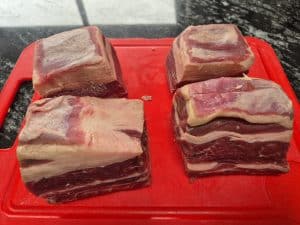
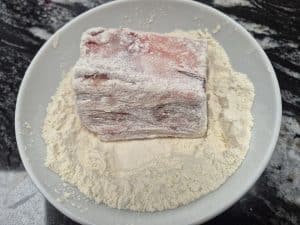
Preheat your oven to 140°C (fan 120°C / 275°F / Gas Mark 1). Pat the ribs dry with kitchen paper — this is important, as a dry surface is what gives you that deep, gorgeous crust. Season generously with salt and pepper, then dredge them lightly in the seasoned flour, shaking off any excess.
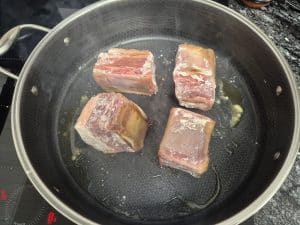
Heat the oil in your heaviest ovenproof pot — a Dutch oven or a solid cast iron casserole is ideal here. Get it properly hot before the ribs go in, then sear on all sides until deeply browned. Don’t rush this stage; the colour you build now translates directly into flavour in the finished dish. Remove the ribs and set them aside.
Step 3 — Sauté the Vegetables
Tip off any excess fat, leaving roughly a tablespoon in the pan. Add the shallots first and cook over a medium heat until lightly caramelised — this takes a few minutes and adds a lovely sweetness to the base. Then add the carrots, celery, leek, and garlic, and cook until everything has taken on a good golden colour, scraping up all those sticky bits from the bottom of the pan as you go.
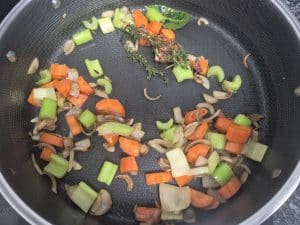
Step 4 — Deglaze and Braise
Pour the reduced wine into the pan to deglaze, getting every last bit of flavour off the base. Return the short ribs to the pot along with any resting juices, then pour over the beef stock — you want the liquid to almost cover the ribs. Tuck in the bay leaves and thyme.
Cover with a cartouche (a circle of greaseproof paper pressed directly onto the surface of the liquid — see the section above if you’ve not made one before), then put the lid on. Transfer to the oven and braise for 3½ to 4 hours, until the meat is completely tender and falling off the bone. The size of your ribs will affect the timing — mine took 3 hours 30 minutes, so start checking at the 3-hour mark.
Step 5 — Rest and Strain
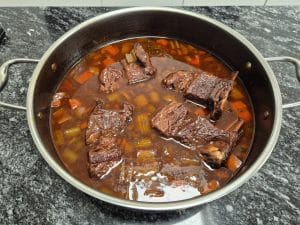
Once out of the oven, resist the urge to dive straight in. Let the ribs sit in the braising liquid for 30 to 45 minutes — this helps them firm up slightly so they’re easier to handle. Carefully lift them out and set aside, then strain the braising liquid through a fine sieve, discarding the vegetables. Skim off some of the fat if you like, though I’d leave a little in — it adds richness.
Step 6 — Finish the Sauce
Return the strained liquid to a saucepan and simmer until reduced, glossy, and slightly thickened. If you want a little extra body, mix the cornflour with a splash of cold water and whisk it into the sauce, and cook it out for a couple of minutes.
For the mustard and vinegar, don’t add them directly to the sauce or it will go lumpy. Instead, spoon two tablespoons of the hot sauce into a small bowl, whisk in the wholegrain mustard and a splash of vinegar until completely smooth, then stir it back into the pan. Reurn the short -ribs to the pan to warm through. Taste, season with salt and pepper, and serve.