Table of Contents
Written by Martin Seymour | Editor, The Mayfair Foodie | About Me

1 Introduction
This luxury cottage pie recipe serves 4 and takes around 1 hour 10 minutes from start to finish, baking at 200°C (180°C fan) for 30–40 minutes. Made with 500g of beef mince — ideally ex-dairy or retired dairy beef for maximum depth of flavour — the filling is built on a base of onion, carrot and celery, enriched with a combination of 150ml of red wine and ruby port, 350–400ml of good beef stock, and tomato purée. The red wine adds complexity and structure to the gravy, while the port brings a rounded sweetness that balances the acidity and elevates the dish well beyond a standard cottage pie. The mashed potato topping is made from 900g of floury potatoes — Maris Piper or King Edward are ideal — mashed with butter and milk until smooth, then roughed up with a fork before baking for a golden, slightly crispy crust. Cottage pie is made with beef mince, distinguishing it from shepherd’s pie, which uses lamb. This recipe can be made up to 24 hours ahead, assembles easily in a single baking dish, and freezes well for up to three months.
The good thing about writing and cooking recipes for the website is that it takes you out of your comfort zone and makes you try new things, not your same old favourites.. That’s exactly what happened this week — a delivery from Wylde Market arrived containing some beautiful pasture-fed, organic retired dairy mince, and I found myself standing in the kitchen asking the age-old question: what can I cook that will genuinely do justice to this meat?
The answer, it turned out, was a cottage pie — but not just any cottage pie. Tampering with a classic British dish is always asking for trouble. I’m not saying that this classic dish is unusual or different; it’s just that, for some unexplained reason, I never cook it. I’m not a fan of deconstructed versions of things that were never broken in the first place. However, my luxury version has just one significant enhancement, and I think it genuinely elevates the dish to another level. It’s all in the gravy. As well as a good beef stock, I added a combination of red wine and port — the red wine adds depth and complexity, while the port brings a subtle, rounded sweetness that builds the flavour beautifully. Otherwise, this cottage pie pays proper homage to the classic.
A word on the mince, because it’s worth mentioning. Ex-dairy, or retired dairy beef, is becoming increasingly popular in the UK and beyond. You’ll find ex-dairy steaks on menus in many Basque and Spanish restaurants — often listed as Txuleta or Galician blonde — and they are absolutely stunning. The meat has more depth and richness than standard beef, a result of the animal’s age and the fat marbling that comes with it. I sourced my mince from Wylde Market, but a good butcher should be able to get hold of it, and honestly, any good quality beef mince will still produce a fantastic result.
Anyhow, that’s how I settled on a cottage pie for Sunday lunch. I served it with buttered organic carrots and green beans, and I did make an extra jug of the red wine and port gravy to go alongside — which I’d highly recommend. Just note that the ingredients in the recipe card below don’t account for the extra gravy, so you’ll need to scale up if you want to do the same.
2 The History of Cottage Pie
Cottage pie is one of the oldest and most enduring dishes in British cuisine, with a history stretching back to the late 18th century. The name itself is thought to derive from the humble cottages where rural working-class families lived — people who relied on cheap, filling ingredients to feed their households. When potatoes were introduced as a staple crop in Britain and Ireland in the 1700s, they quickly became the topping of choice for meat-based dishes, giving birth to what we now know as cottage pie.
The earliest recorded use of the term ‘cottage pie’ dates from 1791, and the dish was originally conceived as a way of using up leftover roasted meat. Minced beef would be combined with whatever vegetables were to hand, bound with a simple gravy, and topped with a layer of sliced or mashed potato before being baked. It was economical, practical, and deeply satisfying — qualities that have ensured its place on British tables for over two centuries.
It’s worth clearing up a common point of confusion here: cottage pie is made with beef, while shepherd’s pie is made with lamb. The distinction is straightforward — shepherds tend sheep, hence shepherd’s pie uses lamb. Cottage pie, meanwhile, is the beef version, and the two should never be confused. Both are topped with mashed potato and baked until golden, but the meat makes all the difference to the final flavour.
Today, cottage pie remains one of Britain’s best-loved comfort foods, equally at home on a weeknight dinner table or as a centrepiece Sunday lunch. It has travelled far beyond British shores too — you’ll find versions of it in Australia, New Zealand, Ireland, and South Africa, each with their own small regional variations. At its heart, though, it’s still the same simple, honest dish it always was. My version keeps faith with that tradition while adding just enough of a twist to make it genuinely special, I hope you like it.
3 What is Ex-Dairy or Retired Dairy Beef — and Why Does It Make Better Mince?
If you haven’t come across ex-dairy beef before, it’s worth understanding what it is and why it produces such exceptional results in the kitchen. Retired dairy cows — animals that have spent several years producing milk — are increasingly being recognised as a superior source of beef, rather than simply a by-product of the dairy industry.
The key difference is age and fat content. A standard beef animal raised for slaughter is typically processed at around 18–30 months. A retired dairy cow, by contrast, is usually four to eight years old by the time it enters the food chain. That additional time means the muscles have worked harder and for longer, which develops more complex flavour compounds in the meat. The fat marbling is also more pronounced, which translates directly into richness and depth on the plate.
In the Basque Country and wider Spain, this is nothing new — ex-dairy beef has been prized for generations. Old Galician blonde cows, some of them over ten years old, produce steaks that are considered among the finest in the world. You’ll see them listed on menus as Txuleta or Rubia Gallega, and they command premium prices for very good reason.
In the UK, the conversation is only just catching up, but ex-dairy mince is now available from good online suppliers like Wylde Market and from progressive butchers who take provenance seriously. The flavour difference in a slow-cooked dish like cottage pie is remarkable — deeper, beefier and more satisfying than standard mince, even when cooked in an identical way. If you can get hold of it, do. If not, the best quality regular beef mince you can afford will still produce an outstanding result.
4 The Secret is in the Gravy — Red Wine and Port
If there is one thing that separates a good cottage pie from a great one, it’s the gravy. Too thin and the filling is watery and disappointing; too thick and it becomes heavy and stodgy. Get it right, and it’s the thing that holds the whole dish together — rich, glossy, deeply flavoured and just loose enough to pool slightly when you press your fork through the mashed potato topping.
My filling is built on a classic base of finely chopped onion, carrot and celery — the holy trinity of so many great slow-cooked dishes. These three ingredients, softened gently before the mince goes in, provide a sweet, aromatic foundation that carries everything else. Don’t rush this stage; give them a good 8–10 minutes over a medium heat until they’re properly soft and beginning to turn golden.
For the liquid, I used a combination of good beef stock, a generous glug of red wine, and a measure of ruby port. The red wine does the heavy lifting — it adds tannin, acidity and a layer of complexity that you simply can’t achieve with stock alone. Any decent drinking red will do. Just the usual rule: if you wouldn’t drink it, don’t cook with it.
The ruby port is the twist, and it’s a subtle but important one. Where the red wine adds structure and depth, the port brings a rounded, almost jammy sweetness that takes the edge off the acidity and knits the flavours together beautifully. The result is a gravy with a genuinely layered, balanced flavour that makes the whole dish sing. When cooking, the wine & port need to go in the dish before the gravy, as it’s important to reduce down to lose all that harsh alcohol bitterness.
The key is to reduce the gravy properly before it goes in the oven. You want to cook it down until it’s thick enough to coat the back of a spoon — this is what prevents the dreaded watery bottom that ruins an otherwise good cottage pie. Be patient with it. A good 20–30 minutes of steady simmering will pay dividends.
5 Getting the Mashed Potato Topping Right
The mashed potato topping is the other half of the equation, and it deserves just as much attention as the filling. The goal is a topping that is creamy and smooth enough to spread easily, but sturdy enough to hold its shape during baking and develop a properly golden, slightly crisp crust on top.
I used organic potatoes for mine, which I’d encourage if you can get them — the flavour is noticeably better, and they mash to a beautiful, clean-tasting result. For the best texture, choose a floury variety if possible — Maris Piper or King Edward are both excellent. Waxy potatoes don’t mash well and tend to produce a gluey, gummy topping. Peel and cut into even-sized chunks so they cook at the same rate, then boil in well-salted water until completely tender.

The important step that many recipes skip is draining the potatoes thoroughly and allowing them to steam dry in the pan for a minute or two before mashing. Excess moisture is the enemy of good mash — it’s what causes the topping to sink into the filling during baking. I mashed mine simply with good butter and organic milk, seasoned generously with salt and pepper. Keep it simple — the quality of the ingredients does the work here, and you don’t need anything fancy.
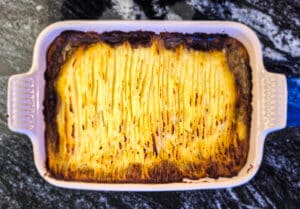
I like to rough up the surface of the mash with a fork before it goes in the oven — those little ridges and peaks catch the heat and brown beautifully, giving you a gloriously uneven, golden crust rather than a flat, pale surface.
6 Step-by-Step Cooking Tips
Brown the mince in batches if you’re making a large quantity. Overcrowding the pan causes the meat to steam rather than brown, and you lose that caramelised, deeply savoury base that gives the filling its character. A hot pan and a little patience here make a significant difference to the final flavour.
Don’t skip the flour. A tablespoon or two of plain flour stirred into the browned mince before the liquid goes in is what thickens the gravy naturally during cooking. Without it you’ll need to reduce the liquid for a very long time to achieve the right consistency.
Allow the filling to cool slightly before adding the mashed potato topping. This is one of those small but important steps — hot filling produces steam during baking, which can cause the mash to become waterlogged and sink. Even 10–15 minutes of cooling makes a noticeable difference.
The cottage pie is cooked when the topping is deeply golden, and the filling is bubbling around the edges. If the top is browning too quickly before the filling is hot through, cover loosely with foil. If you want a more aggressively browned top at the end, a quick blast under the grill for two or three minutes does the job perfectly.
Rest the pie for 5–10 minutes before serving. It will be extremely hot straight from the oven and will also hold its shape much better when you come to portion it if you give it a brief rest.
7 Recipe Variations — Other Ways to Make Cottage Pie
My recipe keeps things clean and classic — mince, finely chopped onion, carrot and celery, beef stock, red wine and ruby port in the filling; organic potatoes, butter and organic milk in the mash. But cottage pie is a wonderfully flexible dish, and there are plenty of ways to adapt it.
Cheesy mash topping: Stir a generous handful of mature Cheddar or Gruyère into the mashed potato before spreading it over the filling, or scatter grated cheese over the top before baking. The cheese melts into a golden, bubbling crust — well worth trying if you want something a little more indulgent.
Adding mushrooms: Many versions of cottage pie include finely chopped chestnut mushrooms in the filling alongside the onion, carrot and celery. They add an earthy, umami depth that works beautifully with the beef. I kept mine out to let the mince and wine gravy do the talking, but they’re a very natural addition.
With Worcestershire sauce: A splash added to the filling alongside the stock is a classic move that adds a savoury, slightly tangy depth. I didn’t use it in my version as I wanted the red wine and port to be the dominant flavour notes, but it’s a perfectly good alternative approach.
Sweet potato topping: Swap the regular mash for mashed sweet potato for a slightly sweeter, more vibrant topping. It pairs particularly well with the port in the gravy, which has a similar natural sweetness.
Vegetarian version: Substitute the beef mince for a combination of green lentils and finely diced root vegetables. The red wine and port gravy work just as well with a vegetable stock base.
Individual portions: Divide the filling and mash between individual oven-proof dishes before baking. These look wonderful served at a dinner party and are a much more elegant presentation than scooping from a large dish.
With bacon lardons: Fry some smoked streaky bacon, chopped into small pieces, with the onions at the start of the recipe. The smokiness adds another flavour layer and pairs particularly well with the port in the gravy.
8 Make-Ahead and Storage Tips
Cottage pie is one of those dishes that genuinely improves with time, making it an ideal candidate for cooking ahead. The filling can be made up to two days in advance and kept covered in the fridge — the flavours develop and deepen overnight, and the gravy often tastes even better the next day.
You can assemble the entire pie — filling and mash topping — up to 24 hours ahead and keep it covered in the fridge. Bring it up to room temperature for 30 minutes before baking, then cook as directed, adding an extra 10 minutes to the baking time to ensure it’s heated all the way through.
Cottage pie freezes exceptionally well, either before or after baking. To freeze before baking, assemble the pie, cover tightly and freeze for up to three months. Defrost overnight in the fridge before baking as normal. To freeze after baking, allow the pie to cool completely, then portion and freeze in airtight containers. Reheat in a 180°C oven until piping hot throughout.
Leftovers keep well in the fridge for up to three days and reheat beautifully — either in the oven at 180°C for 20 minutes or in the microwave in shorter bursts, checking regularly. Some people argue that leftover cottage pie is actually better than fresh, and they’re not entirely wrong.
9 What to Serve with Cottage Pie
Cottage pie is a complete meal in itself, but a few well-chosen sides elevate it from family dinner to something genuinely special. I served mine with buttered organic carrots and green beans, which is a combination that cuts through the richness of the filling without competing with it.

Buttered cabbage or braised red cabbage are both classic British accompaniments and work extremely well. The slight bitterness of the cabbage is a natural foil for the rich, wine-laden gravy. Steamed broccoli or tenderstem is another reliable choice, also springs greens or even creamed leeks or cauliflower cheese could be a different option
If you do as I did and make an extra jug of the red wine and port gravy to serve alongside, it transforms the whole experience. The additional gravy poured over the golden mash at the table is one of those simple pleasures that makes a Sunday lunch feel like a proper occasion.
A simple green salad dressed with a sharp mustard vinaigrette is a lighter option if you want to balance the richness of the pie without a hot side dish. And of course, a glass of the same red wine you used in the cooking is always the right call.
10 Wine/Port Pairing for Cottage Pie
Red wine is the obvious and correct choice here, and conveniently, you’ll already have a bottle open from the cooking. A medium-to-full-bodied red with good fruit and some earthy depth is what you’re looking for — something that can stand up to the richness of the beef and the savouriness of the gravy without overwhelming it.
As for the port, I used a half bottle of Taylor’s Tawny port that I found in the cupboard (I bought it on a trip to Porto last year) . I’m not a Port drinker, but do like using it in cooking sauces because of the sweet notes it gives, if, like me, you are not a Port drinker the good news is it will keep in for1-3months on a cool dark place or fridge.
A French Côtes du Rhône is a brilliant match — the Grenache-based blends from this region have a lovely combination of dark fruit, pepper and earthiness that mirrors the flavours in the dish. A Malbec from Argentina is another excellent option, with its characteristic plum and blackcurrant fruit and firm tannins.
If you want to stay closer to home, a good English red — particularly from the warmer parts of Kent or West Sussex — is an increasingly credible option and a talking point at the table. Closer to the classic British pairing tradition, a robust Rioja Crianza would also serve very well.
Avoid very light reds like Pinot Noir — they tend to get lost against the weight of the dish. And if someone at the table genuinely prefers white wine, a full-bodied oaked Chardonnay is probably the most sympathetic choice.
11 Cottage Pie Recipe — Frequently Asked Questions
What is the difference between cottage pie and shepherd’s pie?
The difference is simply the meat. Cottage pie is made with beef mince, while shepherd’s pie is made with lamb mince. Both are topped with mashed potato and baked, and the method is broadly identical — it’s purely the choice of meat that separates them. The name shepherd’s pie refers to the fact that shepherds tend sheep, making lamb the logical choice.
What is the best mince to use for cottage pie?
A good quality beef mince with around 15–20% fat content gives the best flavour and texture — too lean and the filling can be dry and lacking in depth. If you can source ex-dairy or retired dairy mince, as I did for this recipe, the results are exceptional. The additional age and fat marbling of ex-dairy beef produce a noticeably richer, more flavourful filling.
What is ex-dairy or retired dairy beef?
Ex-dairy beef comes from cows that have spent several years producing milk before being retired from the dairy herd. Because these animals are older than standard beef cattle, their meat has a more developed flavour, firmer texture and richer fat marbling. In the Basque Country and Spain, it has been prized for generations — you’ll see it on menus as Txuleta or Rubia Gallega. It’s now increasingly available in the UK through specialist online suppliers like Wylde Market and progressive butchers.
Why add red wine and port to cottage pie?
Red wine adds depth, complexity and a layer of savoury richness that you simply can’t achieve with stock alone. The port adds a rounded sweetness that balances the acidity of the wine and knits the flavours together beautifully. Together, they build a gravy with real depth and character that elevates the dish well beyond the standard version. Even a modest amount makes a noticeable difference.
How do I stop the mashed potato from sinking into the filling?
Two things help enormously. First, allow the filling to cool slightly before adding the mash — hot filling produces steam that causes the potato to sink. Second, make sure your mash is not too wet. Drain the potatoes very thoroughly after boiling and allow them to steam dry in the pan before mashing. A well-seasoned, butter-rich mash that holds its shape when spread is the goal.
Can I make cottage pie ahead of time?
Yes, and it’s actually better for it. The filling can be made up to two days ahead and refrigerated — the flavours develop and improve overnight. You can also assemble the complete pie up to 24 hours ahead, cover and refrigerate, then bake from room temperature, adding an extra 10 minutes to the cooking time.
Can you freeze cottage pie?
Absolutely — cottage pie freezes brilliantly, either assembled and unbaked or fully cooked. Freeze for up to three months. To freeze before baking, cover tightly and defrost overnight in the fridge before cooking as normal. Fully cooked cottage pie can be portioned and frozen in airtight containers, then reheated in the oven at 180°C until piping hot throughout. I froze one generous portion of the cottage pie I made, it will make a quick delicious midweek treat.,
How long does cottage pie take to cook in the oven?
Once assembled, cottage pie needs around 30–45 minutes in an oven preheated to 200°C (180°C fan). The pie is ready when the mashed potato topping is golden, and the filling is bubbling around the edges. If you’re cooking from cold (straight from the fridge), add an extra 10–15 minutes to ensure it’s heated all the way through.
How do I get a golden, crispy top on my cottage pie?
A few tricks help here. Rough up the surface of the mash with a fork before baking — those ridges and peaks catch the heat and brown beautifully. A light brush of melted butter over the surface also promotes browning. If the top isn’t golden enough by the time the filling is hot, a quick two or three minutes under a hot grill will finish the job perfectly.
What potatoes are best for the mash topping?
Floury varieties work best — Maris Piper and King Edward are the classic choices for a reason. They mash smoothly without becoming gluey, and they hold their shape during baking. Avoid waxy varieties like Charlotte or Jersey Royals, which tend to produce a heavy, gluey topping rather than a light, fluffy one.
Can I add cheese to cottage pie?
Yes, and it’s a very good idea. Stir grated mature Cheddar or Gruyère into the mashed potato before spreading, or scatter it over the top of the mash before baking. The cheese melts into a gloriously golden, bubbling crust that adds both flavour and texture. Some recipes also add a little grated Parmesan, which gives an extra savoury depth and crisps up beautifully.
What can I serve with cottage pie?
Cottage pie is a complete meal in itself, but buttered carrots and green beans are the classic accompaniment — they cut through the richness without competing with the flavour of the filling. Buttered cabbage, braised red cabbage, tenderstem broccoli or a simple green salad all work well. And if you’ve made extra gravy to serve alongside, all the better.
Is cottage pie suitable for batch cooking and meal prep?
It’s one of the best dishes there is for batch cooking. Make a large quantity of the filling, divide it between individual dishes or a large baking dish, top with mash, and either refrigerate or freeze. It reheats beautifully and arguably tastes better the second day, once the flavours have had more time to develop.
12 Final Thoughts
So there you have it — a cottage pie that stays true to the classic while giving it just enough of a lift to feel genuinely special. The red wine and port in the gravy is the kind of small change that makes a big difference, and if you can get your hands on some ex-dairy mince, I’d really encourage you to give it a try. Let me know how you get on — I’d be genuinely amazed if this didn’t earn rave reviews from whoever is lucky enough to share the table with you.
13 Recipe-Ingredients & Method

Luxury Cottage Pie-A Luxury Version with Red Wine & Port Gravy
Print RecipeIngredients
- 500g Best mince
- 900g Potatoes for mashing
- 350/400ml Beef stock
- 150ml Port & red wine
- 2 tsp of Flour
- 2 sticks of celery diced
- 2 Tsp of Tomato puree
- 1 onion diced
- 2 carrots diced
Instructions
Method
Start by finely dicing the carrots, onions and celery — some people prefer to slice the carrots instead, it’s entirely a personal choice. Peel the potatoes and bring to the boil in a pan of well-salted water.

Heat a little oil in a pan and soften the onions, carrots and celery over a medium heat, taking care not to burn them — you’re looking for a little colour, not anything too dark or burnt.
Add the mince to the pan. Some cooks remove the vegetables at this stage and add them back once the mince is browned, though I find it makes little difference and tend to leave everything in together.
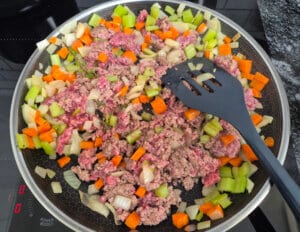
Add the flour and stir it thoroughly into the mince and vegetables.
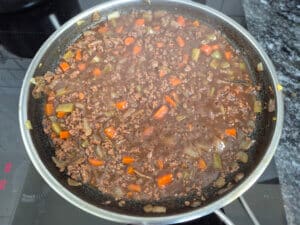
Once browned, add the port and wine and reduce by half. Then add the beef stock and tomato purée and simmer for around 20 minutes until the mixture thickens nicely.
Once the potatoes are soft, drain and leave them to steam dry for a few minutes to remove any excess water. Mash to a creamy consistency, adding milk and butter until smooth and silky.
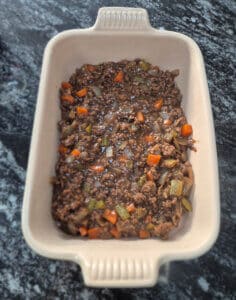
Now it’s time to build the cottage pie. Spoon the mince and gravy mixture into the bottom of a baking dish, then top with the mashed potato. You can pipe the potato for a more finished look, or simply spoon it on and spread it across the dish. Use a fork to create little ridges or peaks across the surface — these will catch and brown beautifully in the oven.
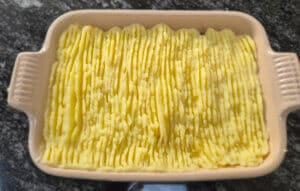
Place in an oven at 200°C (180°C fan) for 30–40 minutes. You’ll know it’s ready when the gravy is bubbling up around the edges and the mash is a gorgeous golden brown.
Leave to rest for 5 minutes before serving. Enjoy!