Table of Contents
Written by Martin Seymour | Editor, The Mayfair Foodie | About Me
This pork chop in a cider sauce recipe serves 4 and takes around 35 minutes to cook, making it an achievable midweek or weekend supper at an easy skill level. The dish uses 4 bone-in pork chops (ideally 2–2.5cm thick), cooked in a creamy sauce made from 350ml of dry or medium-dry cider, 175ml of chicken stock, 125ml of double cream, and a tablespoon of Dijon mustard, with banana shallots, garlic, fresh thyme, and a splash of brandy. The chops are pan-fried — fat cap first to render and crisp it, then 2–3 minutes per side — before a final butter-baste with garlic and thyme. They should be removed from the heat at an internal temperature of 60–61°C and rested for at least 5 minutes, during which the temperature will rise to the safe minimum of 63°C. A slight blush of pink in the centre is correct and intentional. The cider sauce can be made ahead of the chops and gently reheated; add a splash of stock or cider to loosen if it thickens in the fridge. For a lighter result, crème fraîche works well in place of double cream. Serve with creamy mashed potato, buttered greens, or new potatoes in season.


1 Why I Cook This Every Time I Have the Kitchen to Myself
A phrase Jamie Oliver used to reach for whenever he found two ingredients that belonged together was ‘Best Mates’. He may have coined it, and I’ll admit he overused it somewhat, but standing here in front of a pan of pork chops and a glass of dry cider, I find myself reluctantly agreeing with him. These two are genuinely made for each other.
Pork chops in our house are something of a treat — and not just because they’re delicious. My wife simply doesn’t like pork. Not in the form of a roast joint, not as a pork chop, not as pork loin. Bizarrely, however, she is perfectly happy with sausages, bacon, and gammon — which I am extremely grateful for. But the moment a proper chop appears, she’s out. So when she’s away for the evening, I take full advantage.
Pork chops in a cider sauce are one of my absolute favourite recipes. The creamy sauce — full of cider flavour with a gentle background hum of mustard — is just wonderful. What you serve alongside it depends very much on the season; creamy mash works beautifully year-round, and in winter, a pile of buttered greens or root vegetables makes it a proper supper. In summer, something lighter — maybe a simple dressed salad or some new potatoes — would be lovely.
The sauce is the easy part. The trickier bit, if I’m honest, is the pork chop itself. For generations, British home cooks were told to cook pork through completely with no trace of pink — and the result was tough, dry, joyless chops that put a lot of people off pork for life. My mother was one of them; a brilliant cook in many ways, but her pork chops were shoe leather by the time they reached the plate.
The good news is that guidance has moved on, and so has our understanding. A slightly pink, juicy pork chop is not only safe — it’s what you should be aiming for. My method below makes it straightforward. It’s the result of many attempts to get it right, and I’m confident you’ll get a great result.
The pork chop I used for this recipe came from Wylde Market, the online farmers’ market. It was organic, from a farm in Devon, and the quality made an obvious difference. Most good butchers will also have excellent pork — and it’s always worth knowing the story behind what you’re cooking. On other ingredients, I’ve used organic chicken bone broth (Wylde Market) instead of chicken stock, if you see it give it a try but a good chicken stock also works well.
2 Why Pork and Cider Work So Well Together
Pork has a natural sweetness and richness that can sometimes tip into heaviness, particularly with a cream-based sauce. Cider — especially a dry one — cuts straight through that. The acidity balances the fat, the apple fruitiness echoes and amplifies the sweetness of the meat, and the whole thing comes together as something greater than the sum of its parts.
A dry or medium-dry cider works best here. Avoid anything too sweet, or the sauce will lack definition. I’d also avoid very fizzy supermarket ciders — something with a bit of character, even a proper scrumpy if you can get hold of it, will give you a much better result. I used a Henry Western medium -dry organic cider; I managed to have a little drop left over to sample, and it was lovely.
3 Choosing the Right Pork Chop
Before you get anywhere near a pan, it’s worth putting some thought into the chop itself. A bone-in chop will give you more flavour and juicier meat than a boneless one. Aim for something at least 2–2.5cm thick — thin chops are very difficult to cook well, and you’ll almost certainly overcook them before they colour properly.
Don’t trim the fat cap. That layer of fat renders down during cooking, bastes the meat, and gives you the golden, slightly crisp edge that makes a pork chop look as good as it tastes. If you’re not going to eat it, you can always leave it on the side of the plate — but cook it with the fat on.
If you can source a heritage breed — Tamworth, Gloucester Old Spot, or similar — the flavour difference over standard supermarket pork is quite remarkable. A good butcher is the best place to look, or an online farmers’ market like Wylde Market, where you can find out exactly where the animal was raised.
4 What to Serve with Pork Chops in Cider Sauce
The sauce is creamy and substantial, so whatever you serve alongside it needs to either stand up to it or provide a clean, simple contrast. Here are the combinations that work best, with an eye on what’s in season.
Mashed Potato
The classic pairing, and for good reason. A properly made mash — generous with the butter, seasoned well — is the perfect vehicle for the cider sauce and available year-round. Use a floury variety like Maris Piper or King Edward.
Buttered Greens (in season now)
Spring greens, kale, savoy cabbage, or purple sprouting broccoli are all excellent right now. Simply blanched and finished with butter and a little salt, they add colour and a welcome bitterness that cuts through the richness of the sauce.
New Potatoes (from late spring)
British new potatoes come into season around May and June. Once they’re available, a bowl of simply boiled Jersey Royals with butter and mint is one of the finest things you can serve with a pork chop. Hold that thought for a couple of months.
Root Vegetables (Autumn/Winter)
Roasted or mashed root vegetables — celeriac, parsnip, swede — work beautifully alongside pork and cider. A celeriac mash or roasted parsnips with a little honey would be a wonderful alternative to potato if you want something slightly less straightforward.
Rice
A simple alternative to potato, and one that works well if you want to let the sauce do the talking. Plain steamed rice soaks up the cider sauce brilliantly.
5 Alternative Sauces for Pork Chops
The cider sauce is my go-to, but pork chops are genuinely versatile and worth experimenting with. Here are some combinations I’d encourage you to try.
Apple Sauce (Autumn and Winter)
Simple, classic, and the most natural companion pork has. A sharp Bramley apple sauce — just apples, a little butter, and sugar — provides the acidity and fruitiness that the cider sauce delivers in a different way. At its best when British apples are in season, from September onwards.
Creamy Mushroom Sauce
A pan sauce made with shallots, garlic, mixed mushrooms, a splash of white wine, and cream is a brilliant alternative — earthy, rich, and excellent year-round. A little tarragon added at the end makes it something special.
Mustard and White Wine Sauce
If you love the mustard element of the cider sauce, try pushing it to the front. Reduce a glass of white wine with shallots, add cream and a generous tablespoon of wholegrain mustard, and you’ve got a quick, punchy sauce that takes very little effort.
Onion Gravy
Slow-cooked onion gravy — properly made, with the onions given time to go sweet and golden — is the most British of companions for a pork chop. It’s a different mood entirely: comforting, old-fashioned, and very hard to argue with.
6 Frequently Asked Questions
Can I use pork loin steaks instead of chops?
You can, though bone-in chops are preferable for flavour and tend to stay juicier. If using boneless loin steaks, they’ll cook a little faster — watch the temperature closely and rest them just as carefully.
What cider should I use?
A dry or medium-dry still cider works best. Avoid overly sweet ciders, as they’ll make the sauce cloying. A scrumpy or proper West Country cider is ideal if you can get hold of one. You’re adding around 350ml, so use something you’d happily drink.
Can I use Apple juice instead of Cider?
Yes indeed, apple juice works well, a pressed organic apple juice will deliver more flavour
Can I make the sauce ahead of time?
Yes. The cider sauce reheats well over a low heat. You may need to add a splash of stock or cider to loosen it if it’s thickened in the fridge. Make it earlier in the day and gently warm it through while the chops rest.
Is it okay if the pork chop is slightly pink inside?
Yes — this is exactly what you’re aiming for. A slight blush of pink in the centre means the chop is juicy and cooked correctly. As long as you’ve hit an internal temperature of 63°C after resting (which the method above will get you to), it is perfectly safe. The days of cooking pork grey all the way through are, thankfully, behind us.
Can I use crème fraîche instead of double cream?
Yes. Crème fraîche gives a slightly lighter, tangier result, which some people actually prefer. It’s a good swap if you want to reduce the richness a little. Stir it in off the heat or at a very gentle simmer to prevent it splitting.
Can I use chicken thighs instead of pork chops?
Interestingly, yes — the cider sauce works very well with chicken too. It’s quite a different dish at that point, but the flavour combination is excellent. Pan-fry the thighs skin-side down until golden, then finish in the oven and serve with the sauce as written. I have also served chicken breasts in a cider sauce, it worked well.

7 Recipe-Ingredients & Method
Pork Chop in a cider sauce
Print RecipeIngredients
- 4 Pork Chops (2-2.5cm thick)
- 2 tsps of olive oil
- 3 banana shallots (or 1 med onion) finely shipped
- 2 cloves of garlic finely chopped
- 4-5 sprigs of thyme
- 2 tbsp of brandy
- 2tbsp of flour mixed in cold water
- 350ml of dry/med cider
- 175ml chicken stock
- 125ml of double cream (or creme freiche for a lighter version)
- 1 tbsp of dijon mustard
- Salt & pepper
Instructions
The Method
For the Cider Sauce
Heat the olive oil in a wide pan over a medium-low heat. Add the shallots and cook gently for 8–10 minutes until softened and just starting to colour. Add the garlic and cook for a further minute.
Add the brandy — it will sizzle and reduce quickly. Once almost gone, pour in the cider and add the thyme sprigs. Let it bubble at a gentle simmer and reduce by about a third.
Stir in the stock and then add the flour mixed with a little cold water, stirring to combine. Let the sauce simmer for a few minutes to cook out the flour.
Add the double cream and stir the Dijon mustard thoroughly into the sauce. Keep it at a gentle simmer. Season with salt and pepper and taste as you go — the mustard should be background warmth rather than the star.
Keep the sauce warm over a very low heat while you cook the chops. If it thickens too much, add a splash of stock or cider to loosen.
For the Pork Chops
Trim off any skin leaving a good covering of fat. Pat the chops completely dry with kitchen paper and season generously on both sides, and the fat cap, with salt and black pepper. If you have time, leave them to sit at room temperature for 30 minutes before cooking.
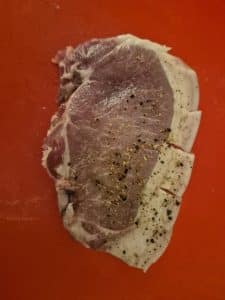
Heat a heavy-based or cast iron pan over a high heat until properly hot. Add a tablespoon of olive oil. Stand the chops on their fatty edge using tongs and hold them there for 2–3 minutes, until the fat is golden and crisped. This renders the fat and gives you a wonderful crackling-like edge.

Lay the chops flat in the pan. Cook for 2–3 minutes per side, turning every minute or so, until both sides are deeply golden. You’re building colour here, not cooking them through.

Reduce the heat to medium-low. Add a generous knob of butter, two bashed garlic cloves, and a sprig of thyme to the pan. Tilt the pan so the butter pools and baste the chops continuously with the foaming, herb-scented butter for 1–2 minutes.

Remove the chops when a probe thermometer reads 60–61°C in the thickest part, away from the bone. Rest them on a warm plate, loosely tented with foil, for at least 5 minutes. The temperature will continue to rise to around 63°C — the safe minimum for pork — and the juices will redistribute. Don’t skip this step.
Please note timings are based on a 2-2.5cm pork chop, if your pork chop is thinner or thicker adjust accordingly. If you are unsure that the pork is cooked once rested and when you with a sharp knife remove the chop from the bone and slice, that way you can check then to see that your chop is perfectly cooked. A lot of restaurants serve this way
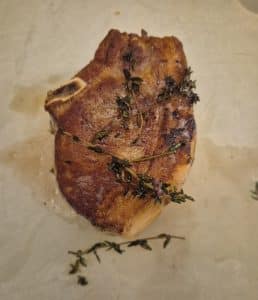
To Serve
Spoon any resting juices from the chops into the cider sauce and stir through. Plate the chops and pour the sauce generously over or alongside. A final pinch of flaky salt doesn’t go amiss.