Table of Contents
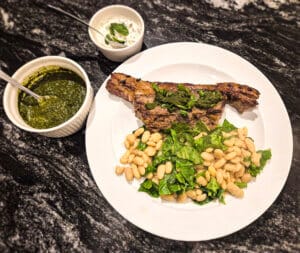
1 Served with White Beans, Spring Greens and Homemade Mint Sauce
Written by Martin Seymour | Editor, The Mayfair Foodie | About Me

Barnsley chops are thick, double loin lamb chops cut straight across the saddle, giving you both loins on either side of the backbone – essentially the T-bone steak of lamb. This traditional British cut originated at the Brooklands Hotel in Barnsley, South Yorkshire, in the early 20th century and typically measures 2-3cm thick. One Barnsley chop per person is sufficient due to the substantial size of the cut. This recipe serves the chops with white beans, spring greens, and homemade mint sauce for a balanced meal that takes approximately 25 minutes to prepare. Pan-fry for 4-5 minutes per side to achieve medium-rare (55-60°C internal temperature), remembering to render the fat edge first by holding the chop upright in the pan for 60-90 seconds. Barnsley chops are not commonly found in supermarkets – order from a quality butcher or online farmers’ market like Wylde Market for pasture-fed, organic lamb.
2 Why I Love Cooking Barnsley Chops
It’s funny how many British traditional dishes suddenly go out of fashion, then regain their popularity and come back with a bang. I think the Barnsley chop is a case in point. I spend a lot of time browsing restaurant menus and over the last few years have noticed this lovely double lamb loin cut creeping back onto menus at fashionable restaurants, and so it should – it’s a classic and a great alternative to a beef steak.
So when I was scrolling through Wylde Market, the online farmers’ market, and saw Barnsley chops, I had no hesitation in ordering them. My choice of sides might well raise a few eyebrows, but I wanted something that balanced the fat of the chop, and for me it had to be white beans. With the organic spring greens, lemon juice works well at complementing the lamb.
Obviously, the chop goes well with traditional roasties too. Below, I’ve added a selection of different serving suggestions along with other cooking tips and information.
One essential for me when eating lamb is to have a fresh homemade mint sauce. Once you’ve tried this, you’ll wonder why you ever bought the supermarket version.
Anyhow, I hope I’ve tempted you to cook a Barnsley chop. How you cook this easy-cook treat is up to you. For me, it works well as a dinner party centrepiece, a simple supper or even on the BBQ. When or what occasion you choose is up to you, but for me, I cooked them as a Valentine’s night treat, washed down with a nice French red from Bordeaux.
I don’t want to blow my own trumpet – it was down more to the quality of the produce – but they were delicious, and it was a simple but memorable meal.

Thanks to Harry & Emily Musbury, the lamb came from their farm in East Devon. They’re long-time advocates of regenerative, holistic farming practices that prioritise the well-being of the entire ecosystem, starting from the soil. If you head onto the Wylde website, you’ll see their full range of produce, including lamb, pork and beef, alongside many other farmers just like Harry & Emily. I should mention the spring greens are also organic, also purchased from Wylde Market, grown in East Cornwall. I love seeing a story behind the produce.
3 What is a Barnsley Chop?
A Barnsley chop is a thick, double loin lamb chop cut straight through the saddle – think of it as the lamb equivalent of a T-bone steak. Instead of getting a single loin like a standard lamb chop, you get both loins on either side of the backbone, making it substantially meatier and more impressive on the plate.

The cut is typically about 2-3cm thick and includes a good amount of fat around the edges that crisps up beautifully when cooked properly. Because you’re getting two loins in one chop, it’s perfect for hungrier appetites – one Barnsley chop is genuinely filling in a way a single lamb chop often isn’t.
The key difference from your standard supermarket lamb chops is the cut itself. Regular lamb chops come from cutting between the ribs along the rack, giving you that familiar single piece of meat on a bone. A Barnsley chop cuts perpendicular to this, straight through the saddle (the back section of the lamb), so you get a cross-section showing both sides of the loin with the backbone running through the middle.
What makes them special beyond the size is the quality of meat you’re getting. The loin is one of the most tender cuts on a lamb, and when you source them from pasture-fed, organic farms like Harry & Emily Musbury (where mine came from via Wylde Market), you get incredible flavour and texture that’s worlds apart from intensively farmed lamb.
They’re not commonly found in supermarkets, which is part of their appeal – this is proper butcher’s shop territory, the kind of cut that reminds you why building a relationship with a good independent butcher or farm shop matters.
4 History of the Barnsley Chop
The Barnsley chop gets its name from the Brooklands Hotel in Barnsley, South Yorkshire, where it was supposedly created (or at least popularised) in the early 20th century. The story goes that the hotel’s chef developed this particular cut to serve hungry businessmen and travellers who needed a substantial, impressive meal – one lamb chop that could genuinely satisfy rather than the daintier portions typical of the era.
Whether the Brooklands actually invented the cut or simply gave it a name and made it famous is debatable – butchers in Yorkshire had likely been cutting lamb this way for generations before any hotel got involved. But the Brooklands connection stuck, and “Barnsley chop” became the recognised term for this thick, double loin cut.
The cut reflects a particularly Northern approach to meat: straightforward, generous, and unpretentious. No faffing about with French trimming or elaborate presentation – just a proper thick chop that delivers on flavour and fills you up. It’s the kind of cut that speaks to Yorkshire’s reputation for plain speaking and good value.
Interestingly, while the name is thoroughly Yorkshire, the cut itself never became as ubiquitous as you might expect. It remains something of a specialist order, the kind of thing you need to ask your butcher for specifically rather than finding pre-packed in supermarkets. That’s kept it feeling special – a proper treat rather than midweek routine.
The Brooklands Hotel itself is long gone, but the legacy lives on every time a butcher cuts through the saddle and produces these magnificent double chops. It’s a small but satisfying piece of British culinary history that deserves to be better known.
5 What to Serve with Barnsley Chops
The beauty of Barnsley chops is they’re substantial enough to be the absolute star of the plate, but versatile enough to pair with everything from classic British sides to more modern combinations. Here’s what works:
Vegetables and Sides
My version uses white beans and spring greens with a squeeze of lemon juice – the beans provide creamy richness that balances the fat from the chop, while the spring greens add a slightly bitter, fresh contrast. The lemon juice cuts through everything beautifully and complements the lamb without overwhelming it.
For more traditional routes, you can’t go wrong with roast potatoes (the crispy kind with plenty of fat), creamy mash, or proper triple-cooked chips. Minted peas are classic for a reason – that sweet-savoury combination with lamb is hard to beat. Roasted root vegetables like carrots, parsnips, or celeriac work brilliantly too, especially if you’ve got pan juices to drizzle over them.
If you’re going the Mediterranean route, consider roasted tomatoes, sautéed courgettes, or a simple rocket salad with shaved Parmesan and balsamic. Puy lentils also work well. Couscous offers a Middle Eastern flavour, also in the region, hummus is often served with lamb
Sauces
For me, homemade mint sauce is absolutely essential with lamb – it’s fresh, sharp, and takes literally minutes to make. Once you’ve had proper mint sauce made with fresh mint, white wine vinegar, and a touch of sugar, you’ll never go back to the jarred stuff.

Other excellent options include redcurrant jelly (classic with lamb, sweet-tart and glossy), Greek yoghurt mixed with crushed garlic and chopped mint (cooling and creamy), red wine sauce made from the pan juices, Cumberland sauce (if you’re feeling fancy), or simply a good meat gravy made from the lamb drippings.
The key is choosing something with acidity or sweetness to cut through the richness of the meat – lamb fat needs balance.
6 Frequently Asked Questions
What’s the difference between a Barnsley chop and a regular lamb chop?
A Barnsley chop is cut across the saddle (the back section of the lamb), giving you both loins on either side of the backbone – essentially two chops in one. A regular lamb chop is cut between the ribs along the rack, giving you a single piece of loin meat on a rib bone. Barnsley chops are substantially bigger, thicker (usually 2-3cm), and more filling – one Barnsley chop equals roughly two regular chops in terms of meat.
Where can I buy Barnsley chops?

As previously mendtioned I ordered mine from Wylde Market’s Harry & Emily Musbury collection – specifically their pasture-fed organic lamb Barnsley chops. You can browse their full range here. Alternatively, good independent butchers or farm shops should be able to supply them, though you might need to call ahead and order as they’re not always on display – it’s a specialist cut that many butchers will prepare on request.
Can I use regular lamb chops instead?
Yes, you can adapt this recipe to use regular lamb loin chops or even double loin chops (sometimes called butterfly chops). You’ll need two per person rather than one, and adjust the cooking time down slightly as they’ll be thinner – probably 3-4 minutes per side rather than 4-5. The flavour combination with the white beans and spring greens works beautifully with any quality lamb chop.
What temperature should Barnsley chops be cooked to?
For pink/medium-rare (my preference and how most chefs serve lamb), you’re aiming for an internal temperature of 55-60°C. For medium, cook to 60-65°C. If you prefer well done, take it to 70°C or above, though the meat will be less tender and juicy. Use a meat thermometer inserted into the thickest part of the loin (avoiding the bone) for accuracy. Remember the chops will continue cooking slightly as they rest, so you can pull them off the heat a degree or two before your target temperature.
Do you need to marinate Barnsley chops?
Not at all – good quality lamb like pasture-fed organic doesn’t need much help. I simply season mine generously with salt and pepper before cooking. The lamb flavour is the star, and when you’re serving with something punchy like homemade mint sauce or garlic yoghurt, you want the meat to shine through rather than compete with marinade flavours. That said, if you want to add herbs, a quick rub with olive oil, crushed garlic, and rosemary 30 minutes before cooking works beautifully.
Are Barnsley chops expensive?
They’re more expensive than standard lamb chops, yes – you’re paying for a premium cut and, ideally, better quality lamb from farms practising higher welfare standards. Expect to pay £10-18 per chop depending on source and quality. That said, one Barnsley chop is genuinely filling, so while the price per chop is higher, you’re not paying much more per portion than buying two regular chops. I’d rather have one exceptional chop than two mediocre ones.
How many Barnsley chops per person?
One per person is standard – they’re substantial chops. If you’re serving particularly hungry eaters or doing a minimal sides situation, you could stretch to one and a half, but with proper accompaniments like white beans, greens, and potatoes, one is plenty. For children or lighter appetites, you could potentially split one chop between two people, though you’d need to carve it carefully.
Can you grill Barnsley chops instead of pan-frying?
Absolutely – they’re excellent on a barbecue or under a hot grill. For barbecue, cook over direct high heat for 4-5 minutes per side, exactly as you would in a pan. For overhead grilling, position the chops about 10cm from the heat source and cook for 5-6 minutes per side, watching carefully to prevent burning. The key with either method is getting a good sear on the outside while keeping the inside pink. Just make sure you render that fat cap properly by holding the chop fat-side-down with tongs for a minute or so.
What’s the best way to render the fat on a Barnsley chop?
Before you cook the flat sides of the chop, hold it upright with tongs so the fat edge is flat against the pan. Press it down gently and let it render for 60-90 seconds until the fat is golden and crispy. This not only gives you delicious crispy fat to eat, but also releases fat into the pan that helps cook the chop and adds flavour. Don’t skip this step – that rim of properly rendered fat is one of the best bits of the whole chop.
Do Barnsley chops need to rest after cooking?
Yes, absolutely – rest them for 3-5 minutes loosely covered with foil after cooking. This allows the juices to redistribute through the meat rather than running out onto the plate when you cut into them. The chops will also continue cooking slightly during this time (carryover cooking), which is why you can pull them from the heat a degree or two before your target internal temperature. Use the resting time to finish your sides or make a quick pan sauce from the lamb drippings.

7 Recipe-Ingredients & Method
Barnsley Chops
Print RecipeIngredients
- 2 Barnsley Chops
- 450g jar of white beans
- 2 Tbsp of Lemon Juice
- 2 Garlic cloves-grated
- 4 spring Cabbage leaves, ribs discarded
- 2 tsp of olive oil
- 3 tbsp of butter
- To make the mint sauce
- salt & pepper
- bunch of fresh mint
- 4 tbsp of red or white wine vinegar
- 1 level tbsp of caster sugar
- 4 tbsp of boiling water
- To make the Greek Yoghurt sauce
- 3 Tblsp of Greek Yoghurt
- Chopped mint
- 1 clove Finely Grated Garlic
Instructions
I suggest making the mint sauce in advance, it will keep for 2 or 3 days in advance but 30mins before serving is fine
Strip of mint leaves, sprinkle with a little salt & finely chop. Transfer to a mixing bowl, add the sugar and boiling water, mix well and leave to cool.
Stir in half the vinegar, taste add more if needed (I usually add more but its a question of taste). Transer to a serving dish and place in the fridge.
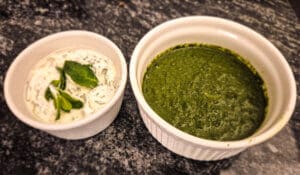
For the greek yoghurt sauce, mix chopped Mint & finely grated Garlic with 3 tbsps of greek yogurt.
Mix Half the butter with the garlic, set aside
Take the chops out of the fridge 20 mins before cooking. Season with salt & pepper
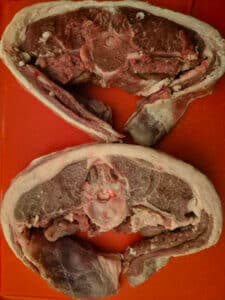
Heat the oil in a large frying pan, you actually only need to wipe the pan with the oil as the chops will provide most of the fat. Place the chops in the pan, the chops will take about 4/5 minutes each side depending on thickness to serve pink (I have added cooking temps to the FAQ’s section)
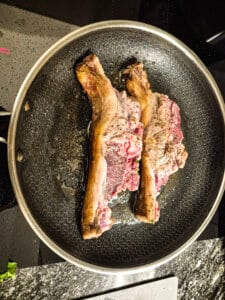
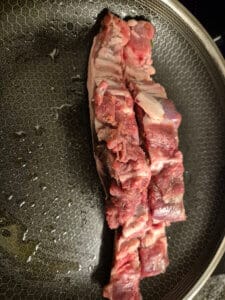
Take out chops to rest add the garlic butter to melt on the top of the chops
In a saucepan gently heat the beans in a pan with half the liquid from the jar, also blanch the spring greens in boiling water, for 1 minute and add greens the saucepan with a knob of butter and season with salt & pepper, before serving add the lemon juice.
If you prefer you can cook the beans in the pan that the chops cooked in, picking up a lot of the juices and fat from the pan.
Serve the chops, beans and spring greens on warm plate with a large spoonful of the fresh mint sauce on the side