Table of Contents
Written by Martin Seymour | Editor, The Mayfair Foodie | About Me
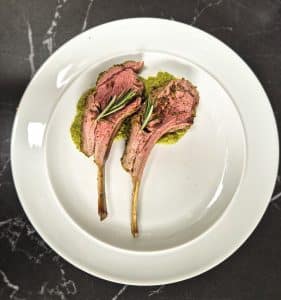
Herb-crusted rack of lamb is a classic British dinner party main course that serves 4, with a total cook time of 20–25 minutes at 220°C (200°C fan). The herb crust is made from fresh breadcrumbs (75–80g), finely chopped rosemary, flat-leaf parsley, optional thyme and Parmesan, bound with a drizzle of olive oil — blitzed together until vibrantly green. Dijon mustard is brushed onto the seared lamb before the crumb is pressed on, acting as both flavour layer and adhesive. For even cooking, a whole rack is divided into mini racks of 2–3 bones each: sear fat-side down for 2–3 minutes in a very hot pan, roast for 8–10 minutes, apply mustard and crumb, then return to the oven for a final 5–10 minutes. Always rest for 5–8 minutes under loose foil before carving. Target internal temperatures are 52–55°C for rare, 57–60°C for medium rare (the recommended sweet spot), and 63–65°C for medium. The dish is served here on a bed of minted pea purée.


1 Why I Always Divide a Rack of Lamb Into Mini Racks
If you’re like me — a keen watcher of MasterChef on TV — one of the most popular faux pas made is the cooking of a rack of lamb, along with the chocolate fondant. Very often, the lamb is undercooked and the fat barely rendered down. Trust me, I do get the pressure of the competition, and the time constraints can turn accomplished cooks into headless chickens.
I love rack of lamb and have been cooking it on and off for years, and not under competition pressure. I usually get it right. I like it med/rare, and my wife likes it more med/well, which is not an issue as I invested in an internal meat thermometer — it takes all the stress and guesswork out of cooking meat perfectly. I’ll put a temperature guide below, but one reason I think it’s difficult to judge is that most people cook a whole rack, which means the middle of the rack takes longer to cook. I divide it into mini racks, as it cooks more evenly.
I’ve added serving suggestions — I serve my lamb on a bed of pea puree, which looks nice, and the minted peas add to the flavour. As it was a Sunday, I also served traditional Sunday roast accompaniments: roast potatoes, red cabbage, honey-roasted carrots and parsnips, baby leeks in white sauce, and a red wine and lamb gravy. As you’ll see below, herb-crusted rack of lamb works well whatever the season — give it a go and remember to bow when you take the applause from your happy assembled guests.

2 Why Rack of Lamb Has a Reputation for Going Wrong
Rack of lamb sits in that slightly intimidating category of restaurant dishes — the kind that looks effortlessly elegant on a plate but can go sideways surprisingly fast at home. The MasterChef cliché exists for a reason: timing is everything, and a whole rack is genuinely tricky to judge. The outer chops cook faster than the middle, the fat needs proper rendering, and a minute or two either side of perfect makes a real difference to the eating.
The good news is that splitting into individual mini racks (I suggest three bones each) largely solves the timing problem, and a decent meat thermometer solves the rest. Once you’ve got those two things in hand, herb-crusted rack of lamb stops being a high-wire act and becomes one of the most reliable and rewarding things you can cook for guests.
3 What Is French-Trimmed Rack of Lamb?
When you buy a rack of lamb, you’ll often see it described as ‘French-trimmed’ or ‘frenched.’ This refers to the process of cleaning the rib bones — scraping away the fat and meat from the upper portion to expose the last few centimetres of bone. It’s purely aesthetic, but it gives the rack that elegant crown appearance and means the bones can be used as a natural handle when carving or eating.
Most good butchers and supermarket counters sell racks already French-trimmed. If yours isn’t, it’s straightforward to do yourself with a sharp knife — simply score around the bone and scrape clean. Those exposed bones are also what make the rack look so striking when it comes to the table, which is part of the reason it’s such a natural dinner party dish.
4 Choosing the Best Lamb — Why Quality Really Matters Here
With a recipe this simple — a handful of herbs, good breadcrumbs, mustard — the quality of the lamb carries most of the weight. This is not the place to cut corners on the meat.
For this recipe, I used lamb from Wylde Market (wyldemarket.com), an online farmers’ market supplying organic and pasture-raised British produce. Their lamb is grass-fed and slower-grown than supermarket alternatives, which translates directly into flavour — deeper, more complex, genuinely lamby in the best sense of the word. With rack of lamb in particular, where the cooking is quick, and the cut is naturally lean, that quality of flavour comes through clearly in every mouthful.

Look for racks with good fat coverage across the top — that’s the fat that renders down during the sear and roast, basting the meat and carrying flavour into the crust. Organic, pasture-raised lamb also tends to have a slightly deeper colour to the meat, which is a reliable indicator of how the animal was raised.
5 The Herb Crust — Simple, Fragrant and Brilliant
The herb crust for rack of lamb is about as unfussy as it gets: fresh breadcrumbs, rosemary, flat-leaf parsley, finely grated Parmesan can also be added, and a drizzle of olive oil. The Parmesan might raise an eyebrow — it’s not a classic British addition — but it does something clever here, adding a savoury, slightly nutty depth that amplifies the herbs rather than competing with them.

A few things worth noting on the crust:
- Use fresh breadcrumbs, not dried panko. Blitz a couple of slices of stale white bread — you want texture that clings and crisps rather than dusty crumbs that fall away.
- Rosemary is the dominant flavour — chop it finely so it integrates into the crust rather than sitting in tough little spikes.
- Flat-leaf parsley adds freshness and colour. Curly parsley works fine but flat-leaf has a cleaner flavour.
- The olive oil binds everything and helps the crust colour in the oven. You don’t need much — just enough to bring the mixture together.
The Dijon mustard painted onto the lamb before you press on the crust does two things: it adds a gentle heat and tang that cuts through the richness of the lamb, and it acts as the glue that holds the crumb in place during the final blast in the oven. Don’t be shy with it.
6 The Dinner Party Trick: Sear Your Lamb Before Guests Arrive
If you cook in a kitchen-diner, you’ll know the problem with pan-searing meat when guests are there: the smoke. Even with an extractor running, searing a rack of lamb in a scorching hot pan generates enough smoke to fill a room and set off the alarm — not the ambience you’re going for.
The solution is simple: sear the lamb before anyone arrives. Here’s how to do it properly:
- Sear the racks completely — fat-side down first for 2–3 minutes until deeply golden, then all other sides for 1–2 minutes each. You’re building colour and rendering the fat, not cooking through.
- Place on a wire rack and allow to cool completely at room temperature.
- If guests are arriving within an hour or two, leave uncovered at room temperature. If it’s longer, refrigerate uncovered.
- When you’re ready to cook, take the lamb out 20–30 minutes before it goes in the oven — cold lamb straight into a hot oven cooks unevenly.
- Roast as normal, applying mustard and crumb partway through. Add 3–4 minutes to the first roasting stage if the lamb has come from the fridge.
The sear can absolutely be done a few hours ahead. The smoke will be long gone, the kitchen will be calm, and you’ll look effortlessly composed when you pull a perfect herb-crusted rack of lamb out of the oven.
7 How to Cook Herb Crusted Rack of Lamb — Step by Step
The full recipe and ingredient quantities are in the recipe card below, but here’s the logic behind each stage:
1. Bring the lamb to room temperature
Non-negotiable. Cold meat goes into a hot pan unevenly and cooks unevenly in the oven. Give it 30–40 minutes on the counter before cooking.
2. Make the herb crumb
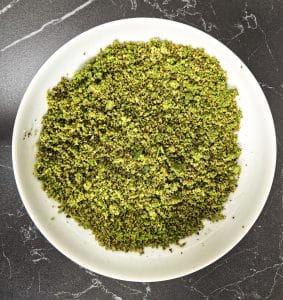
Add breadcrumbs, rosemary, parsley and thyme (you can add finely grated parmesan at this stage). Put the mixture in a blender and blend until the herbs and breadcrumbs are combined; it should look vibrant green. Add a small dash of olive oil to bring together. It should hold together when pressed but not be wet or greasy. Make this ahead — it keeps happily in the fridge for a couple of hours.
3. Sear hard and fast
A heavy-based pan over a very high heat. Fat-side down first — that’s where most of the flavour development happens. Two to three minutes until deeply golden, then all other sides. This step is about Maillard reaction — the browning that creates flavour. Don’t rush it and don’t move the meat around.
4. First roast (oven at 220°C / 200°C fan)
Eight to ten minutes for small individual racks from room temperature. If you’re cooking a larger rack, expect longer — this is exactly why a thermometer matters more than any timing.
5. Apply mustard and crumb
Pull from the oven, brush generously with Dijon mustard over the fat and meat surfaces, then press the herb crumb on firmly. Work quickly — you’re not returning to the oven for long.
6. Final blast
Five to ten minutes until the crumb is golden and crisp. Start checking the internal temperature at five minutes. Timings vary depending on the thickness of the lamb and how you like your lamb served.
7. Rest & Serve
Five to eight minutes under a loose tent of foil. This is not optional — the muscle fibres relax, and the juices redistribute. Cut too early, and they run straight out onto the board. The internal temperature will also rise a few degrees during this time. Once rested cut the lamb rack with a sharp knife into individual chops.
8 Internal Temperature Guide for Rack of Lamb
This is the most reliable way to cook lamb perfectly every time. Probe at the thickest part of the meat, away from the bone.

Rack of lamb is at its absolute best at medium rare — the meat stays pink, tender and juicy throughout. Once you push past medium/well, you’re into dry territory quickly. A few degrees makes a meaningful difference here, which is why the thermometer earns its place on the counter every time.
9 Rack of Lamb Around the World — How to Adapt It to Any Occasion
One of the things I love most about rack of lamb is how well it travels across different cuisines. The basic technique — sear, roast, rest — stays the same. What changes is the crust, the sides and the sauces, and those three things can take you from a classic British Sunday roast to a Moroccan-inspired summer feast without much effort at all. Here’s how I think about it.
The Classic British Sunday Roast
This is the version in the recipe card and the pictures above, and it’s the one I reach for most often. The rosemary-Parmesan herb crust is at home alongside everything the British roast does well: crispy roast potatoes, honey-roasted carrots and parsnips, braised red cabbage, and a proper red wine and lamb gravy. Baby leeks in white sauce might be the sleeper hit of the plate — the creaminess works beautifully against the herb crust.
This is the ideal combination for autumn through to early spring, when root vegetables are at their best and the idea of something warming and generous on the table is hard to beat. Rack of lamb is a natural upgrade on the Sunday joint — it feels special without requiring anything fundamentally different from your usual roast repertoire.
Middle Eastern and North African — Summer on a Plate
Lamb is central to Middle Eastern and North African cooking, and rack of lamb responds brilliantly to those flavours. For a summer version, tweak the crust: swap the Parmesan for a pinch of cumin and coriander, add some finely grated lemon zest, and work in a small amount of harissa or za’atar. The mustard base still works as the adhesive — or try a smear of harissa directly on the lamb instead.
For the sides, think along these lines:
- Herby lemon couscous with toasted pine nuts and dried apricots
- Preserved lemon and chickpea salad with fresh coriander and mint
- Roasted aubergine with pomegranate molasses and flat-leaf parsley
- A cooling cucumber and yoghurt sauce (tzatziki or raita) alongside
The brightness of preserved lemon against lamb fat is one of those flavour combinations that feels inevitable once you’ve tried it. This version works equally well as a summer dinner party centrepiece or an al fresco lunch, and the colours on the plate are spectacular.
French — Dauphinoise and a Good Bordeaux
France has a long and distinguished tradition with rack of lamb, and the classic French approach keeps the herb crust much as it is — fine herbs, a little garlic worked in, perhaps some thyme alongside the rosemary — and pairs it with gratin dauphinoise. That combination of crispy herb crust and silky, cream-drenched potato gratin is genuinely hard to improve on.

For a French-inspired plate, consider:
- Gratin dauphinoise — the definitive pairing, rich and deeply comforting
- Haricots verts with a little butter and tarragon
- A simple dressed green salad to cut through the richness
- A red wine reduction sauce made with the roasting juices, a splash of Bordeaux or Burgundy, and good lamb stock
The crust works especially well here because the Parmesan and rosemary sit naturally in the French flavour register. Add a crushed clove of garlic to the crumb mix if you’re going this route.
Greek — Lemon, Oregano and Open Fires
Greek cooking has an almost philosophical relationship with lamb, and rack of lamb adapts beautifully to that tradition. For a Greek-inspired version, shift the crust: replace the rosemary with dried Greek oregano, add plenty of lemon zest, and work in a little crumbled feta instead of (or alongside) the Parmesan. The result is brighter and more aromatic, with that characteristic Mediterranean tang.
For the sides in summer, this version pairs brilliantly with:
- A proper Greek salad — ripe tomatoes, cucumber, Kalamata olives, red onion, and a thick slab of feta
- Warm pitta or flatbread
- Tzatziki and a drizzle of good olive oil
- Orzo baked in tomato and stock (a Greek-style pastitsio base, essentially)
In cooler months, swap the Greek salad for oven-roasted lemon potatoes — the kind slow-roasted in stock, olive oil, lemon juice and oregano until almost melting. That combination with the herb-crusted rack is extraordinarily good.
Indian-Inspired — Spice Up the Crust
Lamb and spice are natural partners, and it’s very easy to take the herb crust in an Indian direction without changing the fundamental technique at all. Replace the rosemary and parsley with a teaspoon of garam masala, ground cumin, and a pinch of chilli, and work in some fresh ginger and coriander leaf. The mustard base is surprisingly compatible — or use a thin layer of mango chutney as the adhesive instead for a slightly sweeter note.
Sides that work well with a spiced crust:
- Saffron rice or a simple pilaf with cardamom and toasted almonds
- Saag (spinach) with a little cream and nutmeg
- Minted yoghurt and a wedge of lemon
- Naan or flatbread for the sauce
This is also a brilliant direction for a summer BBQ — the spiced crust chars beautifully over coals and the aroma is exceptional.
BBQ — Fire, Smoke and the Herb Crust
Rack of lamb on the BBQ is one of the best things you can cook over coals, and the herb crust holds up well to the heat if you’re careful about it. The approach is slightly different from the oven method: sear over direct high heat first (fat-side down, same as always), then move to indirect heat with the lid closed to finish. Apply the mustard and crumb for the last five minutes over indirect heat so it crisps rather than burns.
translatesThe added dimension from the BBQ is smoke, and it plays well against rosemary in particular. Keep your crust fairly robust and press it on firmly — it needs to be able to handle a little more handling than the oven version. Any of the cuisine variations above translate to the BBQ: the Middle Eastern spiced crust is especially good over coals, and the Greek oregano-lemon version is a natural for an outdoor summer lunch.
Your meat thermometer is even more important here than in the oven — BBQ temperatures are harder to control precisely, so don’t rely on timing alone.
10 Make-Ahead Tips and Storage
Making ahead for a dinner party
The advance sear method (detailed above) is genuinely the best approach for entertaining. Sear up to two hours before guests arrive, refrigerate if needed, and finish in the oven when you’re ready. The herb crumb mixture can also be made earlier in the day and kept in the fridge.
Storing leftovers
Cooked rack of lamb keeps well in the fridge for up to three days, wrapped or in an airtight container. The herb crust will soften overnight but the flavour remains excellent.
Reheating
For best results, bring refrigerated cooked lamb to room temperature first, then reheat in an oven at 160°C (fan 140°C) for 10–12 minutes — just enough to warm through without continuing to cook it. A microwave will do the job but the crust won’t survive it.
Can you freeze it?
You can freeze a cooked rack of lamb for up to two months, but the herb crust loses its texture on defrosting. If you want to freeze ahead, sear and freeze before adding the crumb, then defrost thoroughly in the fridge, apply the crumb, and finish in the oven from cold (adding a few extra minutes).
11 Variations on Herb Crusted Rack of Lamb
- Panko breadcrumbs — for a lighter, crispier crust with more visual texture. The crumb tends to stay more separate rather than forming a cohesive casing, which some people prefer.
- Mint in the crust — finely chopped fresh mint alongside or instead of parsley gives a classic British lamb flavour note. Use sparingly or it can dominate.
- Garlic — a clove or two of finely minced garlic worked into the herb crust adds depth. Gordon Ramsay’s version leans into this and it works very well.
- Walnut crust — replace some of the breadcrumbs with finely blitzed walnuts for a nuttier, slightly richer crust that pairs particularly well with a red wine sauce.
- Pistachio crust — a restaurant favourite. Blitz shelled pistachios with the breadcrumbs for a vivid green crust that looks stunning on the plate. Pairs beautifully with a pomegranate reduction.
- Harissa-spiked mustard — mix a teaspoon of harissa into the Dijon before brushing it onto the lamb for a gentle warmth and North African note.
12 Frequently Asked Questions
How long does rack of lamb take in the oven?
For individual mini racks (two to three bones each), expect 11–20minutes total in a 220°C oven — around 10 minutes for the first roast, then 5-10 minutes after applying the crumb. A whole rack will take 20–25 minutes, depending on size. Always use an internal thermometer rather than relying solely on timing.
How do I stop the herb crust falling off?
Two things: make sure the mustard layer is generous (it’s the adhesive), and press the crust on firmly with your hands rather than just sprinkling it on. Letting the lamb cool slightly after the first roast before applying the crumb also helps the mustard set slightly before the crumb goes on.
Can I use dried herbs instead of fresh?
You can, but fresh herbs make a significant difference here. Dried rosemary in particular can be quite sharp and woody. If you do use dried, reduce the quantity by roughly half and crush the rosemary in a pestle and mortar first to soften the texture.
What’s the difference between a rack of lamb and lamb chops?
A rack of lamb is a section of the rib cage with multiple connected bones, sold as a single joint. Individual lamb chops (or cutlets) are the same cut but separated. When you carve a cooked rack between the bones, you’re essentially producing individual lamb cutlets. Serving as a rack makes for better presentation and more consistent cooking.
Do I need to rest the rack of lamb?
Yes — always. Five to eight minutes under loose foil. Skipping the rest means the juices run straight out when you carve, leaving the meat drier than it should be. The internal temperature also continues to rise during resting, so factoring in that carryover is part of hitting your target doneness.
Can I cook rack of lamb from frozen?
Not directly — always defrost fully in the fridge overnight before cooking. Cooking from frozen leads to uneven results, with the outside overcooked before the centre reaches a safe temperature.
What wine goes with herb-crusted rack of lamb?
Red wine is the natural choice — specifically something with enough structure to stand up to the richness of the lamb but not so tannic it overwhelms the herb crust. A Rioja Reserva, a Bordeaux, or a Burgundy (Pinot Noir) all work beautifully. If you prefer white, a full-bodied Viognier or a white Burgundy (Chardonnay) is an interesting alternative.
Is rack of lamb expensive?
It’s not the cheapest cut — but for a dinner party, four individual mini racks (two to three bones each) means you’re looking at very manageable portion costs, especially compared to a restaurant. Buying from a quality supplier like Wylde Market (wyldemarket.com) means you’re getting organic, pasture-raised lamb at a fair price, and the eating quality justifies every penny.
Can I cook herb-crusted rack of lamb on a BBQ?
Yes — with some adaptation. Sear over direct high heat first, then move to indirect heat with the lid on to finish. Apply the crumb for the final few minutes over indirect heat. It’s less controlled than an oven but the added smokiness from the BBQ works remarkably well with the herb crust. Use your thermometer — it’s even more important here.
How many bones per person for a rack of lamb?

Two, three or even four bones per person is the standard portion as a main course, which is why splitting into individual mini racks works so well. A lot depends on the size and thickness of the lamb and your appetite. For this recipe, I served 3 chops per person as they were thick racks.
13 Full Recipe-Ingredients & Method
Herb Crusted Rack of Lamb
Print RecipeIngredients
- Rack of lamb, I bought 2 x 6 bone rack and cut into 3 rack portions
- 2 tbsp Parsley
- 2 tbsp Rosemary
- 2 tbsp Thyme (optional)
- 1 tbsp Parmasan (optional)
- 75-80g Breadcrumbs
- 1 Tsp Olive oil
Instructions
Method
Remove the lamb from the fridge 30–40 minutes before you plan to cook. Cold meat in a hot pan is never a good idea — it seizes up, cooks unevenly, and you’ll struggle to get a good sear. This step is non-negotiable.
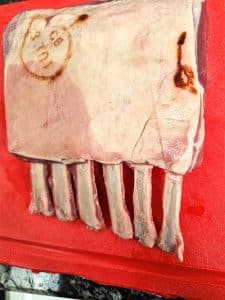
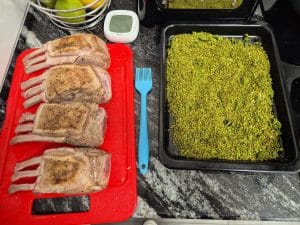
While the lamb comes to temperature, make your herb crumb. Add the breadcrumbs, rosemary, parsley and thyme to a blender — along with the finely grated Parmesan if you’re using it — and blitz until the herbs and breadcrumbs are fully combined and the mixture looks vibrantly green. Add a small dash of olive oil and pulse again to bring it together. It should just hold when pressed without feeling wet or greasy. This can be made a couple of hours ahead and kept in the fridge.
When you’re ready to sear, get a heavy-based frying pan over a very high heat until it’s properly smoking. Season the lamb generously with salt and pepper. Place fat-side down first and leave it — don’t be tempted to move it around. Two to three minutes until the fat is deeply golden, then turn and sear all remaining sides for a minute or two each. You’re building flavour here through the Maillard reaction, not cooking through.
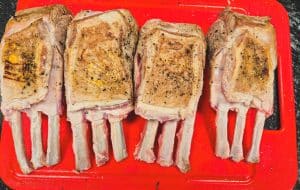
Transfer the seared racks to a wire rack set over a roasting tin and place in a preheated oven at 220°C (200°C fan). Roast for 8–10 minutes for small individual racks from room temperature. A larger rack will need longer — trust your thermometer over any timing.
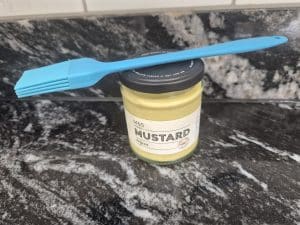
Remove from the oven and brush the fat and meaty surfaces generously with Dijon mustard — it’s both the flavour layer and the glue for your crumb. Press the herb crumb on firmly with your hands, covering all the mustard-coated surfaces. Return to the oven for a final 5–10 minutes until the crumb is golden and crisp. Start checking the internal temperature at the 5-minute mark. Timings will vary depending on the thickness of your racks and how you like your lamb — refer to the temperature guide above.
Once your target temperature is reached, transfer the racks to a warm plate and tent loosely with foil. Rest for 5–8 minutes — the muscle fibres need time to relax and the juices to redistribute. Skip this and they’ll run straight out the moment you cut. The internal temperature will also continue to rise slightly during resting.
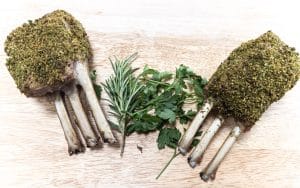
To serve, carve between the bones into individual chops using a sharp knife.