Table of Contents
Written by Martin Seymour | Editor, The Mayfair Foodie | About Me

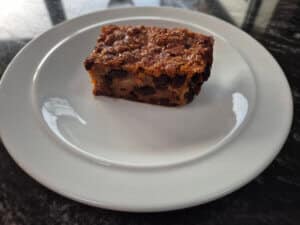
Sourdough bread pudding is a classic British baked dessert with roots dating back to the 11th and 12th centuries, traditionally made to use up leftover or stale bread. This recipe uses 500g of sourdough as the base, combined with 580g of mixed dried fruit, full-fat milk, eggs, butter, brown sugar, mixed spice and lemon zest, baked for 90 minutes at 180°C until set and golden. Sourdough is particularly well suited to bread pudding — its open crumb absorbs the egg and milk mixture without turning claggy, and its mild tang adds a subtle depth of flavour that plain white bread doesn’t provide. The recipe makes approximately 16 portions, keeps well in the fridge for three to four days, and freezes for up to three months. British bread pudding differs from its American counterpart in that it is denser and firmer — closer in texture to a fruit cake — and can be served warm or cold, with or without custard or clotted cream.
1 How This Recipe Came About
It was a Saturday morning and I’d just finished making myself a bacon and brie sandwich — a rather good brunch, as it turned out. As I tidied up, I noticed the rest of the sourdough loaf sitting on the counter and, in one of those odd flashes of inspiration, it struck me: bread pudding. Which, when you think about it, is exactly what bread pudding was invented for — using up leftover bread that would otherwise go to waste. My mum was coming over for Sunday lunch the next day, and suddenly it seemed like exactly the right thing to make. She used to make it when I was young, and it was one of my absolute favourites — I knew mum still loved it, and I doubted she’d made one in years, as she does very little cooking now.
The only question was the bread. I had most of a sourdough loaf left over from brunch, and, looking online, I could only find one recipe using sourdough for a traditional bread pudding — and it seemed less than convincing. Undeterred, I pressed on, drawing on a recipe I’d used many years ago for a standard loaf. Did it work? Well, the fact you’re reading this probably gives the game away.
It turned out brilliantly. Mum was delighted and ended up taking a good portion home with her (it keeps well in the fridge for three or four days). The only tweak I made to the classic recipe was an extra scattering of demerara sugar on top for that irresistible crunchy crust. And the sourdough? It worked beautifully — the slight tang of the bread adds a subtle depth you simply don’t get with a standard white loaf. I ordered mine from Wylde Market, the online farmers market, along with the milk in the recipe, and the quality of their produce really does make a difference, I would highly recommend taking a peek at their website.
Finally, I do urge you to give this recipe a go as it’s super easy and turned out lovely.
2 A Brief History of Bread Pudding
Bread pudding is one of Britain’s oldest and most practical puddings. Its origins stretch back to the 11th and 12th centuries, when wasting food was simply not an option for most households. Stale or leftover bread was too precious to throw away, so thrifty cooks would soak it in water, mix it with fat, sugar and whatever dried fruit they had to hand, and bake it into something warming and substantial. In medieval times it was known as “poor man’s pudding” — simple, cheap and filling.
By the 18th and 19th centuries, bread pudding had become a staple across Britain, made in every household from grand country houses to the most modest terraced kitchens. Dried fruit — sultanas, raisins, currants and mixed peel — became the standard additions as the dried fruit trade expanded, and the spicing with cinnamon and nutmeg gave it a warmth that made it genuinely comforting. School dinner halls and works canteens kept the tradition alive well into the 20th century, serving generous squares to generations of children and workers. My mum has memories of going to the baker’s on the way to school, buying a portion of bread pudding for one old penny, this was a long time ago, as she is 91!
It’s worth noting that British bread pudding is quite different from the American bread pudding you might find in recipes online. Ours is denser, richer and less custard-like — closer to a fruit cake in texture, baked firm enough to cut into squares and eat in your hands if you wish. It’s not a dessert that needs cream or custard to work, though nobody would blame you for adding some.
3 Why Sourdough Works So Well Here
The original appeal of bread pudding was using up bread that had gone stale, and sourdough is particularly well-suited to this. Its open crumb structure soaks up the egg, milk and sugar mixture beautifully, holding everything together without becoming soggy or disintegrating. Where a supermarket white loaf can turn a little claggy, sourdough stays structured and gives the finished pudding a satisfying, almost chewy texture in places.
The mild tang of sourdough also does something rather lovely to the overall flavour. It cuts slightly through the sweetness of the dried fruit and the richness of the egg mixture, adding a subtle complexity that you simply won’t get with plain white bread. It’s not sour in the finished pudding — the baking mellows it right out — but there’s an extra dimension there that makes it noticeably better.
If you don’t have sourdough to hand, a standard white sandwich loaf will work perfectly well with this recipe — it’s the classic version, after all. But if you do have a leftover sourdough loaf that’s a day or two old, I’d strongly encourage you to try it this way first.
4 Serving Suggestions
Traditional bread pudding doesn’t strictly need anything alongside it — it’s substantial enough to stand alone as a mid-afternoon treat or a simple dessert. That said, a small jug of warm custard is never a bad idea, and a dollop of clotted cream takes it somewhere decidedly indulgent. For a lighter option, a spoonful of crème fraîche cuts through the richness nicely. Dust with a little icing sugar before serving if you want to make it look the part.
5 Frequently Asked Questions
Can I use fresh sourdough rather than stale?
Stale bread is ideal because it absorbs the liquid without turning to complete mush. If your sourdough is fresh, slice or tear it the night before and leave it out uncovered to dry out. In a pinch, you can dry it in a low oven (120°C) for 15–20 minutes, though staling naturally overnight gives a better result.
Does it matter which type of sourdough I use?
A standard white or country sourdough loaf works best here. Seeded or heavily wholegrain sourdoughs can make the texture a little dense and may bring a stronger flavour. A good quality white sourdough with an open crumb, like the ones from Wylde Market, is ideal.
Can I leave out the mixed peel?
Absolutely. Mixed peel is traditional and adds a lovely citrus note, but it’s divisive — plenty of people dislike it. The pudding works perfectly without it. If you’re leaving it out, a little extra lemon zest will compensate for the citrus element.
Can I freeze bread pudding?
Yes — it freezes brilliantly for up to three months. Cut into portions once cold, wrap individually and freeze. Defrost in the fridge overnight and reheat gently. The texture holds well and it’s one of those things that’s just as good from frozen as fresh.
How do I know when it’s cooked through?
Insert a skewer or thin knife into the centre of the pudding — it should come out clean with no wet mixture clinging to it. The top should be a deep golden brown and feel firm to the touch. If it’s browning quickly but the centre still feels soft, cover with foil and continue baking.
Can I add other dried fruits?
Of course. Dried cranberries, chopped dates or dried apricots all work well alongside or instead of the traditional mix. Just keep the total dried fruit weight roughly the same so the balance of the recipe stays right.
Can you reheat Bread Pudding?
Yes indeed, reheat individual portions in a microwave for 30-45 seconds, or warm it in a low oven (150°C) for about 10 minutes.
6 Recipe-Ingredients & Method
Sourdough Bread Pudding
Print RecipeIngredients
- 500g Sourdough bread , cut into small pieces
- 580 g of mixed dried fruit
- 1 1/2 tsp of mixed spice
- 600ml full fat milk (organic if poss)
- 150g light brown sugar
- 100g Melted butter
- 2 med eggs
- zest from 1 lemon
- 3g Salt
- 4 tbsp of Demerara sugar
Instructions
- Add the dried fruit — sultanas, raisins and currants — to the soaked bread, along with the mixed peel if you’re using it, the mixed spice and lemon zest. Give everything a good mix to combine
- Pour in the milk and get your hands in — squeeze the mixture together until it becomes a combined, even mush. Don’t be shy about it, this is hands-on cooking.
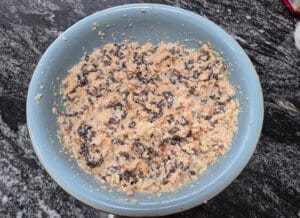
- Leave the mixture to sit and absorb for 15 minutes. This is the point where the sourdough really does its job.
- Meanwhile, preheat your oven to 180°C / 160°C fan / 350°F and grease or line an 8-inch square cake tin.
- Beat the eggs and sugar together and pour over the bread mixture, stirring until fully incorporated. Follow with the melted butter and mix again until everything comes together nicely.
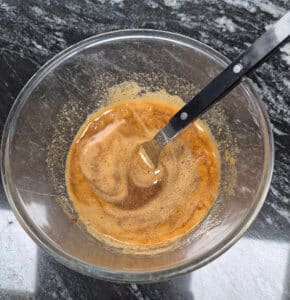
- Spoon the mixture into your prepared tin, spreading it out evenly and pressing it down firmly across the base.
- Scatter a generous amount of demerara sugar over the top — don’t hold back here, this is what gives you that wonderful crunchy crust.
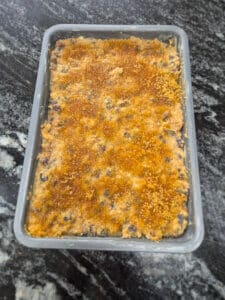
- Bake for 90 minutes until deep golden brown and set firm in the centre.
- Remove from the oven and leave in the tin for 15 minutes before turning out onto a wire rack. Try to resist cutting into it straight away.
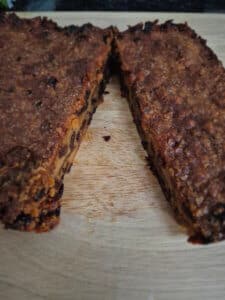
- Cut into squares and serve warm. Though it’s honestly just as good the next day — if it lasts that long!