Table of Contents
Written by Martin Seymour | Editor, The Mayfair Foodie | About Me
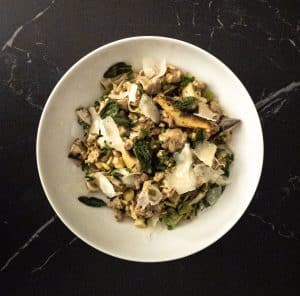
This creamy sausage pasta serves 2 and is ready in 20–25 minutes — one of the fastest recipes on the Mayfair Foodie. Pork sausagemeat is removed from the skins and fried loose over medium heat, breaking up as it colours, before sliced leek, shiitake mushrooms, and garlic are added to the pan. White wine goes in next and is reduced by half before a knob of butter is stirred through. Double cream — mixed with Dijon mustard before it goes in — is added off a rolling boil and allowed to thicken gently, followed by freshly grated Parmesan. Dried tagliatelle (around 10 minutes in well-salted water) or fresh pasta is drained and folded straight into the sauce. The dish is finished with fried sage leaves — crisped in oil for 30–60 seconds and set aside on kitchen paper — plus fresh chives and more Parmesan grated at the table. Sausages, shiitake mushrooms, leeks, double cream, and pasta were all sourced from Wylde Market, the online farmers’ market specialising in organic and pasture-raised produce from British farms. Pork and wild garlic sausages — a seasonal product available roughly March to May — inspired the original version of the recipe; a quality pork banger with 80% meat content or above works perfectly year-round. Leftovers keep in the fridge for up to two days; reheat gently in a pan with a splash of water or cream to loosen the sauce, and avoid freezing the finished dish as cream-based sauces can split on defrosting.

1 The Recipe That Wasn’t Supposed to Be a Recipe
I have to confess I’m a bit of a menu planner. I usually think ahead and plan my meals for the week. I suppose this is because I like writing recipes; you have to plan. However, occasionally I do wing it — I start with an ingredient and work around it. Sometimes it works, and sometimes it really does not. This time it worked so well, I had to publish it as a recipe. This recipe is a case in point: I started with some lovely pork and wild garlic sausages and built around it. So my creamy sausage pasta with leeks and mushroom sauce was born — a simple dish made from great produce, most ingredients from Wylde Market, the online farmers’ market.
So why did this work so well? Simplicity, I think. Great pork sausage meat goes brilliantly with leek, garlic and mushrooms — add a sauce of white wine and cream, topped with fresh chives, crispy fried sage leaves and parmesan, and you have a fantastic combination of flavours. I went with the pasta in the cupboard, which happened to be tagliatelle. Any pasta will do, as long as it can take being coated in the creamy sauce.
I’ve added garlic to the ingredients list, as I realise wild garlic sausages are a seasonal product and, to my knowledge, not readily available in supermarkets — so a good pork sausage will work perfectly well. I take the sausagemeat out of the skins. If you want to include sausages with the skin on, cook them whole, then slice and add them at the end. Personally, I think it works better the first way.
2 Why this creamy sausage pasta works
The flavour logic here is simple but satisfying. Pork sausage meat is fatty, savoury and rich — it forms the base of the sauce rather than sitting alongside it, which means every bite carries that porky depth. Leek softens into something almost sweet when given a little time in the pan, complementing the meat without overpowering it. Mushrooms bring an earthy, umami note that white wine couldn’t provide on its own. And the white wine itself — reduced down — delivers acidity that stops the cream feeling heavy.
The Dijon mustard stirred into the cream is the quiet detail that holds it all together. It doesn’t make the sauce taste mustardy; it adds a gentle background warmth and just enough sharpness to cut through the richness. Fried sage leaves on top complete the picture — crispy, fragrant, and a completely different texture to everything underneath.
3 Choosing the right sausages
This recipe started with pork and wild garlic sausages from Wylde Market, and if you can get hold of wild garlic sausages in season (spring, roughly March to May), they’re worth seeking out.
For the rest of the year, a good-quality pork sausage is all you need. What matters is fat content and flavour — a butcher’s banger, or a higher-welfare supermarket sausage with a decent meat percentage (look for 80% or above), will give you the richness the sauce needs. Avoid anything too heavily seasoned or herbed, since you’re building your own flavour profile in the pan.
I remove the sausagemeat from the skins and fry it loose, breaking it up as it colours. This way it disperses through the sauce rather than sitting in neat slices. You could cook the sausages whole and slice them at the end, but I find the first method gives you a better-integrated dish.
4 Which mushrooms to use
I used shiitake mushrooms in this recipe, and they’re an excellent choice — deeper and more complex than chestnut mushrooms, with a silky texture when cooked that holds up well in a cream sauce. They’re cultivated year-round, so availability isn’t an issue, though their flavour is at its best in autumn when wild varieties are also around.
Chestnut mushrooms are a perfectly good substitute if shiitake aren’t available — earthier than white button mushrooms, and they won’t disappear into the sauce. If you happen to find wild mushrooms (ceps, girolles or a mixed wild selection), use them. The depth of flavour they add is extraordinary and will take this dish somewhere quite special.
Whatever mushrooms you use, make sure they’re dry when they go into the pan. Wet mushrooms steam rather than fry, releasing liquid that dilutes the sauce. If yours look damp, spread them on a piece of kitchen paper for a few minutes before cooking.
5 The best pasta for a creamy sauce
I used tagliatelle here — it was what I had in the cupboard — and it turned out to be a good call. Long, flat pasta like tagliatelle or pappardelle works particularly well with a creamy sauce: the surface area is generous, so every strand picks up the sauce along with the loose bits of sausagemeat and mushroom.
Rigatoni, pappardelle, or penne are solid alternatives. Their ridges and hollow tubes trap the sauce rather than letting it slide off, which means every forkful delivers the full hit of the dish. What I’d avoid is very thin pasta — spaghetti or angel hair can feel delicate against the weight of a sauce like this, and very large pasta shapes make it hard to get a balanced forkful.
Dried pasta is absolutely fine, and probably what most people will reach for including myself. Fresh tagliatelle is a pleasure if you’re making your own or can buy it, but this is a genuinely quick weeknight dish and dried pasta fits that spirit perfectly.
6 How to make the sauce
The technique here is straightforward, but worth understanding so you don’t lose the sauce.
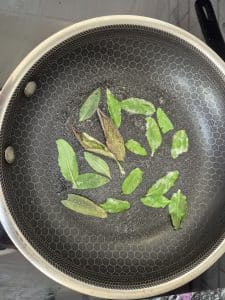
Start with the sage leaves — fry them first in a little oil or butter over medium-high heat until crispy, then set them aside on kitchen paper. They’ll go back on right at the end, and you don’t want them sitting in moisture.
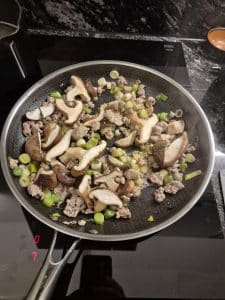
The sausagemeat goes in next over medium heat, broken up into rough pieces as it fries. Don’t rush this — you want proper colour on the meat, not just steamed through. After a couple of minutes, add the leek and let it soften. Then the mushrooms and garlic go in together. Season at this stage with salt and pepper.
Once the mushrooms have lost their raw look, add the white wine and let it reduce by roughly half. This is important — if you skip the reduction, the sauce will taste sharp and thin. Once reduced, add a knob of butter and stir through for a minute or two.
For the cream: stir the Dijon mustard into the double cream before it goes in the pan, then reduce the heat and add the mixture gently. Don’t let it boil — just let it warm through and thicken slightly. Add the parmesan, stir again, then fold in your cooked, drained pasta.
7 The finishing touches — fried sage, chives and parmesan
These three garnishes aren’t decorative afterthoughts — they each do real work.
Fried sage leaves are one of those simple things that make a dish feel considered. The key is to fry them quickly in a little oil or butter — about 30 to 60 seconds per side over medium-high heat. Watch them closely; they go from done to burnt very quickly. Properly fried sage loses its bitter edge and becomes nutty and fragrant, and the crunch it adds contrasts beautifully with the silky sauce underneath.
The chives bring freshness and a mild onion note that lifts the richness of the dish. Use them generously — two tablespoons isn’t too much for this quantity.
The parmesan does double duty: stirred into the warm sauce where it melts and adds savouriness, then grated again on top at the table. Use a proper block and grate it yourself — pre-grated parmesan has a dry, powdery texture that doesn’t melt as cleanly into a cream sauce.
8 About Wylde Market
The pork and wild garlic sausages in this recipe came from Wylde Market — the online farmers’ market specialising in organic, pasture-raised produce from British farms. Most of the other ingredients came from the same delivery: the shiitake mushrooms, the leeks, the double cream, and even the pasta.


What I like about sourcing from Wylde Market is that the provenance is clear. You know where the animals were raised and how they were kept. For a recipe like this one, where the sausagemeat is doing the heavy lifting on flavour, that quality comes through in the finished dish in a way that cheaper produce simply doesn’t.
9 Seasonal notes — leeks and mushrooms
Leeks are a classic British autumn and winter vegetable, at their best from September through to April. Outside that window they’re still available, but they tend to be thinner, milder and less interesting. If you’re making this in summer, a couple of banana shallots are a reasonable substitute — they’ll give you that sweet, softened allium base without the texture of good seasonal leek.
Shiitake mushrooms are cultivated year-round so seasonality is less of an issue. That said, if you’re cooking in autumn and can source mixed wild mushrooms, it’s worth the upgrade — ceps in particular have a depth of flavour that makes the sauce considerably richer.
Wild garlic sausages, which inspired the original version of this recipe, are a spring-only product — available roughly March to May, when wild garlic carpets woodland floors across the UK. If you see them at a farmers’ market or from a good butcher in those months, it’s worth picking them up.
10 What to serve with creamy sausage pasta
This is a rich, complete dish that doesn’t need much alongside it. A simple green salad dressed with something acidic — a sharp lemon vinaigrette or a good red wine vinegar dressing — does the job well, cutting through the cream and refreshing the palate between mouthfuls.
Good bread is always welcome for mopping up any sauce left in the bowl. Sourdough or a decent ciabatta would be my choice. If you’re serving this for a dinner party rather than a weeknight supper, a light starter — bruschetta or a small charcuterie plate — keeps things in the right register without making the meal feel heavy before the main event.
11 Wine pairing
There’s already white wine in the sauce, which gives you a natural cue for pairing. A crisp Italian white works well — Soave, Pinot Grigio, or a Verdicchio all have the right acidity to cut through the cream without competing with the sausage. If you want to spend a little more, a good Gavi or a Sicilian Grillo has the weight to match a creamy pasta sauce.
If you’d rather open a red, go light-bodied. A Barbera d’Asti or a young Dolcetto — both from Piedmont — have the acidity to handle cream without the tannins that make heavier reds feel harsh next to dairy. Avoid anything too bold or oaky.
12 Storage, reheating and leftovers
Creamy pasta is best eaten fresh, but it does keep — store leftovers in an airtight container in the fridge for up to two days. The sauce will thicken as the pasta absorbs it overnight, which is normal.
To reheat, add a splash of water or a little extra cream to loosen the sauce, then warm it gently in a pan over low heat rather than in the microwave if you can. Microwaving can cause a cream sauce to split if it gets too hot too quickly. Stir regularly and bring it back slowly.
Freezing the finished dish isn’t ideal — cream-based sauces can split when defrosted. If you want to get ahead, freeze just the sauce without the pasta, and cook fresh tagliatelle when you’re ready to serve.
13 Variations
Add some heat
A pinch of chilli flakes added with the garlic and mushrooms works well. The cream softens the heat considerably, so don’t be shy — half a teaspoon is about right for a gentle background warmth.
Italian sausages
If you can find Italian fennel sausages, they’re a natural fit here. The anise note from the fennel seed sits very happily in a white wine and cream sauce, and it gives a nod to the classic Italian combination.
Crème fraîche instead of double cream
Full-fat crème fraîche can substitute for double cream and adds a slight tang that actually works in the sauce’s favour. Don’t use low-fat versions — they’re likely to split when heated.
Add spinach
A large handful of baby spinach stirred through in the final minute adds colour and wilts down to almost nothing. It’s a good way to add some greenery without changing the character of the dish.
Dairy-free
A good-quality oat cream or cashew cream (designed for cooking rather than drinking) can substitute for the double cream. The parmesan is harder to replace authentically, but a dairy-free hard cheese or a tablespoon of nutritional yeast will add a similar savoury depth.
14 Frequently asked questions
Can I use crème fraîche instead of double cream?
Yes — full-fat crème fraîche works well and adds a slight tang that sits nicely in this sauce. Avoid low-fat versions, which are likely to split when heated.
What can I use instead of white wine?
Chicken stock is the most straightforward substitute — use the same quantity and reduce it down in the same way. Dry vermouth works well too if you have it; it behaves very similarly to white wine in a cream sauce.
Can I freeze creamy sausage pasta?
Freezing the finished dish isn’t ideal, as cream sauces can split when defrosted. The better approach is to freeze just the sauce (without pasta), then cook fresh tagliatelle to serve.
Can I make this ahead?
The sauce can be made a day ahead and refrigerated. When you’re ready to eat, cook the pasta fresh and reheat the sauce gently in a pan with a splash of water or cream to loosen it.
What’s the best pasta shape for a creamy sauce?
Long, flat pasta like tagliatelle or pappardelle coats well in cream sauces. Rigatoni and penne also work — their ridges and hollow tubes trap the sauce. Avoid very thin pasta like spaghetti or angel hair, which can feel too delicate against the weight of this sauce.
Can I use dried mushrooms?
Yes — dried porcini work well if you can’t get fresh shiitake or chestnut mushrooms. Rehydrate them in warm water for 20 minutes, drain, and use the soaking liquid in place of some of the white wine for an extra hit of depth.
Do I have to remove the sausage meat from the skins?
No. If you prefer, cook the sausages whole until done through, then slice and add them to the sauce at the end. The flavour is the same; it’s more a question of whether you want the meat integrated into the sauce or in pieces.
Can I use Italian sausages instead of British pork sausages?
Yes, and they work particularly well. Italian sausages — especially the fennel-seasoned kind — sit very naturally in a white wine and cream sauce. Just be aware they’re often more heavily seasoned than British sausages, so taste as you go.
15 More sausage pasta recipes on Mayfair Foodie
If you enjoyed this recipe, you might also like my Sausage and Fennel Pasta — a 20-minute Italian-inspired dish using pork sausage meat, caramelised fennel and white wine.
Creamy sausage pasta
Print RecipeIngredients
- 4 sausages, removed from their skins
- 10-12 sage leaves
- 200g tagliatelle or pasta of your choice
- 1 med leek finely chopped ( I used 4 baby leeks)
- 150g shitake mushrooms
- 150ml of white wine
- Knob of butter
- 2 cloves of garlic finely chopped
- 2 tsp of dijon mustard
- 100ml Double cream
- Parmesan grated
- Chopped chives finely chopped (optional)
Instructions
Start with your sage leaves — fry them in a little oil over medium-high heat until crispy but not burnt, around 30 to 60 seconds. Keep an eye on them; they turn quickly. Set aside on some kitchen paper.
In the same pan, add a little more oil and start frying your sausagemeat over a medium heat, breaking it up as it colours. After 2 or 3 minutes, add your sliced leeks and let them soften alongside the meat. Once the sausagemeat is nicely browned and the leeks have softened, add the mushrooms and garlic. Season well with salt and pepper. Give it all a couple of minutes, then pour in the white wine and let it reduce down by about half.
While the wine is reducing, get a pan of well-salted water on for your pasta. Dried tagliatelle will need around 10 minutes; fresh pasta only a couple.
Once the wine has reduced, add a knob of butter and stir through for a minute or two. Stir your Dijon mustard into the double cream, then reduce the heat and gently stir the cream mixture into the pan. Let it warm through — don’t let it boil — then add the grated parmesan and stir again.
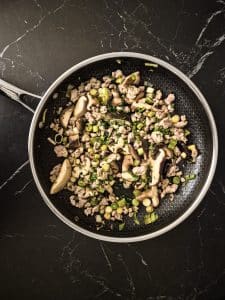
Drain your pasta and add it straight into the pan, tossing everything together so the sauce coats every strand.
Serve in a bowl, scatter over the chives and lay the crispy sage leaves on top. Grate over more parmesan at the table — don’t be shy with it.