Table of Contents
Written by Martin Seymour | Editor, The Mayfair Foodie | About Me
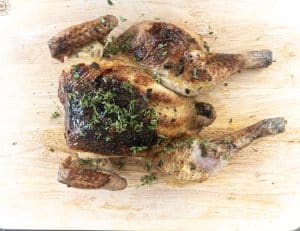
This spatchcock chicken recipe uses a butter, honey, sage, garlic and turmeric mixture worked under the skin, and serves 4 with a cooking time of around 1 hour at 190°C fan. Spatchcocking — removing the backbone so the bird lies flat — cuts oven time by roughly a third compared with a whole trussed bird, since flattening the chicken exposes it to even, direct heat rather than leaving the legs undercooked while the breast dries out. The bird used in this recipe was brined beforehand, a step covered in full in a separate guide to brining meat, which keeps the breast especially juicy given its direct exposure to heat once flattened. A 1.5–2kg chicken is recommended as the easiest size to manage. The chicken should reach an internal temperature of 74°C at the thickest part of the breast and thigh before serving, and it is rested for 10–15 minutes under its pan juices once out of the oven. Variations on the stuffing include Spanish (pimentón and rosemary), Italian (basil and lemon), Greek (olive oil and feta), Thai (lime leaf and lemongrass), and Indian (cumin, chilli and coriander) versions, making the base technique adaptable well beyond the sage-honey-turmeric combination used here.

Roast chicken is one of my favourite things to eat. Most people who love a traditional roast dinner would choose beef as their go-to roast, but for me it is chicken; that’s not saying I dislike beef, in fact I love all traditional roast meats, but if I’m pushed, chicken is my favourite. When the weather gets warmer, or I’m looking for an alternative to a roast, I love a spatchcock chicken; it is so versatile and works with a variety of vegetables or salads. So if you are looking for something different as a weekend treat, try my spatchcock chicken recipe. Below is a guide to spatchcocking a chicken; it is really easy, and all you need is a good pair of kitchen shears.
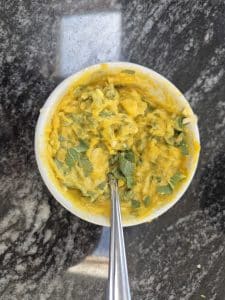
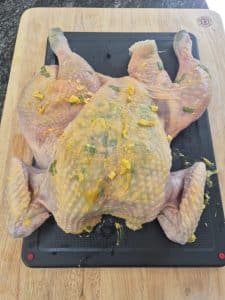
Finally, I stuffed and coated my chicken for this recipe in a butter, honey, sage and garlic, and turmeric mix that gives a slight Middle Eastern flavour to the chicken. I served it with cumin potato wedges and sea gem lettuce with a simple tomato salad.
All the ingredients here are organic: the chicken, butter, garlic and honey all came from Wylde Market, the online farmers’ market. The honey I used was a turmeric and ginger variety, so if you’re using plain honey instead, just add a teaspoon of turmeric to the stuffing mix to match.
This chicken was brined before spatchcocking, which is entirely optional but well worth it if you have the time — it’s the same technique and the same bird featured in my complete guide to brining, if you want the full details on why it works and how to do it read my guide to brining meat. Brining first keeps the breast meat especially juicy, which matters more than usual here since spatchcocking exposes it to direct heat.

If you know how to spatchcock a chicken, you can jump straight to the recipe below.


Go straight to recipe & method
1 How to Spatchcock a Chicken
Spatchcocking (also called butterflying) means removing the backbone so the bird lies flat. It looks like a bit of butchery, but it’s genuinely one of the simplest techniques in this kitchen — five minutes with sharp kitchen scissors, and you’re rewarded with a chicken that cooks faster, more evenly, and gets significantly crispier skin than a whole roast bird.
Why It Works
A whole chicken is an awkward shape to cook evenly — the breast is thin and exposed, the legs are thick and tucked underneath, so by the time the legs are done the breast has usually dried out. Flattening the bird puts everything at a uniform thickness and opens the whole skin surface to direct heat, which is exactly why it crisps so well. It also cuts oven time by roughly a third compared with a trussed whole bird.
What You’ll Need
- A whole chicken (1.5–2kg works best)
- Sharp kitchen scissors (poultry shears if you have them)
- A sharp knife
- A chopping board with a groove or channel, or a tray to catch juices
Step by Step
- Place the chicken breast-side down, legs facing you, on the chopping board.
- Locate the backbone running down the centre of the bird.
- Cut along one side of the backbone, from tail to neck, using firm, controlled strokes through the rib bones.
- Cut down the other side of the backbone to remove it completely. (Keep it — it’s the base of a good stock.)
- Turn the chicken breast-side up and open it out like a book.
- Press down firmly on the breastbone with the heel of your hand until you hear and feel it crack — this is what lets the bird sit flat.
- Tuck the wing tips underneath the breast so they don’t burn before the rest of the bird is done.


2 Stuffing the Chicken Under the Skin
The other technique worth getting right here is working the butter mix under the skin rather than just rubbing it over the outside. Once the chicken is spatchcocked, gently separate the skin from the breast meat at the top of each breast, creating a pocket — be patient and don’t tear the skin, you’ll feel a thin layer of tissue that comes away easily as you work your fingers further in. Spoon the butter mixture into each pocket and spread it evenly over the breast meat underneath. This keeps the breast especially moist as it cooks, since the butter bastes it from the inside out, and any butter left over is worth rubbing over the legs and the rest of the skin before it goes in the oven.

3 Variations on the Stuffing
Once you’ve got the spatchcocking technique down, the sage, turmeric, and honey butter is really just one option — the flat shape and loosened skin work brilliantly with all sorts of flavour combinations. Here are a few worth trying:
Spanish
Butter, honey, pimentón and rosemary — smoky and warm, and a natural match for serving with patatas bravas-style wedges.
Italian
Butter, honey, basil and lemon — bright and herby, especially good with a simple tomato salad on the side.
Greek
Butter, olive oil, feta and black olives — swap the butter for olive oil here and crumble the feta through for a salty, Mediterranean take.
Non-Butter Stuffings
These two work without a butter base at all, so they’re a good option if you want something lighter or dairy-free.
Thai
Lime leaves, honey, lemongrass and chilli, finished with a dash of fish sauce for depth.
Indian
Cumin, chilli, turmeric, curry leaves and coriander — rub this straight onto the flesh under the skin rather than mixing it into a butter.
4 What to Serve With Spatchcock Chicken
This recipe works well with cumin potato wedges and a simple tomato salad alongside sea gem lettuce, which is what I served it with here, but it’s flexible enough to pair with whatever you’ve got to hand. Baby new potatoes, plain roasties, rice or couscous all work as a base, and a fresh green salad or a few grilled vegetables round it out nicely. Because the flavours in the butter lean Middle Eastern, a simple cucumber and yoghurt side or a herby couscous also work particularly well.
5 Storing and Reheating Leftovers
Leftover spatchcock chicken keeps well in the fridge for up to three days in an airtight container. Reheat gently, covered, in an oven at around 160°C fan until piping hot throughout, adding a splash of water or stock to the tray to stop it drying out. It also shreds well cold into salads or sandwiches, so it’s worth cooking the full bird even for a smaller household.
FAQ
What’s the difference between spatchcocking and butterflying a chicken?
Nothing — they’re two names for the same technique. “Spatchcock” tends to be the more common term in the UK, while “butterfly” is used more in the US, but both describe removing the backbone so the bird opens out flat.
Do I need special equipment to spatchcock a chicken?
Just a good pair of sturdy kitchen scissors or poultry shears and a sharp knife. No specialist kit is required — it’s one of the more accessible butchery techniques to do at home.
Can I ask my butcher to spatchcock the chicken for me?
Yes — most butchers will happily do this for you if you ask, which is worth knowing if you’d rather not tackle the backbone yourself. It takes them moments.
How long does it take to cook a spatchcock chicken?
Around an hour at 190°C fan for a 1.5–2kg bird, roughly a third quicker than roasting the same chicken whole. Always check the juices run clear and the internal temperature reaches 74°C at the thickest part of the breast and thigh.
Why is spatchcock chicken quicker to cook than a whole roast chicken?
Flattening the bird means there’s no thick, dense area for heat to slowly work into, as there is with the legs on a whole trussed bird. Everything cooks at roughly the same rate, so you’re not waiting for the legs to catch up while the breast overcooks.
Should I brine a spatchcock chicken before cooking?
It’s optional, but well worth doing if you have the time. Spatchcocking is actually an excellent brining candidate, since the flattened shape means a brine reaches every part of the bird evenly.
Can I stuff the butter under the skin in advance?
Yes — you can prepare the chicken up to a day ahead, cover and refrigerate it, and cook straight from the fridge (allow a little extra time in the oven if so, and always check with a thermometer).
What can I use instead of butter for the stuffing?
Olive oil works well as a dairy-free alternative, particularly for the Greek, Thai and Indian variations above, which don’t rely on butter for their flavour.
How do I stop the skin from tearing when separating it from the breast?
Go slowly and use your fingers rather than a utensil. Start at the thicker end of the breast where the skin is more robust, and ease it away gently — you’ll feel a thin layer of tissue give way as you go. A small tear here or there won’t ruin the dish, but patience gets you the best result.
Can I cook a spatchcock chicken on the barbecue?
Yes — spatchcocking is actually a popular technique for barbecuing, since the flat shape sits well on the grill and cooks evenly over indirect heat. Sear the skin side briefly over direct heat first, then move to indirect heat to finish, checking temperature as you would in the oven.
What size chicken is best for spatchcocking?
A 1.5–2kg bird is the easiest to manage and cooks most evenly. Larger birds can be spatchcocked too, but you may need a bigger tray and a little extra cooking time.
Can I freeze spatchcock chicken?
Cooked chicken freezes well for up to three months in an airtight container. Defrost thoroughly in the fridge before reheating, and reheat until piping hot throughout.
6 Recipe-Ingredients & recipe
Spatchcock Chicken Recipe
Print RecipeIngredients
- 1 free-range/organic chicken, spatchcocked
- Season chicken with salt & pepper
- For the butter stuffing:
- 60g softened butter
- 1 tbsp honey
- tsp turmeric
- 2 sprigs sage; leaves removed, stalks discarded. Finely chop leaves
- 2 cloves garlic, minced or finely chopped
- Once cooked garnish with thyme or rosemary