Table of Contents
Written by Martin Seymour | Editor, The Mayfair Foodie | About Me

Pan seared scallops are one of those dishes that look far harder than they are — barely three minutes in a hot pan and you have something that could pass for restaurant cooking. In my house, I can do no wrong cooking scallops, provided they’re cooked well. Serve them with risotto and I’m earning serious brownie points. This recipe takes its inspiration from Wylde Market: beautiful hand-dived scallops, Carnaroli risotto rice and seriously good organic Spanish Verdelli lemons. Add to that the crunch of sourdough breadcrumbs, some crispy capers, and I’m onto a winner. The best thing about this dish, apart from the way it tastes, is how easy it is to prepare.
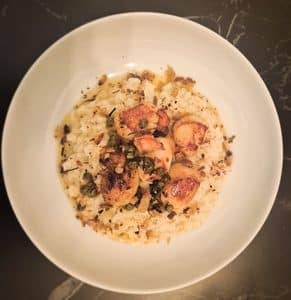
The combination of the lemon risotto and brown butter with the sweet scallops worked beautifully; the final touch of the breadcrumbs added another texture to the dish. I have to mention a tip that I picked up from a top chef, when cooking the risotto I added the rind of the parmesan as I finished grating the parmesan and left with the only the rind, I discarded it before serving but it gave an extra cheesy kick and I will never throw away the rind again.
If you are making risotto for the first time you might want to take a peek at my guide to cooking risotto, it covers everything you need to know about cooking risotto from start to finish, read here.
1 What Are Hand-Dived Scallops and Why Use Them?
Most scallops sold in the UK are dredged — caught by dragging a weighted metal frame across the seabed. It’s efficient, but it churns up the sea floor and the scallops often arrive bruised, grit-filled and waterlogged from the journey. This also causes damage to the sea bed and the other sea life.
Hand-dived scallops are collected one at a time by a diver. It’s slower and more expensive, and it shows in the finished plate:
- They’re cleaner. No grit trapped in the muscle, so no gritty risotto.
- They’re firmer and denser, which means a better crust and less shrinkage in the pan.
- They’re not soaked in water, so they sear rather than steam — the single biggest factor in getting this right.
- Divers select by size and leave the small ones to grow, so the seabed recovers.
Mine came from Wylde Market, who list the dive boat the scallops came off.
2 How to Pan Sear Scallops
This is the part worth getting right. A scallop takes about two and a half minutes to cook and about ten seconds to ruin. Everything below is the difference between a deep amber crust and a pale, squeaky disc.
1. Get them properly dry
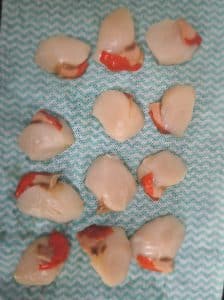
Pat each scallop dry with kitchen paper, then leave them uncovered on a fresh sheet of paper for ten minutes while you get everything else ready. Any surface moisture has to boil off before browning can start, and while it’s boiling off, the inside is overcooking. Season with fine salt just before they go in the pan — salt draws out moisture, so seasoning early undoes the drying.
2. Pull off the side muscle
There’s a small rectangular tag of tougher muscle on the side of each scallop. It peels away with your fingers. It’s edible but chewy, and it goes tough in a hot pan.
3. Heat the pan more than feels sensible
Use a heavy stainless steel or cast iron pan if you have one. Add a neutral oil with a high smoke point and wait until it shimmers and moves like water. Butter goes in later; if it goes in now it will burn before the scallops colour.
4. Lay them in a clock formation
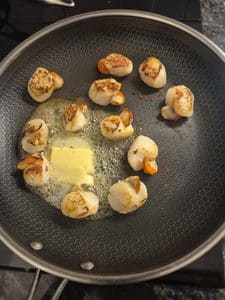
Place the first scallop at twelve o’clock and work round the pan clockwise. It sounds fussy, but it means you know exactly which one went in first, so you turn them in the same order and every scallop gets identical time in the pan. Leave space between them — a crowded pan drops in temperature and the scallops steam in their own moisture.
5. Don’t touch them
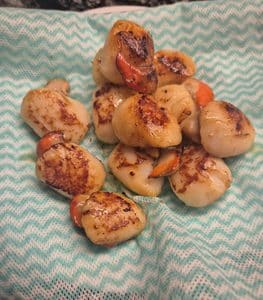
Resist the temptation to nudge, shuffle or peek. Give them a full minute to a minute and a half. When a crust has formed, the scallop releases from the pan on its own; if it sticks, it isn’t ready. Turn them in the order they went in — the undersides should be a deep golden brown.
6. Butter at the end

Add a knob of butter once they’re turned and cook for another minute, tilting the pan and spooning the foaming butter over the tops. The butter browns as it foams and takes on a nutty flavour that makes the sauce. Total time in the pan is around two to two and a half minutes.
7. Get them out

Lift the scallops onto a warm plate straight away. They carry on cooking in a hot pan, and an overcooked scallop is rubbery and shrunken. When you press one it should feel like the fleshy pad at the base of your thumb — springy, with a little give. The centre can stay very slightly translucent.
3 Pan Fried Scallops or Pan Seared Scallops — Is There a Difference?
Not really, and you’ll see both used for the same dish. Pan fried scallops is the phrase most British cooks use; pan seared scallops is more common in American recipes. Searing technically implies a very hot pan and a short cook aimed at building a crust, which is exactly what’s happening here, so if you want to split hairs, this is a sear. Either way, the method is the one above.
4 The Lemon Risotto
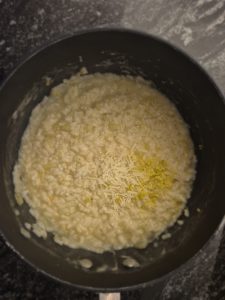
The risotto here is deliberately simple, because the scallops are the point. Carnaroli is worth seeking out over Arborio — it holds its shape better and is far more forgiving if you’re also watching a pan of scallops. I used a banana shallot rather than onion for a softer, sweeter base.
The only departure from a standard risotto is the lemon. Stir the grated zest in at the very end, along with the Parmesan and cold butter, during the mantecatura — the vigorous beating that makes a risotto creamy. Zest added early loses its perfume; added at the end it stays bright and lifts the whole plate. Save the juice for the pan sauce.
Aim for a risotto that spreads slowly when you spoon it onto a warm plate — all’onda, as the Italians have it, meaning it moves in a wave. If it stands up in a mound it’s too thick; loosen it with a splash of hot stock.
5 Crispy Capers and Sourdough Breadcrumbs
These two are what turn a nice plate of scallops into something you remember, and both take minutes.
For the capers, drain them well and pat them dry, then fry in a little hot oil for a minute or so. They burst open into small crisp flowers and their sharpness mellows into something salty and nutty. Lift them out onto kitchen paper before they darken. Fry them separately from the scallops — if they go into the brown butter they’ll soften rather than crisp.
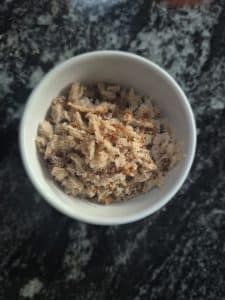
For the breadcrumbs, dry a slice of sourdough in a low oven at 80°C (175°F) until it’s firm and dry to the touch, then break or pulse it into coarse crumbs. Coarse is what you want here — fine crumbs disappear into the risotto instead of giving you something to bite. Fry them in butter or olive oil until golden and stir the chopped chives through at the very end, off the heat.
6 Alternatives to Risotto
If you’d rather not stand and stir, or you want something lighter underneath:
- Pearl barley orzotto — the closest swap. Same creamy, slow-stirred character with a nuttier bite that stands up well to the scallops, and it’s more forgiving if you leave it unattended.
- Cauliflower or celeriac purée — silky, quick and elegant. Celeriac in particular has an earthy sweetness that works with the brown butter.
- Soft Parmesan polenta — all the comfort of risotto for a fraction of the effort.
- Minted pea purée — fresh and sweet, and a good shout in spring.
- White bean and garlic purée — quick, cheap and surprisingly luxurious with a good olive oil stirred through.
- Lentils — small dark ones like Puy or beluga, dressed while warm with lemon and olive oil.
- Brown rice — nutty and wholesome, though it won’t give you the creaminess.
Worth mentioning the other classic partner too: black pudding. It’s a garnish rather than a base, but scallops and black pudding is a pairing that’s earned its place on British menus.
7 What to Serve Alongside
This is a rich plate, so keep the rest simple. A handful of dressed rocket or watercress after the main event cuts through the butter nicely. Some good bread for the sauce is never wrong. For wine, something crisp and unoaked — a Picpoul de Pinet, an Albariño or a dry Chablis. All three have the acidity to stand up to the lemon.
8 Timing and Getting It All to the Table
The one genuine challenge here is that neither risotto nor scallops wait. Here’s the order that works:
- Well ahead: dry the sourdough, blitz the crumbs, prep the scallops and leave them on kitchen paper in the fridge. Get the stock hot and keep it simmering.
- Fry the capers and the breadcrumbs before you start the risotto. Both hold their crunch happily for half an hour.
- Start the risotto. When it’s about five minutes from done, get the scallop pan heating.
- Finish the risotto with zest, Parmesan and butter, take it off the heat and cover it. Sear the scallops while it rests — two minutes’ rest actually improves a risotto.
- Plate risotto first, scallops on top, then the caper and lemon butter spooned over, breadcrumbs last.
9 Pan Seared Scallops FAQs
Why won’t my scallops sear?
Almost always moisture. Either the scallops are wet-packed and full of absorbed water, or they weren’t patted properly dry, or they were salted too early. The other common cause is a pan that isn’t hot enough, or too many scallops in it at once dropping the temperature. Dry them well, get the pan properly hot, and cook in batches if you need to.
How long do you pan sear scallops for?
Around a minute to a minute and a half on the first side, then another minute after turning, with butter added. Total time in the pan is roughly two to two and a half minutes for a standard king scallop. Larger scallops may need a few seconds more each side.
How do I know when scallops are cooked?
Press one gently — it should feel springy, like the fleshy pad at the base of your thumb, with a little give. The centre can remain slightly translucent; scallops are perfectly good very lightly cooked. If it feels firm and bouncy it has gone too far.
Why are my scallops rubbery?
Overcooking, and it happens fast. The window between perfect and rubbery is a matter of seconds. Get them out of the pan the moment they’re done — leaving them in a hot pan while you plate up is enough to take them past it.
What pan is best for searing scallops?
Heavy stainless steel or cast iron, I used my Hexclad frying pan, great for searing. Both hold their heat when cold scallops hit the surface, which is what gives you the crust. Non-stick tends to lose heat quickly and doesn’t develop the same browning, though it will do the job if it’s all you have — just get it properly hot and don’t crowd it.
Oil or butter for searing scallops?
Both, in that order. Start with a neutral high smoke point oil, because butter burns at searing temperature. Add the butter once the scallops are turned, so it foams and browns for the last minute and becomes the sauce.
Do I need to remove the roe?
That’s down to taste. The orange coral has a stronger, more mineral flavour than the white muscle and some people love it. It cooks at a different rate and can catch in the pan, so if you’re keeping it on, it’s worth turning the scallops carefully. Removing it is perfectly acceptable.
Can I use frozen scallops?
You can, but defrost them slowly in the fridge overnight and dry them thoroughly — they will release more water than fresh. You’ll get a decent result but rarely the same crust. If frozen is what’s available, it’s still worth cooking; just accept a slightly paler sear.
How many scallops per person?
Three to four king scallops each for a main course served over risotto, which is what this recipe assumes. Two or three each is right for a starter.
Can I make the risotto ahead?
Not really, in the sense that a risotto is at its best within minutes of being finished. What you can do is cook it to about three-quarters done, spread it on a tray to cool quickly, then finish it with hot stock when you’re ready. Restaurants do exactly this. It’s not quite as good as start to finish, but it’s a genuine help if you’re cooking for people.
What can I do with the leftover lemon juice?
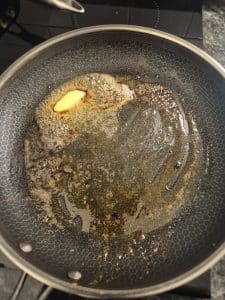
It goes into the pan. Once the scallops are out, the capers and lemon juice go into the brown butter and become the sauce. If you have juice left over, a squeeze over the finished plate does no harm at all.
Can I prepare anything else in advance?
Yes — the breadcrumbs and the crispy capers both keep their crunch for a good half hour, so do them first and set them aside. You can dry the sourdough hours ahead. The scallops can be trimmed, dried and left on kitchen paper in the fridge until you need them.
10 Recipe-Ingredients & Method
Pan Seared Scallops with Lemon Risotto
Print RecipeIngredients
- Ingredients — For the Scallops
- 6–8 hand-dived king scallops
- 1 tbsp neutral oil, for frying
- 25g butter (2 tbsp)
- Juice of 1 lemon (zest reserved for the risotto)
- Salt & ground black pepper
- Ingredients — For the Lemon Risotto
- 150g Arborio or Carnaroli risotto rice (¾ cup)
- 1 banana shallot or half an onion, finely diced
- 1 stick of celery finely chopped
- 1 garlic clove, finely chopped
- 25g butter (2 tbsp), plus a splash of olive oil
- 75ml dry white wine or vermouth (⅓ cup)
- 1 Tbsp of capers
- 750ml fish or vegetable stock (3 cups)
- 40g Parmesan, finely grated (½ cup)
- 25g cold butter (2 tbsp), to finish
- Zest of 1 lemon
- Sea salt and black pepper
- Ingredients — For the Breadcrumbs
- 1 thick slice of sourdough bread
- Butter or olive oil, for frying
- A small handful of chives, finely chopped
Instructions
Method
Heat the oven to 80°C (175°F). Dry the slice of sourdough in the oven until it is firm and dry to the touch. Break it up by hand or pulse briefly in a blender, leaving the crumbs coarse rather than fine.
Pat the scallops thoroughly dry with kitchen paper and pull off the small tough side muscle from each one. Leave them uncovered on fresh kitchen paper while you prepare everything else. Season with sea salt and freshly ground black pepper only just before cooking.
Drain the capers and pat them dry. Fry in a little hot oil for about a minute, until they burst open and crisp. Lift onto kitchen paper and set aside.
Heat a little butter or olive oil in a pan and fry the breadcrumbs until golden. Stir the chopped chives through off the heat and set aside.
For the risotto, melt the butter with a splash of olive oil in a heavy pan over a medium-low heat. Soften the shallot and celery gently for 5 minutes without colouring, then add the garlic for a further minute.
Add the rice and stir for a minute or two until the grains are coated and translucent at the edges. Pour in the wine and let it bubble away almost completely.
Add the hot stock a ladleful at a time, stirring often and waiting until each addition is nearly absorbed before adding the next. After about 18 minutes, the rice should be tender with a slight bite at the centre.
Take the pan off the heat. Beat in the cold butter, the grated Parmesan and the lemon zest vigorously, then season with sea salt and freshly ground black pepper. Cover and rest while you cook the scallops. Loosen with a splash of hot stock if it thickens.
Heat a heavy pan with a little oil until it shimmers. Place the scallops in one at a time in a clock formation, starting at twelve o’clock. Resist the temptation to move them. Cook for about a minute, then turn them in the same order — they should have a deep golden sear underneath.
Add the butter to the pan and cook for another minute, spooning the foaming butter over the scallops as it browns. Remove the scallops to a warm plate.
Add the lemon juice to the brown butter in the pan and swirl to combine.
Spoon the risotto onto warm plates, arrange the scallops on top, spoon over the lemon and brown butter, then scatter with the crispy capers and the sourdough breadcrumbs. Enjoy.