Table of Contents

Written by Martin Seymour | Editor, The Mayfair Foodie | About Me
You might be asking yourself why anyone needs an apple crumble recipe. Everybody can make an apple crumble, and I do see your point. But this one has a little twist, and according to my critics, the family assembled for Sunday lunch, that little tweak was a big success.
I hadn’t intended to make a crumble at all. I had some lovely organic apples and butter from Wylde Market in the fridge that needed using, so a standard crumble it was going to be. Then, in the cupboard, I spotted my favourite granola, made by Goody Granola, which really is as good as the name suggests, and I thought I’d scatter it over the crumble as an extra topping. It worked so well, and got such rave reviews round the table, that I decided to write it up for the site.

The only real trick is timing. Granola is already baked, so don’t put it on at the start. Give the crumble 30 minutes in the oven first, then add the granola for the last 12–13 minutes, and you get a deep golden, nutty, crunchy top with nothing scorched.
1 Which apples should you use?

You can make a good crumble with almost any apple. What changes is the texture of the filling and how much sugar it needs, so it’s worth knowing what you’ve got before you start.
Cooking apples. In Britain that usually means Bramley, which is very sharp and holds a lot of water. It collapses into a soft, fluffy purée, which is the texture most people picture when they think of crumble. For 900g of prepared fruit you’ll want 75–90g of sugar.
The classic mix. Two-thirds cooking apple to one-third eating apple gives you purée with some pieces still holding their shape. Around 70g of sugar.
Dual-purpose varieties. Charles Ross, Blenheim Orange and Russet sit between the two: sweet enough to eat raw, but they hold together when cooked. They do both jobs on their own, which is why I like them here. Around 60g of sugar, and no cornflour needed.
Eating apples alone. Cox, Braeburn, Granny Smith or Honeycrisp give a firmer filling with distinct pieces throughout. 40–50g of sugar is plenty.
Whatever you use, taste a raw slice first. If it makes you wince, go to the top of the sugar range; if it’s pleasant to eat, stay at the bottom.
2 How to Make Apple Crumble Topping
The ratio. A classic crumble topping is 2:1:1 flour to butter to sugar by weight. For this recipe that’s 200g (1⅔ cups) flour, 100g (7 tbsp) butter and 100g (½ cup) sugar. Learn the ratio and you can scale a crumble to any dish without a recipe.
Keep the butter cold. Cold butter rubbed into flour creates small pockets of fat that crisp as they bake. Warm butter smears into the flour and gives you something closer to shortbread.
Leave some lumps. Stop rubbing in while there are still pea-sized pieces of butter-coated flour. Those lumps are what gives a crumble its crunch. A topping rubbed to uniform fine crumbs bakes flat and sandy.
Mix your sugars. Half demerara, half caster gives you both crunch and even sweetness. All caster is softer; all demerara is crunchier but can taste slightly treacly.
Don’t press it down. Scatter the topping loosely over the fruit. Pressing it down compacts it into a solid lid.
Make it your own. The 2:1:1 base takes additions happily, so use whatever you have in the cupboard. A handful of rolled or jumbo oats for chew; chopped hazelnuts, almonds, pecans or walnuts for crunch; pumpkin, sunflower or sesame seeds; desiccated coconut; a teaspoon of cinnamon or mixed spice; the zest of an orange. Keep any additions to about 100g in total, or they overwhelm the flour and the topping won’t hold together. Anything already baked or toasted, granola included, goes on near the end rather than at the start.
Add granola late for extra crunch. A granola crumble topping adds nuts and clusters without extra work, but because granola is already baked it goes on for the last 12–13 minutes only. Added at the start, the nuts and honey scorch. Use a good one. The Goody Granola nut granola I used, made by Beth in Richmond, is properly nutty and not too sweet, and it crisped beautifully on top of the crumble. A sugary breakfast cereal would simply caramelise and go flat.
Make it ahead. Raw crumble topping freezes in a bag for up to three months and can go straight from freezer to oven, adding about 5 minutes to the bake.
3 What I changed after testing this recipe
More apple. My first version called for 900g of apples, but I’d weighed them whole and unpeeled, so once peeled and cored there was noticeably less fruit in the dish than I wanted. The crumble was good but the apple layer was shallow. The recipe now calls for 1.2kg of whole, unpeeled apples, which gives you roughly 900g of prepared fruit and a proper depth of filling under the topping.
Weigh them unpeeled. All the apple weights here are for whole apples as you buy them, which is how most people weigh fruit. Expect to lose around a quarter of that weight to peel and core.
A hotter oven. 170°C fan was a little gentle. 175°C fan gives a better colour on the crumble and a livelier bubble at the edges without any risk of catching.
Granola needs only 12–13 minutes. I’d allowed up to 15. At this temperature it browns faster than that, so check from 10 minutes and cover loosely with foil if it’s getting ahead of itself.
No need to crush the granola. I’d planned to break it up first, but mine wasn’t chunky, so it went straight on from the bag. If yours has big clusters, break any larger than a hazelnut with your fingers so it sits evenly.
4 Variations
Apple and blackberry. The classic autumn pairing, and worth doing while blackberries are about. See the FAQ below for quantities and the one adjustment it needs.
Rhubarb. Swap half the apple for rhubarb cut into 3cm lengths, or use rhubarb alone. It’s much sharper, so increase the filling sugar to around 100g and skip the softening step, as rhubarb collapses quickly on its own.
Apple and pear. Replace a third of the apple with firm pears. Softer and more perfumed, and it needs slightly less sugar.
Plum or damson. Halve and stone them and use in place of a third of the apple. Both are sharp, so taste and add sugar accordingly.
Toppings. See the make it your own note above: nuts, seeds, oats, coconut and spices all work in the base mix.
5 What to serve with apple crumble
Custard. The traditional choice and still the best. Proper pouring custard, thick enough to coat but loose enough to flood the bowl.
Cream. Cold double cream poured straight over hot crumble is hard to beat, and the contrast in temperature is half the pleasure. Clotted cream if you want to make an occasion of it.
Vanilla ice cream. Good with the granola topping in particular, as the nuts and the cold ice cream play off each other.
Temperature. Serve warm rather than piping hot. Ten minutes out of the oven is right: the filling has settled, the topping is still crisp, and nobody burns their mouth.
6 Frequently asked questions
What are the best apples for apple crumble?
Cooking apples such as Bramley are the British default: very sharp, high in water, and they collapse to a soft purée. Many recipes mix them with an eating apple so some pieces keep their shape. Dual-purpose varieties such as Charles Ross, Blenheim Orange and Russet do both jobs on their own. Eating apples alone, including Cox, Braeburn and Granny Smith, give a firmer filling and need less sugar. The section above has the sugar quantities for each.
Do I need cooking apples, or will eating apples do?
Eating apples are fine. They hold their shape rather than breaking down, so you get a filling of distinct pieces, and they need noticeably less sugar: 40–50g rather than 75–90g for 900g of prepared fruit.
Do I need to peel the apples?
For a smooth filling, yes. The skins don’t soften in the oven and catch between the fruit and the topping. Note that all the apple weights here are for whole, unpeeled apples, so you lose around a quarter of that weight when you prepare them.
Do I have to cook the apples first?
It isn’t essential, but it makes a better crumble. Six or seven minutes in butter drives off some of the water, concentrates the flavour and stops the fruit shrinking away from the topping in the oven, which is what causes that hollow gap under the crumble.
What is the ratio for crumble topping?
2:1:1 flour to butter to sugar by weight. For a crumble serving six, that’s 200g plain flour, 100g cold butter and 100g sugar. Once you know the ratio you can make a crumble to fit any dish without looking up quantities.
Why is my crumble topping soggy?
Usually one of three things. The topping was pressed down rather than scattered loosely, so it baked into a solid lid. The butter was too warm when rubbed in, giving a pastry-like texture instead of crumbs. Or the fruit released too much liquid, which softening the apples first prevents.
How do I stop the filling being watery?
Soften the apples in butter before they go in the dish, and don’t over-sugar: sugar draws water out of fruit. Cooking apples hold the most water, so if you’re using Bramleys or another juicy variety, toss the fruit with a teaspoon of cornflour before assembling.
Can I add blackberries?
Yes. Stir 150–200g (1–1½ cups) blackberries through the apples after softening them in the pan, rather than cooking them with the apples, so they keep their shape. Blackberries release a lot of juice, so toss them with 1 tsp cornflour first to stop the filling going runny.
Can I use oats instead of granola?
Yes. Work 50g of rolled or jumbo oats into the crumble base at the start, which is the conventional approach. The difference with granola is that it’s already baked and sweetened, so it goes on for the last twelve minutes only and brings nuts and clusters with it.
Can I make apple crumble ahead of time?
The topping can be made and kept in the fridge for three days or frozen for three months, and goes into the oven straight from frozen. You can assemble the whole thing a few hours ahead and keep it in the fridge, then bake it when you want it, adding about 5 minutes to the first bake. Leave the granola until the end as usual.
Can I freeze apple crumble?
Yes, baked or unbaked. Freeze unbaked without the granola and bake from frozen at the same temperature, allowing an extra 15–20 minutes before the granola goes on. A baked crumble freezes for up to three months; thaw overnight and reheat as below.
How do I reheat leftovers?
In a moderate oven, around 180°C / 160°C fan, for 15–20 minutes, which crisps the topping again. The microwave works but softens the crumble, so it’s a last resort.
Can I make it gluten free or dairy free?
Gluten-free plain flour works in the 2:1:1 base with no other change, though check the granola, as most contain oats. For dairy-free, a firm block-style plant butter rubs in much like the real thing; soft spreads are too wet and will give you a paste.
Apple Crumble with a Crunchy Granola Topping
Print RecipeIngredients
- FOR THE FILLING
- 1.2kg (2 lb 10 oz) apples, weighed whole and unpeeled, about 7–8 medium (roughly 900g / 2 lb once peeled and cored)
- 40–90g (3–7 tbsp) caster sugar, depending on your apples (I used 60g) -see notes
- ½ lemon, juiced
- ¾ tsp ground cinnamon
- 25g (2 tbsp) unsalted butter
- FOR THE CRUMBLE TOPPING
- 200g (1⅔ cups) plain flour
- 100g (7 tbsp) cold unsalted butter, diced
- 50g (¼ cup) demerara sugar
- 50g (¼ cup) caster sugar
- ¼ tsp sea salt
- FOR THE GRANOLA TOPPING
- ¼ tsp sea salt
Instructions
Heat the oven. Heat the oven to 195°C / 175°C fan / 385°F / gas 5.
Make the crumble topping. Rub the cold butter into the flour with your fingertips until it looks like coarse breadcrumbs, leaving some pea-sized lumps for crunch. Stir through the demerara, caster sugar and salt. Chill while you prepare the apples.
Prepare the apples. Peel and core the apples and cut into slices about 1cm (½ inch) thick. Toss immediately with the lemon juice to stop them browning, then with the sugar and cinnamon.
Soften the apples. Melt the butter in a wide pan over a medium heat, add the apples and cook for 6–7 minutes, turning once or twice, until they soften at the edges and catch a little colour in places. Firmer apples will keep their shape; cooking apples will start to break down, which is fine.
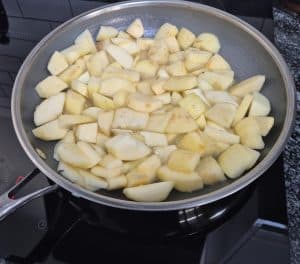
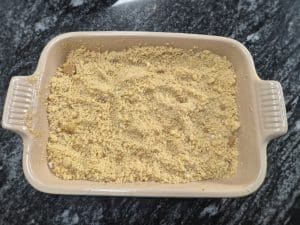
Assemble. Tip the apples and their juices into the dish and level them off. Scatter the crumble topping over in an even layer without pressing it down.
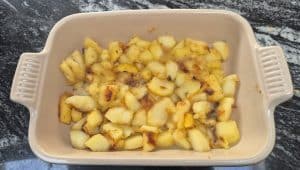
First bake. Bake for 30 minutes, until the topping has set and is starting to colour.
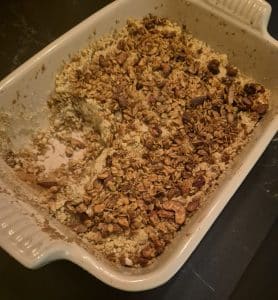
Add the granola. Scatter the granola evenly over the top and return to the oven for 12–13 minutes, until deep golden and the fruit is bubbling at the edges. Check from 10 minutes, and if it’s colouring too fast, lay a sheet of foil loosely over the top.
Rest. Leave to stand for 10 minutes before serving with custard, cream or vanilla ice cream.
Recipe notes
- Sugar. Cooking apples need 75–90g, a cooking/eating mix around 70g, dual-purpose apples such as Charles Ross around 60g, and eating apples alone 40–50g. Taste a raw slice: if it makes you wince, go to the top of the range.
- Granola. It goes on after 30 minutes, never at the start, or the nuts and honey will scorch. A nutty, lightly sweetened granola works best. No need to crush it unless it has clusters bigger than a hazelnut.
- Watery fruit. With Bramleys or other juicy cooking apples, toss the fruit with 1 tsp cornflour before assembling.
- Make ahead. The raw crumble topping freezes for up to three months and can be baked from frozen, adding about 5 minutes to the first bake.


