
This Basque-style beef ragu takes me straight back to San Sebastian, one of the foodie places that has made the biggest impression on me. I’ve been twice and loved every minute of it. It’s a foodie’s paradise, where the locals live and breathe food and, trust me, take what they eat very seriously. The old town alone has over two hundred bars, with many more in and around the city.
Pintxos bars are the place to try small, bite-sized snacks, all beautifully presented. Each bar has its own speciality and features local producers. Days in San Sebastian are spent hopping between pintxos bars, grabbing a snack for a few euros washed down with txakoli wine or the local cider, so you can see why I like it. The locals will often visit five or six pintxos bars before going out to eat.
The Basque Country straddles northern Spain and south-west France. Basques are fiercely independent and proud of their region; they even have their own language, Euskara.
My recipe is my homage to San Sebastian and the region, and my take on a local dish called sukalki, which means “make at home” or “stew”. It’s a comforting one-pot dish of slow-cooked beef shin (off the bone) in a classic ragu without tomatoes, with sliced potatoes, peas and a warming background kick of smoked pimentón. It’s one of those slow-cooked dishes that fill the kitchen with a lovely aroma, building your anticipation for the meal ahead. You do need patience, as it takes about 3 hours in the oven, but it is well worth the wait.
Please give it a try. I’m hoping to do a foodie tour of San Sebastian and the surrounding area next year, where I’ll be featuring more recipes from the region.

What Is Sukalki? A Basque Beef Ragu Without Tomatoes
Sukalki is one of the best-loved everyday dishes of Basque home cooking: chunks of beef slowly braised with onion, carrot, potatoes and peas, coloured and flavoured with dried red peppers. It is a complete meal in one pot, and in the Basque Country it is traditionally cooked in the txokos, the private gastronomic societies where members gather to cook and eat together.
The dish is taken seriously enough to have its own championship. Every summer the town of Mungia, near Bilbao, holds Sukalki Eguna (sukalki day), a cooking contest that has run since the 1960s and draws well over a hundred teams.
When most of us think of a beef ragu, we picture an Italian sauce built on tomatoes and red wine. Sukalki shows there is more than one way to make one. Here the sauce comes from beef stock, brandy and smoked pimentón, which gives it a deep, savoury flavour and a lovely rust-red colour without a single tomato.
Why Beef Shin Is the Best Cut for Beef Ragu


Beef shin is my go-to cut for any slow-cooked beef ragu. It’s a hard-working muscle that’s full of connective tissue, which is exactly what you want. Over three hours of gentle cooking that tissue melts into gelatine, giving you meat that falls apart at the touch of a spoon and a sauce with real body. A beef shin ragu is also good value, as shin is one of the cheaper cuts on the butcher’s counter.
Ask your butcher for shin off the bone and cut it into large chunks, about 5cm (2in). Bigger pieces stay juicy and hold together in the pot, whereas small pieces can dry out and turn stringy. If you can’t get shin, beef cheek or chuck steak both work well, although cheeks may need a little longer.
Key Ingredients
Smoked pimentón: Spanish pimentón de la Vera is made from peppers smoked over oak, and it is the backbone of this dish. I use a mix of 1 tsp hot (picante) and 1 tsp sweet (dulce), which gives a gentle background heat that most people will enjoy. Ordinary paprika won’t give the same smoky depth.
Brandy: Cognac or a Spanish brandy adds richness and a faint sweetness to the sauce. Flambéing it burns off the harsh alcohol and leaves the flavour behind.
Banana shallots: halved lengthways and added for the last hour or so, they soften and sweeten while keeping their shape.
Waxy potatoes: a waxy variety such as Charlotte or Maris Peer holds its shape in the stew. Floury potatoes like Maris Piper will break up and thicken the sauce, which isn’t the end of the world, but you lose the neat slices.
Beef stock: use a good fresh stock if you can, as it makes up most of the sauce. A quality stock pot or concentrate is the next best thing.
Tips for the Perfect Slow-Cooked Beef Ragu
- Brown the beef properly. Work in batches so the pot isn’t crowded. A dark crust on the meat means more flavour in the sauce.
- Keep it at a gentle simmer. The liquid should barely bubble. A rolling boil tightens the meat fibres and makes them stringy, however long you cook it.
- Don’t burn the pimentón. Stir it into the softened vegetables for no more than 30 seconds before the brandy goes in. Scorched pimentón turns bitter.
- Time the potatoes to the beef. Shin varies, so check the meat at 2 hours 15 minutes. The potatoes need about 45 minutes, so add them once the beef is starting to give.
- Judge it by texture, not the clock. It’s ready when the beef falls apart when prodded. If it needs longer, give it another 20 to 30 minutes.
- Flambé safely. Turn off the extractor fan, keep sleeves and hair well clear, and have the lid to hand to smother the flames if needed.
Can You Make Beef Ragu in a Slow Cooker?
Yes. Follow the recipe up to the point where the beef goes back into the pot, then transfer everything to your slow cooker instead of putting it in the oven. Reduce the stock to 500ml (17fl oz / 2 cups), as a slow cooker loses very little liquid. Cook on low for 7 to 8 hours, until the beef is tender. Then turn it to high, add the shallots and potatoes, and cook for a further 1 to 1½ hours until the potatoes are tender. Stir in the peas for the last 15 minutes.
What to Serve with Beef Ragu
With potatoes and peas already in the pot, this beef ragu is a meal in itself. All it really needs is some crusty bread to mop up the sauce, which is how it’s eaten in the Basque Country. If you wanted to add fine green beans into the stew as well as or instead of peas, that would work; otherwise, you could take out the sliced potatoes and make creamy mashed potatoes.
To drink, a Rioja or another Spanish red works well, or keep it Basque with a glass of local cider.
Any leftover meat makes a great pasta sauce. Shred the beef into the sauce, leave out the potatoes and peas, and toss it through pappardelle with plenty of black pepper.
If you love slow-cooked beef, try my beef short ribs in red wine or my slow-cooked beef brisket.
Storing, Freezing and Reheating
Fridge: let the ragu cool, then cover and keep it in the fridge for up to 3 days. Like most stews, it tastes even better the next day.
Freezer: freeze in airtight containers for up to 3 months. The potatoes can turn slightly grainy after freezing, so if you plan to freeze it, you could leave them out and add freshly cooked potatoes when you reheat. Defrost overnight in the fridge.
Reheating: warm it gently in a covered pan on the hob until piping hot all the way through, adding a splash of stock or water if the sauce has thickened.
Beef Ragu FAQs
What is beef ragu?
A beef ragu is a slow-cooked stew or sauce of beef braised in liquid until meltingly tender. In Italy it is usually tomato-based and served with pasta, but versions are cooked across Europe. This recipe is based on sukalki, a Basque beef ragu made with stock and smoked pimentón rather than tomatoes.
Does beef ragu have to contain tomatoes?
No. Many Italian ragus use tomatoes, but the Basque sukalki gets its colour and depth from pimentón and dried red peppers instead. The result is just as rich, with a smokier flavour.
What is the best cut of beef for ragu?
Beef shin is my favourite, as its connective tissue breaks down during slow cooking to give soft, tender meat and a silky sauce. Beef cheek and chuck steak are good alternatives.
Can I use stewing steak instead of beef shin?
Yes, although pre-cut stewing steak is often in small pieces that can dry out. If you use it, check it after 2 hours and add the potatoes once it’s tender.
Why is my beef ragu tough?
Usually because it hasn’t been cooked long enough, or it has been boiling rather than gently simmering. Make sure the liquid is barely bubbling and give it more time. Shin can take up to 3½ hours.
Can I make beef ragu ahead of time?
Yes, and it’s even better for it. Make it a day ahead, cool it and keep it in the fridge, then reheat gently. If you’re cooking ahead, slightly undercook the potatoes so they don’t go soft when reheated.
Do I have to Basque beef ragu with beef shin, potatoes and peas in a cast iron casserole, topped with chives?
No. If you’d rather not, pour in the brandy and let it bubble for a minute or two to cook off the alcohol before adding the stock.
Can I make it without alcohol?
Yes. Leave out the brandy and deglaze the pot with an extra 100ml (3½fl oz) of stock. Add a teaspoon of sherry vinegar at the end to bring back a little depth.
What is the difference between pimentón and paprika?
Both are made from ground dried red peppers, but Spanish pimentón de la Vera is smoked over oak, which gives it a distinctive smoky flavour. It comes in three styles: sweet (dulce), bittersweet (agridulce) and hot (picante).
Can I use choricero peppers?
Yes, and it’s the traditional choice. Traditional sukalki uses dried choricero peppers, a mild Basque pepper. Soak two in hot water, scrape out the flesh and stir it in with the stock, or use a tablespoon of choricero pepper paste. You can then halve the pimentón.
Can I serve beef ragu with pasta?
Yes. For a pasta sauce, leave out the potatoes and peas, shred the beef into the sauce and toss it through pappardelle or rigatoni.
Beef Ragu: A Basque-Style Slow-Cooked Beef Shin Stew
Print RecipeIngredients
- 2–3 tbsp olive oil
- 1kg (2lb 3oz) beef shin, off the bone, cut into large chunks
- Sea salt and freshly ground black pepper
- 1 small onion, finely chopped
- 2 carrots, finely chopped
- 6 banana shallots, peeled and halved lengthways
- 1 tsp hot smoked pimentón (picante)
- 1 tsp sweet smoked pimentón (dulce)
- 100ml (3½fl oz / scant ½ cup) Cognac or brandy
- 750ml (25fl oz / 3 cups) fresh beef stock or bone broth
- 3 bay leaves
- 450g (1lb) medium waxy potatoes, peeled and thickly sliced
- 150g (5oz / 1 cup) fresh or frozen peas
- Garnish with Small bunch of chives, finely chopped, to serve
Instructions
Heat the oven to 180°C (160°C fan / 350°F / gas 4).
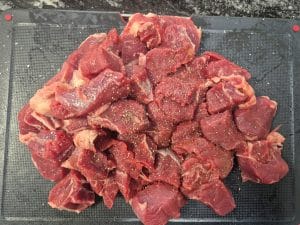
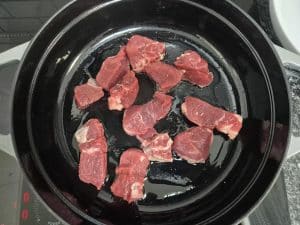
Heat 2 tbsp of the oil in a large flameproof casserole with a lid over a high heat. Season the beef well and brown it in two or three batches so the pot isn’t crowded, getting a good dark crust on all sides. Lift each batch onto a plate and set aside.
Turn the heat down to medium and add a splash more oil if needed. Add the onion and carrot and cook for about 10 minutes, scraping up the browned bits from the beef, until softened.
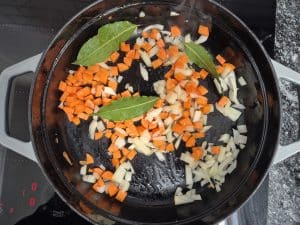
Stir in both pimentón powder and cook for 30 seconds, just until fragrant. Don’t let it catch or it will turn bitter.
Take the pot off the heat and pour in the brandy. Return it to the heat and carefully set it alight. Let the flames die down on their own.
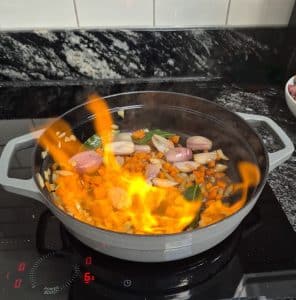
Put the beef and any resting juices back in the pot with the garlic. Pour in the stock, tuck in the bay leaves and bring to the boil. Cover with the lid and put it in the oven for 3 to 3½ hours, checking the meat after 3 hours.
After 2 hours, tuck the shallot halves into the stew, cover and return to the oven. This way they hold their shape.
After 2 hours 15 minutes, check the beef. The potatoes need about 45 minutes, so if the beef is starting to give when prodded, stir them in, pushing them under the liquid, then cover and return to the oven. If the beef is still firm, give it another 15 to 30 minutes before adding the potatoes.
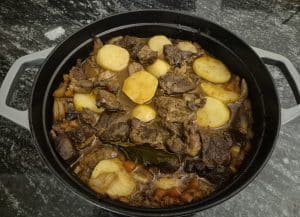
About 10 minutes before serving, stir in the peas, cover again and return to the oven.
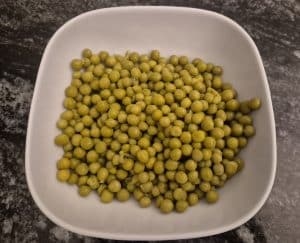
When the beef falls apart when prodded and the potatoes are tender, the stew is ready. If the sauce is thinner than you’d like, take the lid off for the last 20 minutes or boil it down briefly on the hob. Remove the bay leaves, check the seasoning, scatter with the chives and serve.
Recipe notes
The mix of hot and sweet pimentón gives a gentle background heat. For no heat, use 2 tsp sweet smoked pimentón, or 2 tsp bittersweet (agridulce) if you only want to buy one tin.
Shin varies, so judge it by texture rather than the clock. Keep the stew at a gentle simmer, not a rolling boil.
Flambé safely: turn off the extractor fan, keep sleeves and hair clear, and have the lid to hand to smother any flames.
Slow cooker: see the slow cooker section above for timings.


