Introduction
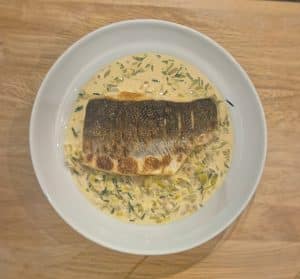
I was on holiday in the Greek islands recently, eating in a lovely little taverna, when I spotted sea bass fricassée on the menu. I had to order it. It was delicious: a fresh fillet of sea bass resting on a creamy fricassée sauce, the two working together perfectly.
It worked so well, in fact, that I came home determined to make my own version, using organic leeks and shallots and cream from Wylde Market, a little lemon juice and chives from my herb garden.
I served mine with mini roast potatoes and fine green beans, though boiled or roasted new potatoes would work just as well. There are more serving suggestions further down.
The best thing about this recipe is how easy it is to prepare and cook. Twenty minutes at the stove and you have a restaurant-quality dish on the table, the kind that draws admiring glances in your direction. I hope you give it a try.
Recipe notes
Dry skin is everything. It is hard to overstate how much the skin needs drying. Any moisture left on it steams rather than fries, and the skin turns soft and sticks. Pat it dry, salt it, leave it uncovered, then pat it dry again just before it goes in the pan.
Season the leeks early. Leeks, shallots and cream are all mild and sweet, so the fricassée needs proper seasoning to come alive. Salting and peppering the leeks and shallots as they go into the pan seasons them through and helps them soften without colouring. Seasoning only at the end leaves the sauce flat.
Thick or thin fillets. The skin needs at least 3 minutes in the pan to crisp, whatever the fillet. Wild bass fillets are thick and need that time for the flesh too. Thinner supermarket fillets cook through much faster, so give them the full 3 minutes on the skin but only a brief baste once turned.
Why the leek. Shallots alone give you a cream sauce. A finely sliced leek gives the sauce body and something for the fish to sit on, which is what makes it a fricassée rather than just a sauce. One large leek, 80–100g, is plenty; it cooks down, but much more and the leek crowds out the fish.
What I changed after testing this recipe
I cooked this several times before settling on the version above. These are the changes that made the difference, and the reasoning behind them.
Half a lemon, not a whole one. My first attempt used the juice of a whole lemon, which overwhelmed the cream and buried the delicate flavour of the bass. Half a lemon, about 4 teaspoons, lifts the sauce without taking it over. Add it off the heat and taste before you serve.
Room-temperature cream. Cold cream straight from the fridge can catch or split when it hits a hot pan. Taking it out 20 minutes beforehand means it blends in smoothly.
Finishing the sauce off the heat. I originally simmered the cream to reduce it. Turning the heat off altogether and stirring the cream, lemon and chives into the reduced wine gives a cleaner, silkier sauce and removes any risk of splitting. The residual heat in the pan keeps it warm while the fish cooks.
Less leek. I started with 150g of leek and it crowded out the fish. One large leek, 80–100g trimmed, is right: it cooks down considerably, and that amount gives the sauce body without turning the dish into a leek dish.
Seasoning the leeks and shallots early. Adding salt and black pepper as they go into the pan, rather than seasoning at the end, seasons them through and makes the finished sauce taste rounder. Black pepper works better here than white.
Three minutes, minimum, on the skin. I lifted the fish too early on my first go, and the skin was pale and soft. It needs a full three minutes, undisturbed, whatever the thickness of the fillet.
A knob of butter when the fish is turned. Basting the fillets in foaming butter for the last minute adds richness and finishes the flesh gently without overcooking it.
What to serve with sea bass
Chipped potatoes and green beans are a good match: the crisp potatoes contrast with the creamy fricassée and the beans add freshness and colour. Cut the potatoes into chunky dice and roast them in the oven at 190°C fan (210°C conventional, 410°F) for about 40 minutes until golden and crisp. Put them in before you start the fricassée and everything comes together at the same time.
Other potatoes. Boiled or roasted new potatoes, crushed new potatoes with olive oil, or a simple buttery mash all work. Anything that will soak up the sauce.
Grains and pulses. Brown rice makes it a more substantial supper, and Puy lentils are particularly good here: their earthiness holds its own against the cream without competing with the fish.
Green vegetables. Tenderstem broccoli, mangetout, samphire in season, or shredded kale wilted in a little butter. Keep them plainly cooked and slightly underdone, as the sauce provides all the richness the plate needs.
To drink. Serve the rest of the bottle you cooked with. A dry, unoaked white with decent acidity is what you want, to cut through the cream.
Variations
Mustard instead of lemon. Leave out the lemon juice and stir a teaspoon of Dijon mustard into the sauce off the heat. It gives you a rounder, warmer sauce rather than a bright one, and works especially well in colder months.
Other fish. The fricassée suits any firm white fish with skin worth crisping. Sea bream is the closest swap. Cod loin, hake or pollock all work, though they need a little longer in the pan.
More herbs. Chives are the classic choice and keep the sauce clean-tasting, but a little chopped tarragon or dill stirred in at the end takes it somewhere slightly more French.
Frequently asked questions
How do you get crispy skin on sea bass?

Three things, in order of importance: dry skin, a properly hot pan, and leaving the fish alone once it’s in. Pat the skin dry with kitchen paper until the paper comes away dry, salt it and leave it uncovered while you make the sauce, then pat it dry once more before it goes in the pan. Press the fillets flat for the first 20–30 seconds so the whole skin makes contact, then don’t move them for at least 3 minutes.
Can I use farmed sea bass instead of wild?
Yes. Farmed fillets are usually thinner and cook through faster, so give the skin the full 3 minutes but baste for only 20–30 seconds once turned.
Do you eat the skin on sea bass?
Yes, and when it’s crisped properly it’s the best part of the dish. That’s why the fish goes on top of the sauce rather than under it.
How do I know when sea bass is cooked?
The flesh turns from translucent to opaque and flakes when pressed gently. With a probe thermometer, take it off the heat at 50–55°C (122–131°F) in the thickest part; it carries on cooking for a moment after it leaves the pan.
Can I make the fricassée ahead?
The leek and shallot base can be sweated and the wine reduced up to a day ahead, then kept covered in the fridge. Warm it through gently, take it off the heat and stir in the cream, lemon and chives just before serving. Don’t add the cream in advance, as reheating a finished cream sauce risks splitting it.
Can I use single cream or crème fraîche?
Double cream is more forgiving because of its higher fat content. Single cream is thinner and more likely to split, so only add it off the heat. Crème fraîche works and gives a tangier sauce, in which case cut the lemon back to a quarter or leave it out altogether.
Can I freeze it?
No. Cream sauces separate on thawing and the fish is best cooked and eaten straight away. This is a 30-minute recipe, so it’s not one that needs making in advance.
What wine should I use?
Any dry white you’d happily drink. Something crisp and unoaked keeps the sauce fresh. Avoid heavily oaked whites, which turn heavy once reduced into cream.
Recipe-Ingredients and Method

Pan-Fried Sea Bass with a Leek and Shallot Fricassée
Print RecipeIngredients
- For the fricassée
- 15g (1 tbsp) unsalted butter
- 2 banana shallots, finely chopped
- 1 large leek, 80–100g (3–3½ oz) once trimmed, halved lengthways, washed and finely sliced
- 100ml (scant ½ cup) dry white wine
- 150ml (⅔ cup) double cream (heavy cream), at room temperature
- ½ lemon, juiced (about 4 tsp)
- 1 small bunch chives, about 10g, finely chopped
- Sea salt and freshly ground black pepper
- For the sea bass
- 2 wild sea bass fillets, skin on, about 150g (5 oz) each
- 1 tbsp olive oil
- 15g (1 tbsp) unsalted butter
- Sea salt
Instructions
Method
Take the chill off the cream. Take the cream out of the fridge about 20 minutes before you start. Cold cream added to a hot pan can catch or split, and room-temperature cream blends into the sauce smoothly off the heat.
Dry and prepare the fish. This is the step that decides whether the skin crisps, so don’t rush it. Pat the fillets thoroughly dry with kitchen paper, pressing firmly on the skin side, and keep going with fresh sheets until the paper comes away completely dry. Lightly score the skin two or three times with a sharp knife, just through the skin and not into the flesh, to stop the fillets curling. Season the skin with salt and leave on a plate, skin side up and uncovered, while you make the fricassée. The salt draws moisture out of the skin.
Sweat the leek and shallots. Melt the butter in a wide pan over a low to medium heat. Add the shallots and leek and season well with salt and black pepper straight away. Cook gently for 8–10 minutes, stirring now and then, until completely soft and sweet. The leek cooks down considerably. They should not colour at all: a fricassée is cooked in butter without browning.
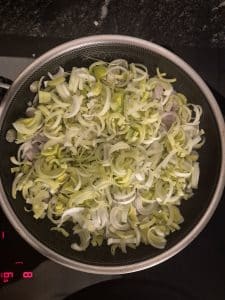
Reduce the wine. Pour in the wine, turn the heat up a little and let it bubble until reduced by about two-thirds, 3–4 minutes.
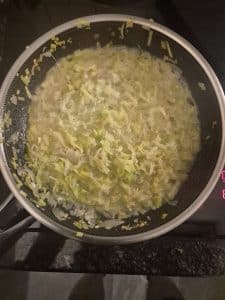
Finish the fricassée off the heat. Turn off the heat. Stir in the cream, the juice of half a lemon and most of the chives. Taste and adjust the seasoning. Cover and leave in the pan, where the residual heat keeps it warm while you cook the fish.
Cook the sea bass skin side down. Pat the skin dry once more, as it will have drawn out moisture under the salt. Heat the olive oil in a non-stick or well-seasoned frying pan over a medium-high heat until shimmering. Lay the fillets in skin side down, laying them away from you, and press each one flat with a fish slice for 20–30 seconds so the whole skin makes contact with the pan. Cook without moving them for at least 3 minutes, until the skin is golden and crisp. Thick fillets like wild bass take 3–4 minutes, by which point the flesh will have turned opaque about three-quarters of the way up the sides.
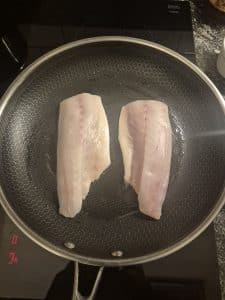
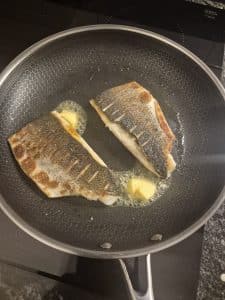
Turn and baste with butter. Turn the fillets over and add the butter to the pan. As it melts and foams, spoon it over the fish for about a minute for thick fillets, or just 20–30 seconds for thin supermarket fillets, which will be almost cooked through by the time the skin is crisp. The flesh should just flake. If you’re using a probe thermometer, take them off at 50–55°C (122–131°F) in the thickest part.
Serve. Give the fricassée a stir and spoon it into two warmed shallow bowls. Sit the sea bass on top, skin side up so it stays crisp, scatter over the remaining chives and serve straight away.