Table of Contents
Written by Martin Seymour | Editor, The Mayfair Foodie | About Me
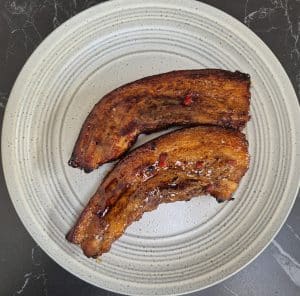
This Asian pork belly recipe uses boneless pork belly slices sourced from Wylde Market, an online farmers’ market supplying produce from British farmers and local producers. The recipe serves 2–3 and uses approximately 450–500g of pork belly slices. The marinade is built around a Thai-inspired sweet-sour-salty-spicy flavour profile: tamarind paste and fresh lime juice (sour), honey (sweet), Thai fish sauce and soy sauce (salty), and finely chopped red chilli (heat). An optional wet brine — salt, sugar, bay leaves and peppercorns dissolved in 500–600ml of water — is recommended for 12 hours before cooking, seasoning the meat through and improving succulence. The pork is marinated for a minimum of 1 hour (3 hours recommended) and roasted at 180°C / 160°C fan for 40–50 minutes. The target internal temperature is 90–95°C, which is significantly higher than lean pork cuts, allowing the fat and connective tissue to soften fully. A reserved spoonful of marinade is brushed over at the end and the pork rested for 10 minutes before serving. Leftovers keep refrigerated for up to 3 days and freeze well for up to 2 months.

1 How This Asian Pork Belly Came Together
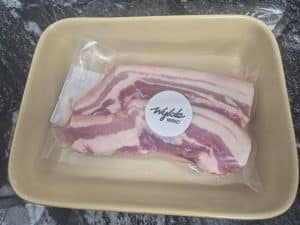
I picked up these beautiful organic pork belly slices from Wylde Market, the online farmers’ market featuring local producers and farmers. The big question was: how do I cook them? I could go traditional, slow-roasted with apple, or venture to the Middle East, coating the pork belly in ras el hanout. In the end, I decided to go Asian — and this sticky Asian pork belly is the result. I wanted to create a marinade built around the sweet, sour, spicy and salty flavour profile of Thailand. The great thing about pork belly is that it’s a reasonably cheap cut and it works well with spices. It’s used a lot in Chinese cookery, too, but I wanted to give it a slightly sweet and sour flavour.
The sourness comes from tamarind paste and lime juice, and the sweetness from honey. Add to that Thai fish sauce and soy sauce, with the heat coming from chopped red chilli.
With such good produce, I wanted to highlight the pork, so as well as marinating, I decided to brine the pork belly. Brining brings out and retains the flavour in meat. I went for a wet brine — salt, sugar, bay leaves and peppercorns — though you can dry brine meat with just salt. I fully appreciate that brining adds a time dimension to the recipe (I brined the pork overnight), so if you’re short on time, feel free to skip this step.
Anyhow, I was very pleased with the overall result: the pork was succulent and tender, and the Asian marinade worked a treat — a definite keeper. Hopefully you’ll give it a try. Below I’ve added some more details on brining meat, and also what to serve my Asian pork belly with.
3 Why You’ll Love This Recipe
- Big, punchy flavour — sweet, sour, salty and spicy all at once, inspired by the balance you find in Thai cooking.
- A budget-friendly cut — pork belly is one of the cheapest, most forgiving cuts you can buy, and it rewards a little patience.
- Mostly hands-off — once the brine and marinade are doing their thing, the oven does the rest.
- Wonderfully versatile — serve it as a proper main with rice and greens, or cube it up for one of the easiest canapés going.
4 The Marinade: Sweet, Sour, Salty and Spicy
The whole recipe hangs on getting four flavours to sing together in one sticky glaze. Get the balance right and it tastes far more sophisticated than the short ingredient list suggests. Here’s who’s doing what:
| Flavour | Where it comes from |
|---|---|
| Sour | Tamarind paste and fresh lime juice |
| Sweet | Honey |
| Salty | Thai fish sauce and soy sauce |
| Spicy | Finely chopped red chilli |
Tamarind is the star of the sourness — a dark, fruity, tangy paste used all over South and Southeast Asian cooking. You’ll find it as a paste or a block in most large supermarkets and world-food aisles, and it keeps for ages. Honey rounds off the sharp edges and, just as importantly, helps everything caramelise into that glossy, sticky finish. Thai fish sauce adds a savoury, umami saltiness — don’t be put off by the smell, a little goes a long way and it’s what makes the whole thing taste properly moreish. Soy sauce backs it up with depth and colour, lime juice brings a fresh brightness (I add a little at the end, too), and red chilli brings the warmth — deseed it for a gentle heat, or leave the seeds in if you like more of a kick.
5 A Word on Pork Belly Slices

I used ready-cut boneless pork belly slices for this, which I picked up from Wylde Market (their boneless pork belly slices are lovely — you’ll find them at wylde.market). Slices are my go-to for a recipe like this: they cook far quicker than a whole belly joint, they’ve got a brilliant ratio of meat to fat, and all that surface area means the marinade really gets to work.
You can absolutely use a whole piece of belly instead — just give it a good deal longer in the oven and let it get properly tender. And a quick note on the skin: we’re not chasing crackling here. This recipe is all about a soft, sticky, sweet-and-sour finish rather than a crisp crackling top, so don’t worry if your slices are skinless.
6 To Brine or Not to Brine?
Brining is simply treating meat with salt before you cook it — either dissolved in water or rubbed straight on — so that it’s seasoned all the way through and holds on to more of its moisture. It’s one of those quiet techniques that makes a real difference, and it’s well worth understanding. There are two main methods.
Wet brine
This is what I did here. You dissolve salt (and usually a little sugar, plus aromatics like bay and peppercorns) in water, then submerge the meat and leave it in the fridge. The meat absorbs some of that seasoned liquid, so it’s the best method when you want to add moisture as well as flavour. It does need a container big enough to hold everything and space in the fridge, which is the only real faff.
Dry brine
Here you rub salt — sometimes with sugar or spices — directly onto the surface of the meat and leave it uncovered in the fridge. It’s less hassle, needs no big tub of liquid, and it dries and firms the surface beautifully, which is exactly what you want when you’re after crisp skin or a good sear.
Equilibrium brine
For the keen: weigh your salt as a percentage of the combined weight of the meat and water (around 1.5–2% is typical). Because you’re controlling the exact salt ratio, it’s almost impossible to over-salt, even if you forget it in the fridge for an extra few hours.
The benefits, whichever method you choose:
- Seasons the meat all the way through, not just on the surface.
- Helps it stay juicy and succulent during cooking.
- Can improve texture and tenderness.
- Buys you a little forgiveness if you happen to overcook it slightly.
As for which meats benefit most, it really comes down to how lean the cut is — the leaner and more prone to drying out, the bigger the payoff:
| Meat / cut | Worth brining? | Why |
|---|---|---|
| Chicken & turkey (lean breast, whole birds) | Yes — big difference | Lean and dries out easily, so brining keeps it juicy |
| Pork chops & pork loin | Yes | Lean and prone to drying; brining is transformative |
| Pork belly | Optional but nice | Already fatty, so less essential — but it seasons through and adds succulence |
| Prawns / shrimp | A quick brine helps | Firms the texture and seasons fast |
| Well-marbled beef (steak, brisket, short ribs) | Usually skip | Enough fat and flavour already; salting before or after is plenty |
The honest truth with this recipe is that because pork belly is already rich and fatty, brining matters less than it would for, say, a lean chicken breast. It genuinely does add a little something — a deeper seasoning and extra succulence — but it’s the one step you can drop without ruining the dish. So if you’re short on time, skip it with a clear conscience.
7 How to Cook Your Asian Pork Belly
Here’s the shape of it, start to finish. (The full ingredients and quantities are in the recipe card below.) If you’re brining, get that going the night before — heat the brine until the salt and sugar dissolve, let it cool completely, then submerge the pork and leave it in the fridge for around 12 hours.
When you’re ready to cook, mix up the marinade and — this bit matters — hold back a clean spoonful before it goes anywhere near the raw pork, so you’ve got some to brush on at the end. Coat the pork in the rest and leave it to marinate for at least an hour (I gave mine three). Take it out of the fridge about 30 minutes before cooking so it isn’t fridge-cold going into the oven.
Roast at 180°C / 160°C fan for 40–50 minutes, until the internal temperature reaches around 90–95°C. Brush over that reserved marinade, then let it rest for 10 minutes before serving. A few things that make it better:
- Line your tray. The honey and marinade caramelise into the best bit — but they’ll also weld themselves to a bare tin. A sheet of foil or a liner saves a lot of scrubbing.
- Why so hot inside? Unlike a lean pork chop (which you’d take to around 63–71°C), belly wants a much higher internal temperature — around 90–95°C — so the fat and connective tissue soften and it turns meltingly tender rather than chewy.
- Guard the glaze. All that sugar and honey can tip from sticky to burnt in the last ten minutes. If it’s colouring too fast, drop the heat or lay a loose sheet of foil over the top.
- Rest it. Ten minutes lets the juices settle and the glaze set to a proper sticky finish.
8 Getting the Balance Right
Taste the marinade before it goes on and trust your palate — every tamarind paste and chilli is a little different. Too sharp? A touch more honey. Tasting a bit flat? A splash more fish sauce or soy. Want more zing? Save some lime to squeeze over at the end. After more heat? Leave the chilli seeds in, or add a second chilli. As a rule of thumb it should taste slightly too bold on its own, because it mellows once it’s on the pork.
9 Make-Ahead, Storage and Reheating
- Brine ahead: up to 24 hours in the fridge.
- Marinate ahead: a few hours or overnight is ideal — I wouldn’t push much beyond that, as the acidity can start to soften the surface of the meat too much.
- Leftovers: keep in an airtight container in the fridge for up to 3 days. They’re lovely cold, sliced into a noodle salad or tucked into a wrap or bao bun.
- Freezing: cooked pork belly freezes well for up to around 2 months. Defrost fully in the fridge before reheating.
- Reheating: warm gently in a moderate oven (around 160°C) covered with foil so it doesn’t dry out, or give it a quick blast in a hot pan to bring the edges back to life.
10 Serving Suggestions
As a main, this Asian pork belly loves a bed of plain rice or noodles to soak up all that sticky glaze — jasmine rice, egg-fried rice or a tangle of rice noodles all work beautifully. Keep the greens simple and fresh alongside: steamed or stir-fried pak choi, fine green beans or tenderstem broccoli, maybe with a little garlic and a splash of soy. Finish with some sliced spring onion, a scattering of fresh coriander, a wedge of lime and a few toasted sesame seeds, and you’ve got a plate that looks like it wandered in from your favourite restaurant.
It also makes a brilliant little canapé. Cut the cooked belly into neat cubes, pop a cocktail stick in each one, and you’ve got sticky, sweet-and-sour bites that vanish in seconds at a party — always the first thing to go.
11 Variations
- Go traditional: slow-roast the belly with apple and a splash of cider for a classic British Sunday-lunch treatment.
- Head to the Middle East: swap the marinade for a ras el hanout rub — warm, fragrant and a completely different mood.
- Take it Chinese: I’ve already got a whole post on this one — my Chinese-style pork belly slices lean on hoisin, five-spice and a few store-cupboard staples for a proper takeaway-style glaze. Well worth a look if that’s the direction you fancy.
- Dial the heat up or down: deseed the chilli for gentle warmth, or leave the seeds in — or add a second chilli — if you like things fiery.
- Use the air fryer: the slices do well at around 180°C — just check them early, as they’ll colour a little faster.
- Cook a whole belly: use a whole boneless piece instead of slices, extending the cooking time and giving it longer to turn tender.
12 Common Mistakes to Avoid
- Over-brining. Leave it too long in a salty brine and the pork can turn overly salty and firm — around 12 hours is the sweet spot.
- Skipping the rest. Give it those 10 minutes out of the oven so the juices settle and the glaze sets.
- Burning the glaze. All that honey and sugar catches fast — keep a close eye on it towards the end.
- Not reserving any marinade. Hold back a clean spoonful before marinating, so you’ve got something safe to brush over the finished pork.
- Pulling it too early. Belly needs that higher internal temperature to go tender — undercooked, it’ll be chewy rather than melting.
13 Frequently Asked Questions
What is pork belly?
It’s the boneless (usually) cut from the underside of the pig — layers of meat and fat that make it rich, forgiving and excellent value. That fat is exactly why it stays so succulent.
Do I have to brine the pork belly?
No. Brining adds flavour and succulence, but because belly is already fatty it’s optional — feel free to skip it if you’re short on time.
What is tamarind and what does it taste like?
Tamarind is a tangy, dark, fruity paste used across South and Southeast Asian cooking. It’s sharp with a slight sweetness — a bit like a sour date. You’ll find it as a paste or block in most large supermarkets and world-food aisles.
Can I make it without tamarind?
Yes — a little extra lime juice, or a splash of rice vinegar, will give you the sourness. The flavour won’t be quite identical, but it’ll still be delicious.
Is this recipe spicy?
Only mildly, as written. Deseed the chilli for a gentle warmth, or leave the seeds in (or add another chilli) if you like more heat.
Can I cook pork belly slices in an air fryer?
Yes — around 180°C works well. They’ll colour a little faster than in the oven, so check early and brush with the reserved marinade at the end.
What internal temperature should pork belly reach?
Aim for around 90–95°C — much higher than a lean pork chop — so the fat and connective tissue soften and the meat turns properly tender.
Can I use a whole piece of pork belly instead of slices?
Absolutely. Just cook it for considerably longer and give it time to become tender all the way through.
Can I prepare it ahead?
Yes — you can brine and marinate in advance, and any leftovers keep in the fridge for up to 3 days.
Can I freeze it?
Yes, cooked, for up to around 2 months. Defrost fully in the fridge before reheating gently.
What should I serve with Asian pork belly?
Rice or noodles to soak up the glaze, plus simple greens like pak choi, fine green beans or tenderstem broccoli. See the serving suggestions above for more ideas.
Where can I buy good pork belly slices?
A good butcher, most supermarkets, or — as I did here — an online farmers’ market like Wylde Market.
14 Final Thoughts
There’s something very satisfying about turning a cheap, humble cut into something this good. The brine and marinade do nearly all the heavy lifting, the oven does the rest, and what comes out is sticky, tender and full of that sweet-sour-salty-spicy balance that keeps you going back for one more piece. Make it once as written, then start playing — more chilli, more lime, whatever suits you. I’d love to know how you get on. Enjoy!
15 Recipe: Ingredients and Method
Asian Pork Belly
Print RecipeIngredients
- Pork Belly slices 450/500g
- For the Marinade
- 2 tbls of Tamarind paste
- 2 tbls of honey
- 1 tsp of fish sauce
- 1 tsp of soy sauce
- Small red chilli deseeded and finely chopped
- 2 tbls of lime juice
- For Brine mixture
- 500/600ml Water (enough to cover the pork)
- 2 tbls salt
- 2 tbls Sugar
- 2 bay leaves
- 1 tsp peppercorns
Instructions
Brine (optional)
Heat the brine ingredients in a saucepan until the salt and sugar have dissolved, then leave to cool completely. Pour into a non-metal tray, add the pork slices so they’re covered, and refrigerate for around 12 hours. 

Marinade & cook

Mix all the marinade ingredients together. Reserve a small spoonful to brush over the pork once cooked, then pour the rest over the pork. Marinate for at least 1 hour — I gave mine 3.
Take the pork out of the fridge at least 30 minutes before cooking, so it isn’t fridge-cold going into the oven.
Heat the oven to 180°C/160°C fan. Cook the pork for 40–50 minutes, until it reaches an internal temperature of 90–95°C (195–200°F).
Brush the reserved marinade over the pork slices, then leave to rest for 10 minutes before serving.