Table of Contents
Written by Martin Seymour | Editor, The Mayfair Foodie | About Me

To cook gammon, boil it for 20 minutes per 500g, then glaze and roast at 200°C for 20-30 minutes until golden. A 2kg joint takes about 1 hour and 20 minutes to boil. Once cooked, gammon becomes ham – and you’ll have delicious meat for roasts, sandwiches and leftovers all week.
Updated April 2026
1 Why I love Cooking Gammon
I have been cooking gammons for years, and it is something I never get bored with. Over the years, I have tried boiling gammon in a variety of different liquids, herbs, vegetables and aromatics, all of which turned out just fine. A piece of gammon is remarkably resilient and can take on different flavours and spices through the boiling process and the glaze you choose to finish it with.
If you have never cooked a gammon before, the good news is that it is a genuinely easy process. The better news is that once cooked, you have a lovely piece of ham that can be used in a variety of different meals. It makes a wonderful addition to a roast dinner alongside chicken, and nothing beats it served next to the turkey at Christmas. Cook a large enough joint, and you will have plenty left over for gammon, egg and chips the next day, or in sandwiches throughout the week.
In this guide, I am going to share everything I have learned about cooking the perfect gammon. From choosing your joint to understanding cooking times, from the classic boil and glaze method to alternative cooking approaches, and of course, my favourite glaze recipes. By the end of this, you will have all the confidence you need to cook a gammon that will have everyone coming back for seconds.
2 What is the Difference Between Gammon and Ham?
This is probably the question I get asked more than any other when it comes to cooking gammon, and the confusion is entirely understandable. The terms are often used interchangeably, but there is actually a proper distinction between the two.
Gammon is the hind leg of a pig that has been cured by dry-salting or brining. It is sold raw and needs to be cooked before you can eat it. Once you have cooked your gammon, it technically becomes ham. So in simple terms, gammon is the raw product you buy from the butcher or supermarket, and ham is what it becomes after cooking.
The word gammon itself has an interesting history. It comes from the Middle English word gambon, which derives from the Old French jambon, meaning ham. You can see the connection to the modern French word for ham, and indeed to Spanish jamón. The word traces back even further to the Late Latin gamba, meaning leg.
In Britain and Ireland, gammon has been a staple for centuries, traditionally associated with Christmas and Easter celebrations. Historically, pigs were slaughtered in late autumn and the meat preserved through winter. The hind leg was brined, sometimes smoked, and hung in cool spaces. This tradition of serving glazed gammon at Christmas continues to this day, though of course we now enjoy it year-round.
It is worth noting that this distinction between gammon and ham is largely a British and Irish one. In other English-speaking countries, particularly America, the term gammon is rarely used and ham covers both the raw and cooked product.
3 Smoked or Unsmoked Gammon: Which Should You Choose?
When you are shopping for gammon, one of the first decisions you will need to make is whether to go for smoked or unsmoked. Both are excellent, but they do offer different flavour profiles that will suit different occasions and personal preferences.
Unsmoked gammon, sometimes called green gammon, has a milder, more delicate pork flavour. It tends to be less salty and works beautifully with a wider range of glazes. If you are planning a sweeter glaze like honey and mustard or marmalade, unsmoked gammon is often the better choice as the flavours will not compete with each other. Unsmoked is also generally preferred if you are serving the gammon cold in sandwiches, as the flavour is gentler.
Smoked gammon has been cold-smoked over wood chips, which gives it a deeper, more robust flavour with those distinctive smoky notes. It can taste saltier than unsmoked and has a slightly firmer texture. Smoked gammon is wonderful if you want a more pronounced flavour, and it pairs particularly well with stronger glazes or when served as part of a hearty meal with plenty of accompaniments.
Personally, I tend to reach for unsmoked most of the time. I find it more versatile and prefer the cleaner pork flavour. But at Christmas, I often choose smoked for its richer, more festive character. There really is no wrong answer here; it comes down to what you fancy.
4 How to Choose the Best Gammon Joint
Getting a good quality gammon joint is half the battle. Here is what to look for when you are shopping.
Bone-in or Boneless
Gammon joints come either on the bone or boneless. Bone-in joints tend to have slightly more flavour and stay moister during cooking, as the bone helps conduct heat evenly and adds richness. However, they are trickier to carve. Boneless joints are much easier to handle and carve into neat slices, making them the practical choice for most home cooks. I generally go for boneless for convenience, but if you are feeding a crowd and have a confident carver in the family, bone-in is worth considering.
What Size Do You Need?
As a general rule, allow 200g of raw gammon per person for a main meal. This accounts for shrinkage during cooking and ensures generous portions. If you want leftovers, and trust me, you do, go larger. Here is a rough guide:
Serving Size Guide
| Joint Size | Serves People |
|---|---|
| 1 kg | 4-5 people |
| 1.5 kg | 6-8 people |
| 2 kg | 8-10 people |
| 3 kg | 12-15 people |
Where to Buy
Supermarkets stock a good range of gammon joints, particularly at Christmas and are perfectly adequate for most purposes, however, be warned from my experience, they do seem to shrink a lot during cooking.
However, if you want something special, particularly at Christmas or Easter, it is worth visiting a good butcher; they can advise on the best joints, often stock higher welfare pork, and can cut you exactly the size you need. Buying direct from the farm is another option, or, as I do, shop at Wylde Market (an online farmers market) that offers nitrate-free organic gammon.
5 Do You Need to Soak Gammon Before Cooking?
This is one of those questions that causes a lot of confusion, and honestly, the advice out there is all over the place. Some recipes insist you must soak overnight, others say it is completely unnecessary. Here is the truth.
Modern supermarket gammons are generally quite mildly cured and rarely need soaking. The curing methods used today are much less aggressive than they were historically, so the salt content is usually manageable without any pre-treatment. Most supermarket packaging will tell you if soaking is required, and nine times out of ten it will say it is not necessary.
However, if you are buying from a traditional butcher or getting a more artisan product, the cure may be stronger, and soaking could be beneficial. The best advice I can give is to check with your butcher or read the packaging carefully.
If you are unsure, there is a simple test. Cut a small slice from the gammon and simmer it in a little water for a few minutes until cooked through. Taste it. If it is unpleasantly salty, soak the joint in cold water for at least a few hours, preferably overnight, changing the water once or twice. If it tastes fine, you are good to go.
Another approach, and this is what I do, is to bring the gammon to the boil in cold water, then discard that first batch of water and start again with fresh or whatever your are going to cook the gammon in. This blanching step removes some of the surface salt and any impurities, and it only adds a few minutes to the process. I do this as a matter of course, regardless of whether I think the gammon needs it.
6 How to Boil Gammon Perfectly
Boiling, or more accurately simmering, is the foundation of most gammon recipes. It cooks the meat through gently, keeps it moist, and allows you to infuse flavour through the cooking liquid. Here is how to do it properly.
First, find a pot large enough to hold your gammon comfortably with room for water to circulate. Place the gammon in the pot and cover it completely with cold water. Bring the water to the boil, then immediately drain it off. This blanching step removes excess salt and any scum.
Return the gammon to the pot and cover again with fresh cold water. Now you can add your aromatics. I typically add a couple of bay leaves, some black peppercorns, a quartered onion, a few carrots, and a couple of celery sticks. I like to add cinnamon sticks, star anise, fennel seeds or cloves for a more festive flavour. The aromatics are not essential, but they do add a subtle background flavour. I always put the sliced carrots at the bottom of the pan as a trivet and place the gammon on top to stop the gammon from sticking to the pan. A quick tip when the gammon is cooked, take the carrots out and put them with the gammon for glazing, the carrots are an additional treat.


Bring everything to the boil, then immediately reduce the heat to a gentle simmer. You want small bubbles breaking the surface, not a rolling boil. Boiling too vigorously will make the meat tough and dry. Cover the pot with a lid and let it simmer away.
The cooking time depends on the size of your joint. I work on 20 minutes per 500g. So a 1kg joint needs about 40 minutes, a 2kg joint needs around 1 hour 20 minutes, and so on. Keep an eye on the water level and top up with boiling water if it drops below the top of the gammon.
You can also use different liquids for boiling. Apple juice, dry ginger or cider (my go-to liquid at the moment)gives a lovely sweet flavour. Coca-Cola has become a popular choice, thanks largely to Nigella Lawson, and it does work remarkably well, adding subtle sweetness and helping to tenderise the meat. I have tried all of these, and they all produce good results, but honestly, plain water with aromatics is perfectly fine.

Do not throw away the cooking liquid. Strain it and you have a wonderfully flavourful stock that is perfect for pea and ham soup, risotto, or cooking lentils. I usually freeze it in portions.
7 How to Glaze and Roast Your Gammon
Once your gammon is boiled, the magic really happens in the oven with the glaze. This is where you transform a simple piece of boiled pork into something spectacular, all sticky, caramelised and irresistible.
Remove the gammon from the cooking liquid and place it on a board to cool slightly. While it is still warm but cool enough to handle, you need to remove the skin. Using a sharp knife, carefully slice under the skin and peel it away, leaving a nice even layer of white fat on the surface. The fat is important; it is what the glaze will stick to and it keeps the meat moist.
Now score the fat in a diamond pattern. Using a sharp knife, make diagonal cuts across the fat about 2cm apart, being careful not to cut into the meat itself. Then make another set of cuts in the opposite direction to create diamonds. This scoring allows the glaze to penetrate and creates those beautiful caramelised edges.
If you want to be traditional, push a whole clove into the centre of each diamond. Cloves add a warm, festive flavour and look impressive. I usually do this at Christmas but skip it the rest of the year.
Place the gammon in a roasting tin lined with foil, this makes cleanup much easier as the glaze can burn onto the tin. Spoon or brush your glaze generously over the surface of the gammon, making sure it gets into all those scored lines.
Preheat your oven to 200°C (180°C fan) and roast the gammon for about 15 minutes, or until the glaze is bubbling and starting to caramelise. Keep an eye on it as the sugars in the glaze can burn quickly. If you want a thicker glaze coating, you can baste it with more glaze halfway through, or even give it a second coat for the final 5 minutes.
Once the glaze is golden and sticky, remove the gammon from the oven and let it rest for at least 15 minutes before carving. This allows the juices to redistribute and makes carving easier. If serving hot, cover loosely with foil while it rests.
8 Gammon Cooking Times
Getting the timing right is crucial for a perfectly cooked gammon. Too little time and it will be undercooked in the centre, too much and it risks becoming dry. Here is my comprehensive guide to gammon cooking times.
For the boil and glaze method that I use, the formula is simple: 20 minutes simmering per 500g, followed by 15 minutes in the oven to glaze. Here is a quick reference table:
Gammon Cooking Times (Boil & Glaze method)
| Joint Size | Boiling Time | Glaze Time | Total Time |
|---|---|---|---|
| 1kg | 40 minutes | 15 mins | 55 mins |
| 1.5kg | 1 hour | 15 mins | 1hr 15 mins |
| 2kg | 1hr 20 mins | 15 mins | 1hr 35 mins |
| 2.5kg | 1hr 40mins | 15 mins | 1hr 55 mins |
| 3kg | 2 hours | 15 mins | 2hrs 15mins |
| 4kg | 2 hrs 40 mins | 15 min | 2hrs 55mins |
The gammon is cooked when it reaches an internal temperature of 70-75°C in the thickest part. If you have a meat thermometer, use it. It takes the guesswork out completely. Insert it into the centre of the joint, avoiding any bone if present.
9 The Best Gammon Glazes
The glaze is where you can really put your own stamp on a gammon. A good glaze should be sticky, slightly sweet, and create that beautiful caramelised coating. Here are my favourite glazes, all tried and tested over the years.
Classic Honey and Mustard Glaze
This is the one I come back to time and again. The combination of sweet honey and sharp mustard is absolutely perfect with gammon. Mix 4 tablespoons of runny honey with 2 tablespoons of English mustard and 1 tablespoon of wholegrain mustard. The English mustard gives heat while the wholegrain adds texture. Simple, classic, unbeatable.
Marmalade Glaze
A festive favourite that works beautifully at Christmas. Combine 4 tablespoons of good-quality orange marmalade with 2 tablespoons of honey and 1 tablespoon of Dijon mustard. Warm gently in a pan to loosen the marmalade before brushing onto the gammon. The bitter orange notes from the marmalade complement the salty pork wonderfully. Last time I was out of marmalade so I used apricot jam, it worked well.
Maple and Brown Sugar Glaze
Rich and deeply sweet, this glaze creates the most incredible sticky coating. Mix 3 tablespoons of maple syrup with 3 tablespoons of soft brown sugar and a pinch of ground cloves. Press the mixture onto the scored fat and watch it transform into pure caramelised deliciousness.
Treacle and Mustard Glaze
For something darker and more intensely flavoured, try black treacle. Combine 3 tablespoons of black treacle with 2 tablespoons of Dijon mustard and 1 tablespoon of brown sugar. The treacle gives a wonderful depth of flavour and creates a stunning dark, glossy finish.
Cola Glaze
If you have boiled your gammon in Coca-Cola, you can make a glaze from the reduced cooking liquid. Simmer 500ml of the cola cooking liquid until it reduces to about 150ml and becomes syrupy. Mix with 2 tablespoons of brown sugar and 1 tablespoon of mustard. The cola caramelises beautifully and adds complex sweetness.
Sticky Ginger Glaze
Ginger and pork are a classic pairing. Mix 4 tablespoons of ginger preserve with 2 tablespoons of dark soy sauce and 1 tablespoon of honey. The ginger adds warmth and a slight spiciness that cuts through the richness of the meat.
10 Alternative Cooking Methods
While the boil and glaze method is my preferred approach, there are other ways to cook gammon that might suit your circumstances better.
Roasting Only
You can roast a gammon from raw without boiling first. This is simpler but the meat can be slightly drier. Preheat your oven to 180°C (160°C fan). If you have not soaked the gammon, I would recommend it for this method as you will not have the blanching step to remove excess salt. Place the gammon in a roasting tin, cover tightly with foil, and roast for 30 minutes per 500g plus an additional 30 minutes. Remove the foil and apply your glaze for the final 30 minutes of cooking.
Slow Cooker
The slow cooker is brilliant for gammon, producing incredibly tender, moist meat with minimal effort. Place the gammon in your slow cooker with a quartered onion and enough water, apple juice, or cider to come about halfway up the joint. Cook on low for 6-8 hours or high for 4-5 hours. The meat will be wonderfully tender. Finish with a glaze under a hot grill or in a hot oven for 15 minutes.
Air Fryer
Air fryers have become incredibly popular, and they work well for smaller gammon joints. Preheat to 160°C. Brush the gammon with your glaze and wrap in foil. Cook for about 1 hour for a 1kg joint, opening the foil and brushing with more glaze for the final 15 minutes to caramelise. This method works best for joints under 1.5kg due to size restrictions.
Pressure Cooker or Instant Pot
If you are short on time, a pressure cooker dramatically reduces cooking time. Add the gammon to the pot with water to cover, plus your aromatics. Cook on high pressure for about 11 minutes per 500g, then allow natural pressure release. Finish with a glaze in the oven as usual. A 2kg joint that would take over an hour to boil can be done in about 45 minutes.
11 How to Know When Gammon is Cooked
Ensuring your gammon is properly cooked is important for both food safety and texture. Here are the ways to check.
The most reliable method is using a meat thermometer. Insert it into the thickest part of the joint, avoiding any bone. The internal temperature should reach 70-75°C. At this temperature, the meat is safely cooked and will be tender and juicy. I really recommend investing in a digital meat thermometer if you do not have one. It takes all the guesswork out of cooking any joint of meat.
If you do not have a thermometer, insert a skewer or sharp knife into the thickest part of the meat. It should slide in easily with no resistance. The juices that run out should be clear, not pink. You can also check that the meat is pulling away slightly from any bone, and that it feels firm but not hard when pressed.
When boiling, if the gammon floats to the surface it is usually a good sign it is approaching done. The skin should also start to pull away from the fat layer.
12 Serving Suggestions and Side Dishes
Gammon is wonderfully versatile and can be served in so many different ways depending on the occasion.
For a Traditional Roast Dinner
Serve thick slices of glazed gammon alongside roast potatoes, honey roasted parsnips, buttered carrots, and green beans. A good parsley sauce is the traditional British accompaniment and cuts through the richness beautifully. Alternatively, a simple gravy made with some of the cooking stock works well.
At Christmas
Gammon is perfect as part of the Christmas spread, either alongside the turkey or as an alternative for those who prefer it. Serve with all the usual trimmings: roast potatoes, Brussels sprouts, pigs in blankets, stuffing, and cranberry sauce. The slight sweetness of the glaze pairs wonderfully with cranberry.
Gammon, Egg and Chips
A proper British pub classic. Thick slices of gammon, a fried egg with a runny yolk, and proper chips. You can add a grilled pineapple ring (not in my kitchen), or simply peas on the side. I like to roast down some cherry tomatoes, adding a splash of sherry vinegar. Simple, satisfying, and one of the best ways to use leftover gammon.
Cold Buffet
Gammon is just as delicious cold as it is hot. Slice it thinly and serve as part of a buffet spread with pickles, chutneys, coleslaw, and crusty bread. It is perfect for Boxing Day when you want something substantial but do not want to spend time cooking.
In Sandwiches
Home-cooked gammon makes the most incredible sandwiches. Layer thick slices on good bread with English mustard, or make a toasted sandwich with cheese and pickle. It is leagues better than any shop-bought ham and far cheaper
13 How to Store and Use Leftover Gammon
One of the joys of cooking a gammon is having plenty of leftovers. Here is how to store them and make the most of every last slice.
Storage
Once cooled, wrap the gammon tightly in cling film or place in an airtight container. It will keep in the fridge for up to 5 days. For longer storage, slice the gammon and freeze in portions. I freeze small amounts and use for sandwiches. It freezes well for up to 3 months. Defrost overnight in the fridge before using.
Leftover Ideas
Pea and ham soup is the classic way to use up gammon leftovers. Simmer dried split peas with chunks of gammon in the saved cooking stock for a hearty, warming soup. Add diced potatoes, carrots, and onion for a more substantial meal.
Carbonara made with diced gammon instead of pancetta is absolutely delicious and a great way to use up smaller pieces. The slight sweetness from the glaze residue works surprisingly well.
Stir diced gammon through mac and cheese, add it to a quiche, fold it into an omelette with cheese, or scatter over a baked potato with soured cream and chives. Gammon also works brilliantly in fried rice or noodles.
Do not forget about the cooking stock. If you have saved it, use it as the base for risotto, to cook lentils or beans, or reduce it down to make a rich gravy.
14 Frequently Asked Questions
How long does it take to cook gammon?
For the boil and glaze method, allow 20 minutes simmering per 500g, plus 15 minutes in the oven to caramelise the glaze. A 2kg joint takes approximately 1 hour 35 minutes total.
Can I cook gammon the day before?
Yes, you can boil the gammon a day or two ahead, then store it in the fridge. Bring it to room temperature before glazing and roasting. This actually makes entertaining much easier.
Why is my gammon tough?
Gammon becomes tough when boiled too vigorously or overcooked. Always simmer gently, never boil rapidly. The liquid should have small bubbles breaking the surface, not a rolling boil.
How do I stop my gammon being too salty?
Always blanch the gammon first by bringing it to the boil in cold water, then discarding that water before starting the main cooking. If you know your gammon is heavily cured, soak it overnight in cold water, changing the water once or twice.
Can I freeze cooked gammon?
Yes, cooked gammon freezes well for up to 3 months. Slice it first and freeze in portions for convenience. Defrost overnight in the fridge before using.
What is the best liquid to boil gammon in?
Plain water with aromatics works perfectly well. For extra flavour, try apple juice, cider, or Coca-Cola. Each adds subtle sweetness and helps tenderise the meat.
How much gammon do I need per person?
Allow approximately 200g raw gammon per person for a main meal. This accounts for shrinkage during cooking. Go larger if you want leftovers.
Do I need to remove the string from gammon before cooking?
Leave any string or netting in place during boiling as it helps the joint hold its shape. Remove it after boiling, before you score and glaze.
Can I cook gammon in a slow cooker?
Yes, and it produces wonderfully tender results. Cook on low for 6-8 hours or high for 4-5 hours, then finish with a glaze under a hot grill or in the oven.
What temperature should cooked gammon be?
The internal temperature should reach 70-75°C in the thickest part of the joint. Use a meat thermometer for accuracy.
What should I do with the cooking liquid?
Save it! Strain and use it as stock for pea and ham soup, risotto, or cooking lentils. It freezes well in portions. Note that if you used smoked gammon, the stock may be quite salty.
Can I cook gammon from frozen?
No, always thaw gammon completely before cooking. Allow 24 hours thawing time in the fridge for every 2.5kg of meat.
How long will cooked gammon keep in the fridge?
Properly stored in an airtight container or tightly wrapped in cling film, cooked gammon will keep in the fridge for up to 5 days.
Is gammon gluten-free?
Plain gammon is naturally gluten-free, but always check the label as some curing processes may use ingredients containing gluten. The glaze ingredients should also be checked.
15 My Go-To Gammon Recipe: Honey and Mustard Glazed Gammon
This is the recipe I come back to again and again. It is simple, reliable, and produces a gammon that is succulent, beautifully glazed, and absolutely delicious. Adjust the quantities based on the size of your joint.
Gammon Recipe: The Definitive Guide to Cooking Perfect Glazed Gammon
Print RecipeIngredients
- 1.5 kg gammon joint (seves 6-8)
- 1 onion, quartered
- 2 carrots, roughly chopped + 2 halved for the trivet
- 2 celery sticks, roughly chopped
- 2 bay leaves
- 1 teaspoon black peppercorns
- 1 tsp of fennel seeds (optional)
- Whole cloves, for studding (optional)
- For the Classic Glaze
- 4 tablespoons runny honey
- 2 tablespoons English mustard
- 1 tablespoon wholegrain mustard
Instructions
Method
- Place the gammon in a large pot and cover with cold water. Bring to the boil, then drain off the water. This blanching step removes excess salt.
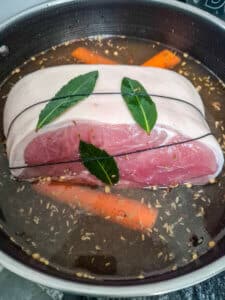
- Return the gammon to the pot with the onion, carrots, celery, bay leaves, and peppercorns. Cover with fresh cold water, ensuring the gammon is fully submerged.
- Bring to the boil, then reduce to a gentle simmer. Cook for 1 hour 20 minutes (20 minutes per 500g), keeping the gammon submerged and topping up with boiling water if necessary.
- Remove the gammon from the liquid and place on a board. Save the cooking liquid for stock. Preheat your oven to 200°C (180°C fan).
- While still warm, carefully remove the skin using a sharp knife, leaving a layer of fat on the surface. Score the fat in a diamond pattern, being careful not to cut into the meat.
- If using cloves, push one into the centre of each diamond.
- Mix together the honey and both mustards to make the glaze, warm in a saucepan.
- Place the gammon in a foil-lined roasting tin. Brush the glaze generously over the surface, making sure it gets into the scored lines.
- Roast for 15 minutes until the glaze is bubbling and caramelised. I usually brush the gammon with any remaining glaze or glaze that has fallen to the bottom of the pan after 10 minutes. Keep an eye on it to prevent burning.
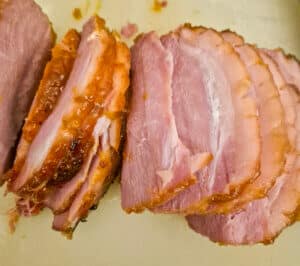
- Remove from the oven and rest for 15 minutes before carving. Serve hot or allow to cool completely for serving cold.