Table of Contents

For those of you who are regular visitors to this website, you might be surprised to see a cake recipe, even more so a classic Christmas cake. Although I don’t have a sweet tooth, I love a fruit cake, and the Christmas cake is the fruit cake of all fruit cakes in my humble opinion. So, I just had to add this recipe to the website: Ladies & Gentlemen Traditional British Christmas Cake Recipe | Make-Ahead Fruit Cake.
I should say from the outset I’m not baking this cake; it falls to Mrs Mayfoodie to produce this festive delight. For me, Christmas would not be Christmas without a Christmas cake. I also secretly hope that when Christmas is over, there is some cake left to enjoy during January.
The making of this cake also brings joy (especially as I’m not doing the hard work). The feeding of the fruit cake once baked adds to the anticipation, and then the final act, a few days before Christmas, the icing of the cake. I just love it.
I’m not sure the original recipe was from James Martin, but I’m sure my wife has added or amended along the way. Please give this recipe a try, as I’m sure you will like it, and all your future Christmases will not be complete without a classic Christmas cake.
1 A Bit of History (Because I’m a Food Nerd)
Now, I find the history of British Christmas cake absolutely fascinating. This isn’t just any old fruit cake – it’s got proper heritage. The whole thing evolved from medieval plum porridge, which sounds rather grim if I’m honest. It was this thick, hearty mixture of dried fruits, spices, and yes, actual meat, that they’d serve at the start of Christmas feasts. Thankfully, by the 16th century, someone had the bright idea to ditch the oatmeal for flour and eggs, turning it into something rather more civilised.
The Christmas cake really came into its own during the Victorian era. As sugar became more affordable and everyone got rather excited about baking, the wealthy middle classes embraced elaborate iced fruit cakes as the centrepiece of their Christmas celebrations. Queen Victoria herself was apparently rather partial to a good fruit cake, which certainly helped cement its status as an essential part of British Christmas.
Here’s the clever bit though – the tradition of making your Christmas cake weeks or even months in advance wasn’t just about being organised. Before refrigeration, that high alcohol and sugar content acted as preservatives. Brilliant really. The ritual of “feeding” the cake with brandy or sherry every fortnight became part of the Christmas anticipation, much like opening advent calendar windows.
You might have heard of Stir-up Sunday – it’s the last Sunday before Advent and traditionally the day you’re supposed to make your Christmas cake. The name comes from the Book of Common Prayer for that day: “Stir up, we beseech thee, O Lord, the wills of thy faithful people.” Rather poetic, isn’t it? Families would gather round to stir the mixture, each person making a wish as they stirred from east to west, honouring the journey of the Three Wise Men. I love these old traditions.
What I particularly appreciate about the homemade Christmas cake is how it represents something quite timeless about British celebrations – the warmth, the generosity, the sense of occasion. Whether it’s covered in pristine royal icing or given a more rustic treatment, this traditional Christmas fruit cake connects us to generations past.
2 Why I Think This Is Simply the Best Christmas Cake Recipe
Now, I might be biased (Mrs Mayfoodie makes this after all), but this recipe strikes that perfect balance between rich, boozy fruit and warming spices. The thing about a proper homemade Christmas cake is that it develops incredible depth of flavour as it matures – something those shop-bought versions simply can’t replicate, no matter what they claim on the packaging.
The beauty of making your own British Christmas cake is that you’re in complete control. You can select really good quality dried fruits, adjust the spices to your liking, and choose your preferred spirit for feeding. I’m a brandy man myself, but I know people who swear by rum or whisky. This easy Christmas cake recipe works beautifully whether you’re a novice baker or an old hand at festive baking.
3 A Few Variations Worth Trying
Over the years, I’ve heard of a few variations that work well, so I thought I’d share them.
For a Gluten-Free Version
Simply swap the plain flour for a decent gluten-free plain flour blend. Make sure your baking powder is also gluten-free. The ground almonds provide excellent structure, so you’d barely know the difference.
Non-Alcoholic Christmas Cake
Replace the brandy with strong black tea, orange juice, or a combination. It’ll still be beautifully moist, though it won’t keep quite as long. You might want to add an extra teaspoon of vanilla extract to boost the flavour. Personally, and no surprise that I think the alcohol version has the edge, but this works surprisingly well.
Going Luxury
If you’re feeling rather extravagant, try adding 100g glacé cherries (rinsed and quartered), 50g chopped crystallised ginger, and 100g roughly chopped pecans or walnuts. A tablespoon of black treacle adds extra depth and a darker colour. This luxury version is absolutely magnificent Christmas indulgence.
Vegan Christmas Cake
Use plant-based butter, replace the eggs with 4 tablespoons of aquafaba (that’s chickpea water) mixed with a teaspoon of baking powder, and ensure your sugar is vegan-friendly.
4 How I Like to Serve It (And a Few Ideas for Decoration)
Now, traditionally I go with marzipan followed by royal icing. Creating those classic peaked snow scenes with the icing is rather festive. This is done about a week before Christmas, giving the marzipan time to firm up first.
If you prefer something more contemporary, you could leave the marzipan exposed with a bit of texture scored across with a fork, perhaps decorated with whole blanched almonds and glacé fruits. Some people go for a more rustic look these days – just a dusting of icing sugar with fresh rosemary sprigs, cranberries, and a cinnamon stick arranged on top. It looks rather elegant in a natural sort of way.
As for serving, I think a simple slice is perfection on its own with a good strong cup of tea or coffee. Some enjoy it with a small glass of dessert wine or port – rather nice after Christmas dinner. On Boxing Day morning, try it lightly toasted with a smear of butter. Absolutely divine, though some think I’m slightly mad for doing this.
The cake is wonderfully rich, so thin slices are the way forward. A traditional Christmas cake should be dense, moist, and intensely flavoured – a little goes a long way, which means it lasts beautifully throughout the festive season for sharing with family and friends. Or for sneaking late-night slices when no one’s watching.
5 Keeping It Fresh and Solving Common Problems
Proper storage is rather important with Christmas cake. Once the cake is completely cool, wrap it tightly in baking parchment, then in foil. Store in an airtight tin somewhere cool and dark – not the fridge, mind you, as that can dry it out. The cake keeps for up to three months before icing, getting better as it matures.
Once iced, your Christmas cake will keep for several weeks at room temperature. When you’ve cut into it, cover the exposed edge with baking parchment to prevent drying. Any leftover cake (rare in our house) can be frozen for up to six months – wrap individual slices for easy defrosting.
If Your Christmas Cake Turns Out Dry
This usually happens from over-baking or not feeding it enough. Don’t panic – poke holes in the base with a skewer and give it a good feed with extra brandy or fruit juice. Wrap tightly and leave for a few days. The moisture redistributes, and Bob’s your uncle, crisis averted.
Cake Sinking in the Middle
I’ve seen this happen when the oven temperature is too high, causing rapid rising then collapse. Using an oven thermometer is invaluable ( I bought one recently and it’s already been well used) – our oven runs hot, so we’ve learned to adjust accordingly. Opening the door too early to peek can also cause sinking. Patience is key.
Burnt Top or Edges
If your cake browns too quickly, cover loosely with foil and reduce the temperature slightly. Every oven has its quirks – you might need to adjust cooking times based on yours.
Fruit Sinking to the Bottom
This can happen if the batter is too wet or the fruit pieces are too large. Tossing the fruit in a tablespoon of the measured flour before adding it to the batter works a treat for keeping everything evenly distributed.
6 Preparation and Cooking Times
- Prep: 30 minutes (plus cooling)
- Cook: Around 2 hours (plus additional checks)
- Maturing: Up to 3 months for peak flavour, we usually bake 6 weeks before christmas.
7 Nutritional Notes (Per Slice)
For those mindful of indulgence: approximately 678 kcal, with 29g fat (12g saturates), 88g carbs (79g sugars), 3g fibre, 9g protein, and 0.6g salt. It’s a treat, no question, but perfectly reasonable when enjoyed in moderation.
8 Questions People Often Ask Me About Christmas Cake
When should I make my Christmas cake?
The traditional answer is Stir-up Sunday, which falls in late November. That said, I’ve made them as early as September when feeling organised. The longer it matures – up to three months – the richer the flavours become. If you’re running late, don’t worry. Even a fortnight of maturing produces a delicious cake, though I do think the longer maturation is worth it if you can manage.
How long does Christmas cake actually last?
An un-iced Christmas cake, properly wrapped and fed regularly, keeps for up to three months. Once you’ve put the marzipan and icing on, it’ll last several weeks at room temperature. The high sugar and alcohol content are natural preservatives – rather clever really. Some families keep their Christmas cake for months after the festive season. It remains perfectly edible, though I reckon the flavour peaks at about three months.
Can I make Christmas cake without alcohol?
Absolutely. Replace the brandy with strong black tea, orange juice, apple juice, or grape juice. The alcohol adds moisture and acts as a preservative, so your non-alcoholic version won’t keep quite as long, but it’ll still taste lovely. I’d suggest making it in early December and eating it within a month. I’ve made one for a teetotal aunt, and it went down very well indeed.
Why is my Christmas cake dry?
Usually from over-baking, insufficient feeding, or inadequate wrapping during storage. To rescue a dry cake, poke holes in the base with a skewer and give it a generous drizzle of brandy, sherry, or fruit juice. Wrap it tightly in baking parchment and foil, then leave for a few days. The moisture redistributes quite nicely. I’ve rescued several seemingly doomed cakes this way.
Do I have to use marzipan on Christmas cake?
Traditional British Christmas cake typically has marzipan before the icing, which creates a smooth surface and adds that lovely almond flavour I’m rather fond of. That said, it’s not compulsory. You can ice directly onto the cake, though the surface won’t be quite as smooth. Some people really don’t like marzipan – my brother-in-law, for one. In that case, just dust with icing sugar or leave it plain. It’s your cake, do what makes you happy.
Can I freeze Christmas cake?
Yes, and it freezes beautifully. Wrap it tightly in baking parchment, then foil, and freeze for up to six months. Defrost slowly at room temperature, then carry on feeding as usual. This is perfect if you want to bake well in advance or preserve leftovers. Freezing individual slices wrapped in baking parchment is rather handy for portion control. Not that I have much self-control when it comes to Christmas cake.
What’s the best alcohol for feeding Christmas cake?
Brandy is traditional and works beautifully – that’s what we use. Dark rum adds a rich, caramel note that some people prefer. Whisky provides a warming, smoky flavour. Sherry offers sweetness and depth. Cointreau or Grand Marnier complement the citrus notes nicely. Some bakers use a combination. My advice? Choose something you’d happily drink yourself, as the flavour permeates the entire cake.
How do I know when my Christmas cake is properly cooked?
Insert a thin skewer into the centre of the cake. If it comes out clean and dry, you’re done. If there’s wet mixture clinging to it, give it another 10 minutes and test again. Don’t be alarmed if it takes longer than stated – ovens vary enormously. I’ve learned to ignore the clock and trust the skewer test. Sometimes our cake takes an extra 20 minutes. Better to be patient than to undercook it.
This traditional British Christmas cake recipe genuinely embodies what I love about the festive season. Whether you’re an experienced baker or attempting your first homemade Christmas cake, I’m confident you’ll get excellent results. There’s something rather magical about the whole process – the aroma of spices filling your kitchen, the ritual of feeding your maturing cake every couple of weeks, and the satisfaction of presenting your own creation at the Christmas table.
I hope this recipe becomes a treasured part of your family’s Christmas traditions, just as it has for ours. There’s something wonderfully nostalgic about a proper British Christmas cake, rich with fruit and redolent with brandy, sitting proudly as the centrepiece of the festive spread. Mrs Mayfoodie does the hard work, but I like to think my enthusiastic consumption plays an important supporting role. Happy baking, and may your Christmas be filled with joy, laughter, and plenty of delicious cake!
One last thing, are you looking for a fun, super-tasty dessert to wow friends and family? I have the very dessert, it’s a festive Jammy Dodger Trifle, I borrowed the recipe from Tom Cenci, head chef at Soho’s Nessa, actually, Tom was kind enough to let me publish it, I think, along with a great Christmas cake the trifle will be a huge festive success. See recipe here

9 Recipe: Ingredients & Method
Traditional British Christmas Cake Recipe
Print RecipeIngredients
- 1kg mixed dried fruit (a delightful medley of raisins, sultanas, currants, and perhaps a handful of chopped apricots for a modern twist)
- Zest of a lemon or orange
- 150ml brandy, or your preferred spirit
- 250g softened butter
- 200g light soft brown sugar
- 175g plain flower
- 100g ground almonds
- 1/2 tsp of baking powder
- 2 tsp mixed spice
- 1 tsp ground cinnamon
- 1/2 tsp ground cloves
- 100g Flaked almonds
- 4 large fresh eggs
- 1tsp vanilla extract
- For the covering
- 2 packs of ready rolled marzipan
- 3 Free Range Eggs
- 675g/1½lb icing sugar, sifted
- 3 tsp lemon juice
- 1½ tsp glycerine
Instructions
Method
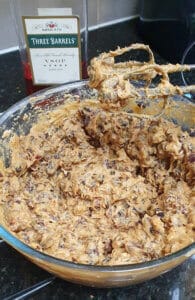
- Begin by combining the 1kg mixed dried fruit, zest and juice of one orange and one lemon, 150ml brandy (or your chosen alcohol), 250g softened butter, and 200g light, soft brown sugar in a large pan over medium heat. Bring it to a gentle boil, then reduce the heat and let it simmer for 5 minutes, allowing the flavours to meld beautifully.
- Transfer this aromatic mixture to a large bowl and set aside to cool for about 30 minutes – the perfect time to pop the kettle on for a cuppa.
- Preheat your oven to 150°C/130°C fan/gas mark 2. Line a deep 20cm cake tin with a double layer of baking parchment for that essential non-stick assurance, and wrap the outside with a double layer of newspaper, secured with string, to ensure even baking without any unwelcome browning.
- Once cooled, stir in the 175g plain flour, 100g ground almonds, ½ tsp baking powder, 2 tsp mixed spice, 1 tsp ground cinnamon, ¼ tsp ground cloves, 100g flaked almonds, 4 large eggs, and 1 tsp vanilla extract. Mix thoroughly, ensuring no pockets of flour remain, to create a luscious, cohesive batter.
- Spoon the mixture into your prepared tin, levelling the top with a spatula for a polished finish. Bake in the centre of the oven for approximately 2 hours. Test with a skewer inserted into the middle – if it emerges clean and dry, your cake is ready. If not, return to the oven for another 10 minutes and check again, repeating as needed.
- Remove from the oven and, while still warm, poke holes across the surface with a skewer. Drizzle over 2 tbsp of your chosen alcohol, letting it seep in for that extra moistness. Allow the cake to cool completely in the tin, savouring the heady scents that fill your kitchen.
- For storage and maturation, carefully peel away the baking parchment and wrap the cake snugly in fresh parchment and foil, or pop it into an airtight tin. Feed it with 1-2 tbsp of alcohol every fortnight to enhance its depth of flavour
-
The week before you want to serve, begin covering the cake.
-
For the covering, stand the cake upside down, flat side uppermost, on a cake board which is 5cm/2in larger than the size of the cake.
-
Brush the sides and the top of the cake with the warm apricot jam.
-
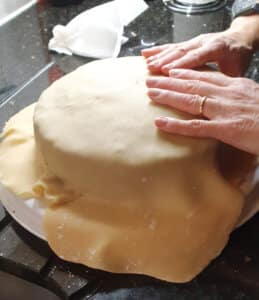
Liberally dust a work surface with icing sugar and then roll out the marzipan to about 5cm/2in larger than the surface of the cake. Keep moving the marzipan as you roll, checking that it is not sticking to the work surface. Dust the work surface with more icing sugar as necessary. I used ready rolled marzipan, it is easier.
-
Carefully lift the marzipan over the cake using a rolling pin. Gently level and smooth the top of the paste with the rolling pin, then ease the marzipan down the sides of the cake, smoothing it at the same time. If you are careful, you should be able to cover the cake with no excess marzipan to trim but, if necessary, neatly trim excess marzipan from the base of the cake with a small sharp knife. Cover the cake loosely with baking parchment and leave for a few days to dry out before adding the royal icing.
-
For the royal icing, whisk the egg whites in a large bowl until they become frothy. Mix in the sifted icing sugar a tablespoonful at a time. You can do this with a hand-held electric whisk, but keep the speed low.
-
Stir in the lemon juice and glycerine and beat the icing until it is very stiff and white and stands up in peaks.
-
Cover the surface of the icing tightly with cling film and keep in a cool place until needed.
-
To ice the cake, place all the icing onto the top of the cake. Spread evenly over the top and sides of the cake with a palette knife. For a snow-peak effect, use a smaller palette knife to rough up the icing.
-
Leave the cake loosely covered overnight for the icing to harden a little, then wrap or store in an airtight container in a cool place until needed.