Table of Contents
1 Traditional Lamb Stew with Crispy Potato Topping

Lancashire hotpot is a traditional British lamb stew with a crispy sliced potato topping, slow-cooked until the meat is tender and the potatoes are golden. This recipe serves 4, takes about 2.5 hours (mostly hands-off oven time), and produces the perfect winter comfort food. The secret is in the layering – potatoes on top crisp up beautifully while absorbing the rich lamb juices below.
2 Why I love this Recipe
Do you have recipes that you don’t cook very often, but when you do, you wonder why on earth you don’t cook them more often? Well, I had exactly this experience a few weeks ago when I made my Lancashire hotpot recipe. It’s so easy to prepare, but more importantly, it tasted absolutely wonderful – proper comfort food that warms you from the inside out.
To rectify my neglect of this classic dish, I’ve decided to add it to the recipes on my website. That way I’ll see it more often, and hopefully it will prompt me to cook this more regularly – as well as pass it on to you. This Lancashire hotpot has quickly become one of my favourite winter warmers, and I think by cooking this recipe, it might become one of yours too.
As with all recipes, feel free to add your own twist to it, but I should say this version is a really solid recipe that works beautifully every single time. It makes a perfect substitute for a traditional Sunday roast or simply a lovely winter’s night comfort food dish. There’s something deeply satisfying about lifting the lid on a bubbling hotpot with its golden, crispy potato topping – it’s the sort of meal that makes everyone gather round the table.
I based my recipe on a Chef James Martin recipe, though I’ve made a few tweaks along the way. The original includes lamb’s kidneys, which add a wonderful depth of flavour – but I’ve left them out as my wife isn’t a fan. I’ll include them as an optional extra below for those who enjoy offal, as they really do make it a traditional Lancashire hotpot. I’ve also added carrots and chopped celery to my version, which adds extra vegetables and a lovely sweetness to the dish.
3 What is Lancashire Hotpot?
Lancashire hotpot is a traditional British lamb stew that originated in the industrial heartlands of Lancashire in the North West of England. At its core, it’s beautifully simple: tender lamb slow-cooked with onions in a savoury gravy, topped with layers of sliced potatoes that become gloriously golden and crispy on top whilst remaining soft and flavourful underneath where they absorb all those delicious meat juices.
What makes a hotpot different from a regular stew is that distinctive sliced potato topping, arranged like overlapping roof tiles. The potatoes form a sort of lid that seals in all the flavour whilst creating that irresistible contrast between the crispy top layer and the meltingly tender meat below. It’s this combination that makes Lancashire hotpot such a beloved dish.
This is proper classic British food elevated to something magnificent – the sort of meal that sustained generations of mill workers and miners coming home to a warm kitchen after a long day’s graft. It’s honest, hearty, and absolutely delicious.
4 A Brief History of Lancashire Hotpot
Lancashire hotpot emerged during the Industrial Revolution, when the cotton mills of Lancashire were in full swing. It was the perfect meal for working families – economical, nutritious, and practically cooked itself whilst the workers were at the mill. Wives would assemble the hotpot in the morning, leave it in a low oven all day, and have a hot, satisfying meal ready when their husbands returned from their shifts.
The dish gets its name from the tall, straight-sided earthenware pots that were traditionally used to cook it. These ‘hotpots’ were designed to fit snugly into the small coal-fired ovens of terraced workers’ cottages. The vertical shape meant the potatoes on top stayed crisp above the liquid whilst the meat below simmered away to tenderness.
In those days, the hotpot would have been made with mutton rather than lamb, mutton being cheaper and more readily available. Lamb’s kidneys were almost always included (waste not, want not), and here’s a fascinating detail: oysters were commonly added too. Hard to imagine now, but in the 19th century, oysters were incredibly cheap – they were poor people’s food, used to bulk out meat dishes. As oysters became more expensive and fashionable, they gradually disappeared from the recipe.
Some recipes from the era also included black pudding, another Lancashire speciality. The Hairy Bikers still include it in their version, and I must say it does add a lovely richness. The dish has evolved over the years, but its essential character – layers of lamb and potatoes slow-cooked to perfection – remains unchanged. It’s a testament to how good simple cooking can be.
5 What Makes This Lancashire Hotpot Recipe Special
I’ve tried quite a few Lancashire hotpot recipes over the years, and this one has become my favourite for several reasons. The balance of flavours is spot-on – the Worcestershire sauce adds depth without overwhelming the lamb, the onions (and in my version, carrots and celery) become beautifully sweet and soft, and the stock creates a rich, savoury gravy that the potatoes soak up wonderfully.
The key to a great Lancashire hotpot lies in the layering. You want the potatoes arranged properly so they crisp up on top whilst absorbing the meat juices below. That contrast in texture – crispy golden top, soft and flavourful middle, meltingly tender meat at the bottom – is what separates a good hotpot from an exceptional one.
What I particularly love about this recipe is how forgiving it is. Unlike some dishes where timing is critical, a hotpot actually benefits from sitting in the oven a little longer. The flavours develop and deepen, the meat becomes even more tender, and the potatoes get crispier. It’s the sort of recipe that rewards patience.
6 Choosing the Right Cut of Lamb
The cut of lamb you use will make a real difference to your finished hotpot. You want something with enough fat to keep everything moist during the long cooking time, and enough connective tissue to break down into that lovely, silky texture.
Best cuts for Lancashire hotpot:
Lamb neck: This is the traditional choice and my top recommendation. Neck has excellent fat marbling and becomes incredibly tender when slow-cooked. You can use neck fillet (boneless) or neck chops (bone-in) – the bone adds extra flavour to the gravy.
Lamb shoulder: Another excellent option, particularly diced shoulder. It’s well-marbled with fat and collagen, which breaks down during cooking to create rich, succulent meat.
Middle neck chops: These bone-in pieces are traditional and add wonderful flavour to the cooking liquor. The bones do mean you need to eat around them, but many would argue that’s part of the charm.
Stewing lamb: Pre-diced stewing lamb from the supermarket works perfectly well. Just make sure it’s not too lean – you want to see some fat marbling.
What to avoid: Lean cuts like leg or loin will dry out during the long cooking time. Save those for quicker cooking methods.
7 The Kidney Question: To Include or Not?
Lamb’s kidneys are a traditional ingredient in Lancashire hotpot, and they add a wonderful depth of flavour that’s hard to replicate. However, I completely understand that not everyone enjoys offal – my wife is firmly in the ‘no kidneys’ camp, which is why my everyday version leaves them out.
If you do enjoy kidneys, I’d strongly encourage you to include them. They contribute a rich, slightly earthy note that complements the lamb beautifully. When cooked slowly in the hotpot, they become tender and mild – nothing like the strong flavour that puts some people off.
How to prepare lamb’s kidneys:
You’ll need about 2-4 lamb’s kidneys, depending on size. Remove the thin outer membrane if it’s still attached, then slice each kidney in half lengthways. Use kitchen scissors or a sharp knife to snip out the white fatty core (the suet) – this has an unpleasant texture if left in. Cut into bite-sized pieces and brown them briefly with the lamb before assembling the hotpot.
If you’re on the fence about kidneys, why not try them once? You might be pleasantly surprised. And if not, simply leave them out – the hotpot will still be absolutely delicious without them.
8 My Modern Twist: Adding Carrots and Celery
While purists might raise an eyebrow, I’ve started adding carrots and chopped celery to my Lancashire hotpot. The carrots add a lovely natural sweetness that balances the savoury lamb, and the celery contributes a subtle aromatic note that enhances the overall flavour.
I cut the carrots into chunky rounds – you want them substantial enough to hold their shape during the long cooking time. The celery I chop fairly small so it almost melts into the gravy, adding flavour without being too prominent.
This addition also means you’ve got some vegetables built into the dish, making it even more of a complete meal. Feel free to leave them out if you want to keep things strictly traditional, but I think they add rather than detract from the finished dish.
9 Getting the Perfect Potato Topping
The potato topping is what defines a Lancashire hotpot, and getting it right is crucial. You want overlapping slices arranged like roof tiles, crispy and golden on top, soft and flavoursome where they meet the meat below.
Choosing your potatoes:
Use floury potatoes like Maris Piper or King Edwards. They absorb the cooking juices better than waxy varieties and develop a lovely fluffy texture underneath the crisp top. Avoid salad potatoes like Charlotte – they’ll stay too firm.
Slicing technique:
Slice your potatoes about 3-4mm thick – thin enough to cook through and crisp up, but thick enough to hold their shape. A mandoline makes light work of this, but a sharp knife and steady hand work just as well. Try to keep the slices even so they cook uniformly.
Arranging the topping:
Arrange the slices in overlapping circles, starting from the outside and working your way to the centre. Each slice should overlap the previous one by about a third – think of roof tiles or fish scales. This creates that beautiful traditional appearance and ensures even coverage.
The butter is essential:
Brush or dot the potato topping generously with melted butter before cooking, and again halfway through when you remove the lid. This is what creates that irresistible golden, crispy top. Don’t be stingy – this is comfort food, not diet food!
10 What to Serve with Lancashire Hotpot
Lancashire hotpot is a substantial dish that’s almost a complete meal in itself – you’ve got your protein, potatoes, and (in my version) vegetables all in one pot. That said, a few simple accompaniments can round things out nicely.
Green vegetables: Buttered peas are the classic choice and work beautifully. The sweetness of good garden peas complements the savoury lamb perfectly. Steamed cabbage, tender-stem broccoli, or green beans are all excellent alternatives.
Pickled red cabbage: This is a traditional Northern accompaniment and one I’d highly recommend. The sharp, tangy crunch cuts through the richness of the hotpot wonderfully. You can make your own or buy it jarred – both work well.
Crusty bread: For mopping up every last bit of that delicious gravy. A chunk of good crusty bread is never wrong with a hotpot.
Braised red cabbage: If you want something more substantial than pickled cabbage, a slow-braised red cabbage with apple makes a lovely warming accompaniment.
Beer pairing: A pint of proper Northern ale or bitter is the traditional drink to enjoy with hotpot. Something malty and not too hoppy – a best bitter or brown ale would be ideal.
Wine pairing: If wine is more your thing, a medium-bodied red like Côtes du Rhône or a Merlot works nicely with the lamb.
11 Make-Ahead Tips and Storage
One of the wonderful things about Lancashire hotpot is how well it lends itself to advance preparation. Like many stews, it actually tastes better the next day once the flavours have had time to meld and develop.
Make ahead:
You can assemble the entire hotpot (without the potato topping) up to 24 hours in advance. Brown your meat and onions, make the gravy, and assemble in your casserole dish. Cover and refrigerate. When ready to cook, add the potato topping and proceed as normal – you may need to add 10-15 minutes to the cooking time if it’s fridge-cold.
Reheating leftovers:
Leftover hotpot reheats beautifully. Cover with foil and warm through in a moderate oven (160°C) for about 30 minutes, then remove the foil for the last 10 minutes to re-crisp the potatoes. Alternatively, portion into microwave-safe dishes and reheat until piping hot.
Freezing:
Lancashire hotpot freezes reasonably well for up to 3 months, though the potato topping won’t be quite as crispy once thawed and reheated. For best results, freeze the meat and gravy portion before adding the potatoes, then add fresh potato slices when you’re ready to cook from frozen.
How long does it keep?
Cooked hotpot will keep in the fridge for 3-4 days in an airtight container. It’s one of those dishes that’s almost better as leftovers – the flavours continue to develop even after cooking.
12 Lancashire Hotpot Variations Worth Trying
While the classic recipe is magnificent, there are several variations that work beautifully if you fancy a change.
Lamb and black pudding hotpot:
Add slices of black pudding between the layers for extra richness. The legendary Hairy Bikers swear by this addition, and I have to say it’s rather good. The black pudding almost melts into the gravy, adding depth and a subtle spiciness.
Slow cooker Lancashire hotpot: Brown everything as usual, then transfer to your slow cooker. Cook on low for 6-8 hours. The only downside is you won’t get crispy potatoes – transfer to a hot oven or grill for the last 20 minutes to crisp the top.
Beef hotpot: Not traditional, but beef works surprisingly well if you prefer it to lamb. Use chuck or braising steak and increase the cooking time by 30 minutes.
Vegetarian hotpot: Replace the lamb with mixed root vegetables (parsnips, swede, carrots) and butter beans or chickpeas. Use vegetable stock and add plenty of thyme for flavour.
Extra vegetables: Beyond my carrots and celery, some people add sliced leeks, mushrooms, or even a layer of swede. Experiment and find your perfect combination.
13 Frequently Asked Questions About Lancashire Hotpot
What is the difference between Lancashire hotpot and Irish stew?
While both are lamb and potato dishes, they’re quite different. Irish stew is a soupy, brothy affair with the potatoes cooked into the stew, often with carrots and sometimes dumplings. Lancashire hotpot has a distinct layered structure with the sliced potatoes arranged on top to form a crispy lid. The cooking method and final texture are completely different.
Can I make Lancashire hotpot in a slow cooker?
Yes, though with a compromise. A slow cooker produces wonderfully tender meat, but you won’t get the crispy potato topping that makes a hotpot special. My advice: cook in the slow cooker on low for 6-8 hours, then transfer to a casserole dish, add a fresh layer of buttered potato slices, and finish in a hot oven (200°C) for 30-40 minutes to crisp the top.
Why is my hotpot watery?
A watery hotpot usually means too much liquid was added, or the lid was kept on for the entire cooking time. The liquid should come about halfway up the meat – the potatoes cook in the steam above. Also, make sure you remove the lid for the final portion of cooking to allow excess moisture to evaporate and the potatoes to crisp up.
How do I get crispy potatoes on top?
Three key factors: generous butter on the potato slices, removing the lid for the last 30-45 minutes of cooking, and using a hot enough oven. If the potatoes still aren’t as crispy as you’d like, finish the hotpot under a hot grill for a few minutes – watch it carefully as it can brown quickly.
What temperature should I cook Lancashire hotpot?
Start at a moderate temperature (around 160°C/140°C fan/Gas 3) with the lid on for the first 1½ hours to cook the meat slowly. Then remove the lid and increase the temperature to 190-200°C for the final 30-45 minutes to crisp up the potatoes. This two-stage approach gives you tender meat and a crispy top.
Can I use lamb chops instead of diced lamb?
Absolutely – in fact, lamb neck chops or middle neck chops are very traditional. The bones add extra flavour to the gravy. Arrange them in a single layer in the casserole before adding the potato topping. Just be aware that diners will need to eat around the bones.
Do I need to brown the meat first?
It’s not strictly essential, but I’d strongly recommend it. Browning the meat creates a caramelised crust that adds enormous depth of flavour to the finished dish. It only takes a few minutes and makes a noticeable difference to the final result.
What’s the best potato for Lancashire hotpot?
Floury potatoes like Maris Piper or King Edwards are ideal. They absorb the cooking juices beautifully and develop a fluffy texture beneath the crispy top. Avoid waxy potatoes like Charlotte or new potatoes – they won’t give you the right texture.
How long does Lancashire hotpot take to cook?
Allow about 2 to 2½ hours total: approximately 1½ hours with the lid on to cook the meat until tender, then 30-45 minutes with the lid off to crisp the potatoes. Preparation takes about 20-30 minutes. It’s not a quick midweek meal, but it’s perfect for a lazy Sunday.
Can I add other vegetables to Lancashire hotpot?
Yes – as I’ve mentioned, I add carrots and celery to mine. Other good additions include leeks (sliced and layered with the onions), mushrooms, or even a layer of sliced swede or turnip. Keep the onions as they’re essential to the dish, but feel free to experiment with additions.
Why is it called a ‘hotpot’?
The name comes from the tall, straight-sided earthenware pots traditionally used to cook the dish. These ‘hotpots’ were designed to fit into the small coal-fired ovens of Northern workers’ cottages. The name stuck even as the cooking vessel evolved.
Is Lancashire hotpot gluten-free?
The traditional recipe uses flour to thicken the gravy, but you can easily make it gluten-free by using a gluten-free flour blend or cornflour instead. Also, check your stock and Worcestershire sauce – some brands contain gluten.
Can I make Lancashire hotpot without kidneys?
Absolutely – that’s exactly what I do in my version! While kidneys are traditional and add lovely depth of flavour, the hotpot is still delicious without them. Don’t feel you need to include them if you’re not keen on offal.
14 Why This Recipe Works
The beauty of Lancashire hotpot lies in its simplicity – good ingredients, proper technique, and patience. The long, slow cooking transforms economical cuts of lamb into something silky and tender, while the potato topping develops that irresistible contrast between crispy top and soft, flavoursome middle.
What I particularly love is how this recipe rewards you for taking your time. You can’t rush a hotpot, and that’s rather the point. It’s weekend cooking at its finest – the sort of dish you assemble whilst pottering about the kitchen, perhaps with a cup of tea or a glass of something nice. By evening, you have something magnificent to show for your efforts.
This traditional Northern English dish has stood the test of time because it simply works. The combination of lamb, onions, and potatoes has been pleasing palates for generations, and I don’t imagine that’s going to change anytime soon. Whether you’re cooking for a Sunday dinner or just want something proper and satisfying on a cold winter’s evening, Lancashire hotpot delivers every single time.
Give it a try – I don’t think you’ll be disappointed. And do let me know how it goes. This Lancashire hotpot might just become your new favourite comfort food recipe.
Enjoy!
For more classic British comfort food recipes, check out our Sausage and Mash with Red Wine Onion Gravy, our lovely Easy Creamy Fish Pie, and Beef Bourguignon recipes.

15 Recipe-Ingredients and Method
Lancashire Hotpot Recipe | Classic British Comfort Food
Print RecipeIngredients
- 900g Lamb cut into chunks
- 100g Butter
- 3 Lambs kidneys, sliced
- 2 med onions finely chopped
- 4 med sized carrots (optional)
- 2 sticks of celery finely chopped
- 25g plain flour
- 2 tsp worcester sauce
- 500ml chiccken stock
- 850-900gr potato sliced (enough to layer the top of your dish
Instructions
Step 1: Prepare and brown the lamb
Preheat your oven to 160°C/140°C fan/Gas 3.
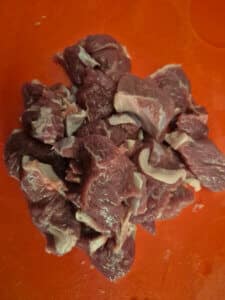
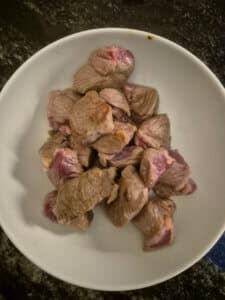
Cut your lamb into chunky bite-sized pieces if it isn’t already. Heat a little of the butter in a large shallow casserole dish over a medium-high heat. Brown the lamb in batches – don’t overcrowd the pan or it will steam rather than brown. You want a nice golden crust on each piece. As each batch is done, lift the meat onto a plate and set aside.
If you’re using kidneys, trim out the white core, slice them, and brown them briefly in the same pan. Set aside with the lamb.
Step 2: Cook the onions and vegetables
Add a little more butter to the pan if needed. Fry the chopped onions until softened and turning golden – this will take about 8-10 minutes. Don’t rush this step; the sweetness of properly caramelised onions makes all the difference.
If you’re adding carrots and celery as I do, add the sliced carrots and chopped celery to the pan now and cook for another 3-4 minutes until they start to soften.
Step 3: Make the gravy
Sprinkle the plain flour over the onions and vegetables, stirring well to coat everything. Let this cook for a minute or two to get rid of the raw flour taste.
Add a good shake of Worcestershire sauce – I’m quite generous with it – then gradually pour in the chicken stock, stirring continuously to avoid any lumps. Bring to a gentle simmer and let it bubble for a couple of minutes until slightly thickened. Season with salt and pepper to taste.
Step 4: Assemble the hotpot
Return the browned lamb (and kidneys if using) to the casserole, tucking the pieces into the gravy. Add the bay leaves, pressing them down into the liquid.
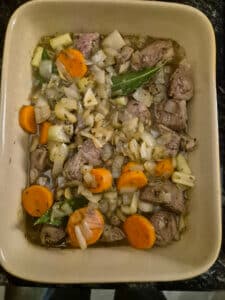
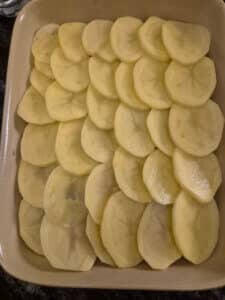
Now arrange your sliced potatoes on top in overlapping layers, like roof tiles or fish scales. Start from the outside edge and work your way to the centre. Season the potatoes with a little salt and pepper, then dot generously with butter or brush with melted butter.
Step 5: Cook the hotpot
Cover with foil if like me I used a baking dish or leave lid on if using a pot and place in the preheated oven for about 1½ hours. The lamb should be tender and the potatoes cooked through.
Remove the lid, brush the potatoes with a little more melted butter, then increase the oven temperature to 200°C/180°C fan/Gas 6. Return the hotpot to the oven, uncovered, for a further 30-45 minutes until the potatoes are beautifully golden and crispy on top.
If you want extra crispiness (and I usually do), pop it under a hot grill for the last few minutes – but watch it like a hawk as it can catch quickly.
Step 6: Rest and serve
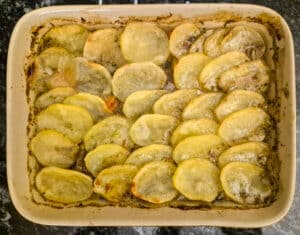
Remove from the oven and let it rest for 5 minutes before serving. This allows everything to settle and makes serving easier.
Serve generous portions with buttered peas, carrots or your favourite green vegetables, and perhaps some pickled red cabbage on the side.
Enjoy!