Table of Contents
1 The Ultimate Slow-Cooked French Stew
Written by Martin Seymour | Editor, The Mayfair Foodie | About Me

Updated August 2026
Beef bourguignon is a French beef stew where chunks of beef are braised slowly in red wine with bacon, mushrooms and onions until falling-apart tender. This recipe takes around 2.5 hours from start to finish, serves 4-6, and produces the rich, deeply flavoured dish that’s made it a dinner party classic. I’ve been cooking this version for over 20 years, and it works perfectly every time.
Beef bourguignon, meaning “beef in the style of Burgundy,” is one of my favourite comfort food alternatives. It makes a good occasional alternative to a Sunday roast or a great option for dinner parties, as it can be cooked in advance.
You cannot rush a good beef bourguignon; two hours of slow cooking leaves the beef falling apart and adds depth to the red wine sauce that coats the beef. Adding bacon lardons gives that smoky feel.
I must have been cooking this recipe for over twenty years – about the same time I bought the Le Creuset cooking pot in the pictures. My apologies, I know the pan looks like it’s had twenty years of toil in my kitchen, but it still does the job perfectly, and to me it’s like an old friend. Look at me getting sentimental over a pan!
Best served with creamy mashed potatoes (scroll down for some mash tips) and plain green veg, it’s that simple, but so full of flavour and a crowd-pleaser of a recipe.
There’s something undeniably special about this classic French stew, with its rich red wine sauce, melt-in-your-mouth beef, and deeply savoury flavours. I cooked the beef bourguignon in the photos last Sunday afternoon, and the house smelled absolutely incredible for hours. That’s half the joy of it, I think – the anticipation as the aromas build whilst it slowly bubbles away.
Beef bourguignon (sometimes spelt boeuf bourguignon) hails from the Burgundy region of France, where they’re rather proud of their wine and their beef. It’s peasant food elevated to something truly magnificent – tough, cheaper cuts of beef transformed through long, slow cooking into something silky and tender. The wine doesn’t just add flavour; it tenderises the meat whilst creating that glossy, deeply coloured sauce that’s worth mopping up with every last bit of mash on your plate.
I served mine with mustard mash, which I think is the perfect accompaniment – the slight heat from the mustard cuts through the richness beautifully. But more on that later. This is proper weekend cooking, the sort of dish that rewards patience. If you’re looking for an impressive dinner party centrepiece or simply want something special for a Sunday lunch, this beef bourguignon recipe is exactly what you need.
For more comforting recipes like this, check out all our recipes here.
2 A Brief History of Beef Bourguignon
I do love knowing the story behind a dish, and beef bourguignon has rather a good one, thanks to Google for this background info. This hearty French beef stew originated in the Burgundy region (Bourgogne in French), one of France’s most celebrated wine-producing areas. The dish emerged as a way for farmers and peasants to make the most of tougher, less expensive cuts of beef by braising them low and slow in the local wine.
The beauty of bourguignon is that it was never meant to be fancy – it was practical, economical cooking at its finest. Those cuts of beef that would be impossibly chewy if cooked quickly become wonderfully tender when simmered for hours in red wine. The locals had plenty of Burgundy wine to hand (lucky them), and this became the base for the braising liquid.
It was cooking legends Elizabeth David & Julia Child who really introduced beef bourguignon to home cooks outside France. They played a big part in introducing French cuisine to British and American audiences.
What I find particularly charming is how a humble peasant dish has become synonymous with French culinary excellence. It’s a testament to how good cooking technique can transform simple ingredients into something extraordinary. The combination of beef, wine, mushrooms, onions, and herbs hasn’t changed much over the centuries – because when something works this well, why tinker with it?
3 Why Red Wine Makes All the Difference
Let’s talk about the wine, because it really is the heart and soul of this dish. Beef bourguignon without good red wine is like fish and chips without the vinegar – technically possible, but missing the point entirely.
The wine does several important jobs here. Firstly, it acts as a tenderiser. The acidity in the wine breaks down the tough fibres in the beef, which is why those cheaper cuts become so wonderfully soft. Secondly, as the wine reduces during cooking, its flavours concentrate and meld with the beef juices, creating that glossy, deeply savoury sauce that’s absolutely magnificent.
What wine should you use? Traditionally, you’d use a Burgundy wine – a Pinot Noir from the region. However, any decent medium-bodied red wine works well. I’d suggest a Côtes du Rhône, a Merlot, or a Cabernet Sauvignon. The key is to use something you’d actually drink. If a wine isn’t good enough to put in your glass, it isn’t good enough for your bourguignon.
Don’t be tempted to use cooking wine – it often has added salt and an inferior flavour that will come through in the finished dish. You don’t need to spend a fortune, but a £7-10 bottle from the supermarket (I look out for supermarkets 25% off wine offers)will serve you far better than those small bottles labelled “cooking wine.”
I also like to save a glass of whatever wine I’m using to enjoy whilst cooking. It makes the whole process rather more civilised, and you can compare the wine in your glass to the sauce as it develops. Research, you understand.
4 Choosing the Right Cut of Beef
The cut of beef you choose will make or break your bourguignon. This isn’t a dish for expensive fillet steak – you need cuts that have plenty of connective tissue, which breaks down during the long cooking time to create that luscious, silky texture.
My recommended cuts:
Chuck steak: This is my top choice. It comes from the shoulder and has excellent marbling and connective tissue. It holds together well during cooking and becomes beautifully tender.
Braising steak: Sometimes sold simply as “braising steak” at supermarkets, this is usually chuck or blade and works wonderfully.
Shin (beef shank): If you can get it from a butcher, shin has an incredible amount of collagen and creates an almost gelatinous, rich sauce. It needs a slightly longer cooking time, but the results are spectacular.
Cheek: Beef cheeks are wonderfully flavoursome and become incredibly tender. They’re often available from butchers and are relatively inexpensive.
What to avoid: Lean cuts like sirloin, fillet, or rump will become dry and stringy with long cooking. Save those for quick-cooking methods.
I always buy slightly more than I think I need – you want generous chunks of beef in each serving, and the meat does shrink during cooking. About 200g per person is a good guide.
5 The Essential Flavour Builders
Beyond the beef and wine, several ingredients build the characteristic flavour of a proper beef bourguignon.
Bacon or lardons: The French would use lardons (thick-cut bacon pieces), and I think they’re essential. They add a smoky, salty depth that underpins the whole dish. Cook them first to render the fat, which you then use to brown the beef – nothing wasted.
Button mushrooms: Whole or halved button mushrooms are traditional. They soak up all those lovely juices and add an earthy element. I add them towards the end so they keep some texture.
Shallots or Baby onions: These sweet little onions are classic in bourguignon. If you can’t find fresh baby onions, frozen ones work perfectly well and save you the tedious job of peeling dozens of tiny onions. Shallots are a good alternative and what I generally use
Carrots: Some recipes include carrots, others don’t. I quite like a few chunky pieces – they add sweetness and colour. Cut them large so they hold their shape.
Garlic: I’ve not included it in my recipe, but I’m sure the French do!
Tomato purée: Just a tablespoon or two adds depth and helps create that rich colour.
Beef stock: Good-quality beef stock enriches the sauce. I use a jelly-type stock pot dissolved in hot water, but homemade stock is even better if you have it.
Fresh thyme and bay leaves: The classic herbs for this dish. A bundle of thyme and a couple of bay leaves, removed before serving.
6 What to Serve with Beef Bourguignon: Mashed Potato Ideas


The traditional French accompaniment is simply good crusty bread for mopping up the sauce. However, I think this rich stew deserves something more substantial alongside – and for me, that’s creamy mashed potato.
Mashed potato variations that work brilliantly with beef:
Mustard mash: This is my go-to with bourguignon. Stir a generous teaspoon of Dijon mustard (or wholegrain if you prefer) through your mash. The slight heat and tang cuts through the richness beautifully and complements the beef perfectly.
Horseradish mash: A spoonful of creamed horseradish stirred into the mash adds a wonderful kick. Horseradish and beef are a classic combination, and it works just as well here as it does with a roast.
Classic buttery mash: Sometimes you can’t beat the original. Use floury potatoes like Maris Piper or King Edwards, plenty of butter, and a splash of warm milk or cream. Season well with salt and white pepper.
Garlic mash: Roast a whole head of garlic until soft, squeeze out the cloves, and mash them into your potatoes. Adds a mellow, sweet garlic flavour.
Celeriac mash: For a lower-carb option, try half potato and half celeriac. It’s slightly lighter and adds an interesting earthy flavour.
Tips for perfect mash: Don’t overwork the potatoes – you want them smooth but not gluey. Make sure they’re well drained before mashing, and warm your butter and milk before adding. Season generously.
Other accompaniments:
Creamy polenta: The Italian approach works surprisingly well with this French dish.
Egg noodles: I’ve seen people using wide egg noodles tossed in butter in their recipes, not for me, but each to their own.
Crushed new potatoes: For something lighter, crush boiled new potatoes with butter and fresh herbs.
On the side: I usually serve some simple steamed green beans, buttered carrots, tenderstem broccoli, or buttered peas to add freshness and colour.
7 Make-Ahead and Freezing Tips
Here’s the brilliant thing about beef bourguignon – it actually tastes better the next day. The flavours have time to meld and deepen, and reheating gives the sauce another chance to reduce and concentrate. This makes it perfect for dinner parties when you want to do the hard work in advance.
Make ahead: Cook the bourguignon completely, allow to cool, then refrigerate for up to three days. Reheat gently on the hob or in a low oven until piping hot throughout. You might need to add a splash of stock if the sauce has thickened too much.
Freezing: This dish freezes beautifully for up to three months. Cool completely, then portion into freezer containers. Defrost overnight in the fridge and reheat thoroughly. The texture remains excellent – I honestly can’t tell the difference between fresh and frozen.
Batch cooking: I often make a double batch when I’m cooking bourguignon. We eat half that weekend and freeze the rest for an easy midweek meal later. It’s the sort of sensible planning that makes me feel very organised.
8 Recipe Variations Worth Trying
Whilst the classic recipe is magnificent, there are some variations that work well:
Beef bourguignon with mixed mushrooms: Instead of just button mushrooms, try a mixture including chestnut mushrooms, cremini, or even a few dried porcini soaked in warm water (add the soaking liquid to your sauce for extra flavour).
Slow cooker bourguignon: Brown everything as usual, then transfer to your slow cooker with slightly less liquid. Cook on low for 8-10 hours. The results are excellent, though the sauce might need reducing on the hob at the end.
Beef bourguignon pie: Make the bourguignon, cool it, then top with puff pastry and bake until golden. An absolutely magnificent dinner party dish.
Lighter version: Skip the bacon and use less oil for browning. The dish will be slightly less rich but still delicious.
9 Frequently Asked Questions About Beef Bourguignon
How long does beef bourguignon take to cook?
Allow about 2 to 3 hours total – around 10-15 minutes for preparation and browning, then 2-2.5 hours of gentle simmering or low cooking in the oven. You can’t rush this dish; the long cooking time is what transforms tough beef into tender, flavoursome meat. That said, if your beef is particularly tough, it might need a little longer. You’ll know it’s ready when the meat is completely tender and falls apart easily.
Can I make beef bourguignon without wine?
Technically yes, but it won’t be bourguignon – the wine is fundamental to the dish. If you need to avoid alcohol, you could use a good beef stock with a splash of balsamic vinegar or even sherry vinegar, but I’d honestly suggest making a different beef stew recipe instead. The wine is what makes this dish special.
What’s the difference between beef bourguignon and beef stew?
Beef bourguignon is a specific type of beef stew from Burgundy, France, characterised by the use of red wine (traditionally Burgundy wine), lardons, mushrooms, and pearl onions. A generic beef stew might use beer, stock, or no alcohol at all, and different vegetables. Bourguignon has a more refined, wine-forward flavour profile.
Why is my beef bourguignon tough?
Either the cooking time wasn’t long enough, or you’ve used the wrong cut of beef. Lean cuts like sirloin will never become tender with slow cooking – they’ll just become dry and stringy. Use chuck, shin, or braising steak, and cook until the meat is completely tender. If in doubt, give it another 30 minutes, no need to rush it.
Can I use white wine instead of red?
White wine would create a completely different dish. Red wine gives bourguignon its characteristic deep colour and rich flavour, and works well with beef. If you only have white wine, you’re better off making coq au vin blanc (the white wine version of coq au vin) with chicken instead.
How do I thicken beef bourguignon sauce?
The sauce should naturally thicken as it reduces during cooking. If it’s still too thin at the end, remove the lid and simmer for another 15-20 minutes to reduce further. For a quick fix, you can mix a tablespoon of cornflour or flour with a tablespoon of softened butter (beurre manié) and whisk it into the sauce, then simmer for a few more minutes until thickened.
What’s the best wine to use for beef bourguignon?
A medium-bodied red wine like Pinot Noir, Côtes du Rhône, Merlot, or Cabernet Sauvignon all work well. The traditional choice would be a Burgundy (Pinot Noir from the Burgundy region). Avoid anything too tannic or oaky. Spend £7-10 on a bottle – if it’s good enough to drink, it’s good enough to cook with.
Can I add other vegetables to beef bourguignon?
Absolutely, my Beef bourguinon is the classic version but I’m all for adding your own twist. Some recipes include potatoes (added halfway through), parsnips, or turnips. I sometimes add a few chunks of carrot. Just be mindful that root vegetables can make the dish more filling and change the traditional character slightly. Peas stirred in at the end are a nice addition too. Let me know what ingenious additions you prefer.
What is the best cut of beef for bourguignon?
Chuck steak (stewing steak) is my top recommendation – it has excellent marbling and becomes wonderfully tender. Shin, or beef cheeks all work beautifully too. The key is choosing cuts with good connective tissue that breaks down during cooking. Avoid lean cuts, such as sirloin or fillet.
Can I make beef bourguignon in a slow cooker?
Yes, and it works very well. Brown the beef and vegetables as usual in a pan first (this step is important for flavour), then transfer everything to your slow cooker. Use slightly less liquid as there’s less evaporation. Cook on low for 8-10 hours. You may need to reduce the sauce on the hob at the end to thicken it.
10 Why This Recipe Works
The beauty of beef bourguignon lies in its simplicity – good ingredients, proper technique, and patience. The long, slow cooking transforms tough cuts into silky, tender meat whilst the wine reduces into a sauce of extraordinary depth and richness. It’s the kind of dish that makes your house smell incredible.
What I particularly love is how this recipe rewards you for taking your time. You can’t rush bourguignon, and that’s rather the point. It’s weekend cooking at its finest – the sort of dish you start in the afternoon whilst pottering about the kitchen, perhaps with a glass of wine or two and some good music. By evening, you have something magnificent to show for your efforts, and if I’m honest, it really is very easy to cook.
This classic French beef stew has stood the test of time because it simply works. The combination of beef, wine, mushrooms, and onions has been pleasing palates for centuries, and I don’t imagine that’s going to change anytime soon. Whether you’re cooking for a l dinner party or just want something proper and satisfying for Sunday supper, beef bourguignon delivers every single time.
Give it a try – I don’t think you’ll be disappointed. And do let me know how it goes. This homemade beef bourguignon might just become your new favourite cold-weather recipe.
For more classic comfort food recipes, check out our Sausage and Mash with Red Wine Onion Gravy and Easy Creamy Fish Pie recipes.
Enjoy!
11 Recipe: Ingredients & Method

Beef Bourguignon Recipe | Classic French Comfort Food
Print RecipeIngredients
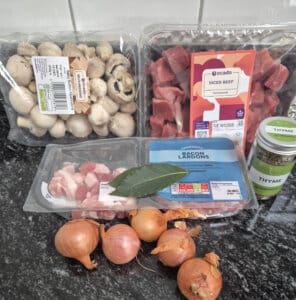
- 1kg Lean braising steak
- Tbsp of plain flour
- 250g Bacon lardons or 4 rashers of bacon finely sliced
- 12 Pearl onions or shallots
- 300/350ml Red Wine
- 500ml Beef Stock
- 250g Button mushrooms
- 3 Bay leaves (dried or fresh)
- 1 tsp of dried tyme or fresh
- 1 Tbsp of tomato puree
- 2 Tbsp of olive oil
Instructions
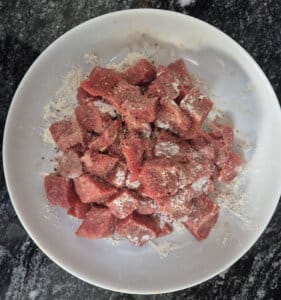
Toss the meat in seasoned flour to coat, shaking off any excess flour
Peel the onions/shallots
Add oil to the pan and brown the meat in a pan on the hob, remove and set aside
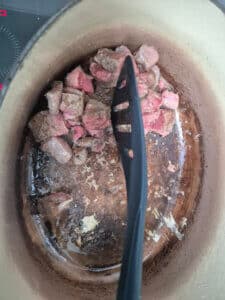
Add Lardons and onions to the pan until Lardons are crispy, and onions take on some colour
Add meat back to the pan with the bay leaves, then add the wine, allowing it to reduce by half to burn off the alcohol.
Add the stock, tomato puree, mushrooms & thyme to the pot, bring back to the boil.
At this stage, you can either put it in the oven at 160 °C or bring it to a simmer on the hob for about 2 hours until the beef is soft and tender.
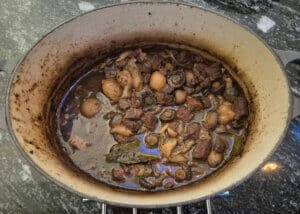
Season again with salt & pepper if necessary and serve